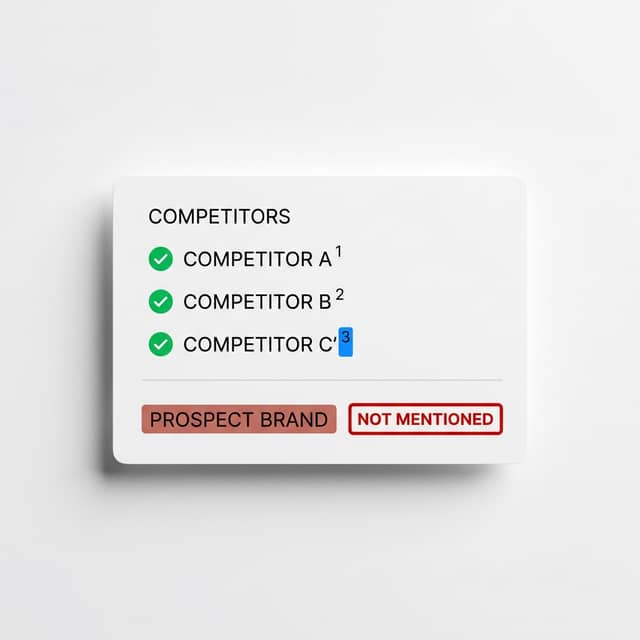
Quick Answer: Do ChatGPT, Perplexity, Claude, and Gemini all cite the same way?
No. ChatGPT and Claude lean on training-data familiarity, favoring brands with long-standing third-party mentions, while Perplexity and Gemini pull from live web retrieval, rewarding fresh, well-structured, well-ranked content. A single-platform strategy leaves visibility gaps, so brands need reference-grade content, buyer-question mapping, and off-site authority working together across all four engines.
Introduction
Getting cited across AI platforms requires a distinct strategy for each engine because ChatGPT, Perplexity, Claude, and Gemini pull from different sources, weigh authority differently, and surface answers through different mechanisms. B2B SaaS buyers now open an AI chat window before they open a Google tab, and the vendors that get named in those answers are the ones that make the shortlist. Ranking on page one no longer guarantees a mention when a buyer asks Claude which platform to trust, the exact gap covered in website ranking versus AI citations. The playbook has shifted from optimizing for algorithms to optimizing for how language models decide who deserves a recommendation. That shift rewards structured content, clear entity signals, and off-site validation on the sources these models already trust.
Key Takeaways:
Each AI engine cites differently, so a single-platform strategy leaves visibility gaps across the buyer journey.
Reference-grade content, buyer-question mapping, and third-party authority are the three levers that consistently earn citations.
A dual-channel approach that combines SEO and AEO outperforms either discipline run alone.
Why AI Citations Behave Differently From Search Rankings
Search engines rank pages. AI engines pick sources to quote. That distinction changes everything about how you structure content, where you invest authority, and how you measure success, part of a broader adoption shift Canada's own National AI Strategy documents as businesses increasingly integrate AI into core operations and buyer research. A page can rank third on Google and still go uncited by ChatGPT because the model reads the page and decides no passage is quotable enough to stand on its own, the same mechanism covered in LLM brand recommendation mechanisms.
The Two Citation Pathways
Every major AI platform selects sources through a blend of training-data familiarity and live retrieval. Understanding which pathway each engine leans on tells you where to invest. Independent research on citation mechanics shows two distinct routes that consistently drive citation decisions.
Training corpus recognition: models like ChatGPT and Claude pull from patterns learned during training, which favors brands with long-standing mentions on reputable sites.
Live retrieval indexing: Perplexity and Gemini fetch fresh web results in real time, rewarding brands with strong current SEO and updated reference pages.
Entity clarity: models cite brands they can identify unambiguously, so consistent naming, schema markup, and clean bio pages matter.
Third-party validation: mentions on publications, review sites, and industry roundups act as trust signals the models weigh heavily, a concept detailed further in AI trust signals and citation authority.
SEO and AEO Are Now One Discipline
Strong SEO feeds AEO because the pages that get indexed cleanly are the same pages that get parsed cleanly by retrieval-based models. Treating them as separate workstreams creates gaps. The brands winning citations today run a coordinated generative engine optimization program that builds ranking pages and citable passages at the same time. This is where the AEO content strategy practiced by teams like GoBlinkly outperforms a traditional SEO agency approach that optimizes only for search rank.

Platform-by-Platform Citation Playbook
Each of the four major AI platforms behaves like a different reader with a different library. Getting cited on all four requires tuning the same core assets, reference-grade content, and authoritative backlinks to the retrieval logic of each engine.
How ChatGPT, Perplexity, Claude, and Gemini Compare
The table below summarizes the core citation mechanics for each engine and where your effort delivers the highest return.
Platform | Primary Source Type | What Triggers a Citation | Best Investment |
|---|---|---|---|
ChatGPT | Training data plus browsing | Established third-party mentions and clear brand entity | Digital PR and reference pages |
Perplexity | Live web retrieval | Fresh, structured content ranking for buyer queries | SEO-optimized answer pages |
Claude | Training data with cautious retrieval | Authoritative editorial mentions and factual clarity | Reputable publications and case studies |
Gemini | Google index and knowledge graph | Structured data, E-E-A-T signals, and Google ranking | Schema markup and Google-first SEO |
The pattern is clear: ChatGPT and Claude reward long-term authority building, while Perplexity and Gemini reward current SEO discipline. A brand chasing only one side wins on some engines and disappears on others, which is why AI search engines compared side by side reveal the need for balanced execution.
Tactics That Work Across All Four Engines
Some tactics move the needle everywhere. Answer-first writing puts the direct answer in the first sentence of every section, which makes passages quotable by every model. Buyer-question mapping ensures each piece of content targets the phrasing prospects actually use in AI chats, not the keyword variants old-school SEO tools surface, a distinction Ahrefs' research on AI brand visibility also reinforces. According to a large-scale study of 21,143 AI citations across major platforms, structural choices like clear headings and semantic depth predict citation more reliably than raw word count. Combine that with reference-grade content and off-site validation, and you build assets that compound across every engine at once.

Conclusion
Winning AI citations is a discipline, not a hack, and it rewards brands that build reference-grade content, invest in third-party authority, and treat SEO and AEO as one coordinated system. The engines will keep evolving, but the underlying pattern holds: models cite sources they can identify, trust, and quote cleanly. Start by auditing which buyer questions your competitors already own across ChatGPT, Perplexity, Claude, and Gemini, then close the gaps with targeted content and authority work. First citations typically appear within 30 to 60 days of coordinated effort and compound from there, a timeline detailed in tracking ChatGPT citations and AEO ROI. The brands that act now will be the default recommendation when buyers ask AI who to trust in 2026 and beyond.
Want to see exactly which buyer questions name your competitors instead of you across every major AI engine? Get a free visibility audit from GoBlinkly and find out where the citation gaps are before your next quarter starts.
About the Author
Ethan Brooks is an AI Content Strategy Specialist at GoBlinkly, covering platform-specific AI citation strategy, helping B2B SaaS teams understand how ChatGPT, Perplexity, Claude, and Gemini each select and validate sources differently. His work focuses on building a coordinated approach that compounds across every engine simultaneously.
Frequently Asked Questions (FAQs)
How do I get recommended by ChatGPT?
You earn ChatGPT recommendations by building third-party mentions on trusted publications and publishing structured, answer-first content that clearly defines your brand as an entity.
Why is my brand not cited in AI search results?
Your brand is likely missing from AI answers because your content is not structured for extraction, your entity signals are inconsistent, or you lack the off-site authority that models use to validate sources.
What is Answer Engine Optimization?
Answer Engine Optimization is the practice of getting your brand cited inside AI-generated answers on platforms like ChatGPT, Perplexity, Claude, and Gemini, rather than only ranking on traditional search engines.
How do I improve my brand visibility in Perplexity AI?
Improve Perplexity visibility by ranking well for buyer questions and publishing fresh, well-structured reference content, since Perplexity retrieves live web results at query time.
Which AI engines should SaaS brands prioritize?
Prioritize ChatGPT and Perplexity first because they dominate B2B buyer research, then expand to Claude and Gemini once your citation foundation is in place.
What is the difference between SEO and AEO?
SEO optimizes pages to rank on search engines, while AEO optimizes content and authority to be quoted directly inside AI-generated answers.
What content do platforms like Gemini trust?
Gemini trusts content with strong Google ranking signals, structured data markup, and clear E-E-A-T indicators tied to Google's knowledge graph.