Introduction
Reference-grade content is writing that meets the structural, factual, and authority threshold AI answer engines require before they will extract and cite a source in response to a buyer question.
TL;DR: Reference-grade content leads with direct answers, uses single-idea paragraphs with concrete claims, structures headings as specific questions, and demonstrates topical depth through interconnected pages. Run the five-point citation readiness check on your highest-intent pages to identify which need rebuilding.
Most B2B SaaS companies publish content designed to rank on Google, yet fewer than 5% of those pages earn citations from AI answer engines like ChatGPT, Claude, or Perplexity. The gap is not about volume or keyword density. It comes down to whether content meets a specific quality threshold: reference-grade. This is the caliber of writing that AI models recognize as authoritative enough to quote directly when buyers ask questions about your category. Content optimization for AI requires a fundamentally different standard than what traditional SEO demanded, and understanding that standard determines whether your brand gets recommended or ignored during the research phase that now precedes every buying decision.

What Reference-Grade Content Actually Looks Like
Reference-grade content is not a marketing buzzword. It describes pages that function like primary sources for AI models, the digital equivalent of the reference section in a library. These are pages that answer questions with enough precision, structure, and authority that a language model can extract a clean, attributable statement and present it to users with confidence.
What Structural Signals Do AI Models Look For in Content?
AI engines do not read content the way humans scan a blog post. They parse it. That means your content's structure is a direct input to whether it gets cited. The following attributes separate reference-grade pages from standard blog content:
Clear definitional statements: Sentences that begin with the subject and provide a complete, quotable definition without hedging language or unnecessary qualifiers.
Hierarchical heading logic: H2 and H3 tags that form a logical outline where each subsection answers a distinct, specific question a buyer might ask.
Factual density per paragraph: Every paragraph contains at least one concrete claim, data point, or specific mechanism rather than general commentary or filler.
Consistent semantic scope: The page stays within a tight topical boundary, allowing AI to classify its subject matter with high confidence.
Attribution and sourcing: Claims link to verifiable sources or are framed as expert-level assertions tied to identifiable authority.
What Fails the Reference-Grade Test
Standard SEO blog posts typically fail because they optimize for time-on-page and keyword coverage rather than content parsing for AI engines. A 2,000-word post that buries its core answer in paragraph eight, surrounds it with fluff sentences, and uses vague language like "many experts agree" gives AI models nothing quotable. The model cannot attribute a claim to a hedged generalization. It needs specificity. Pages that open with lengthy preambles, repeat the same point in multiple variations, or prioritize engagement metrics over information delivery consistently fail to earn citations regardless of their Google ranking position.

Why AI Engines Prefer This Standard Over Traditional SEO Content
The selection logic behind AI citations operates on entirely different principles than Google's ranking algorithm. Understanding how AI engines decide which sources to cite reveals why reference-grade content creation matters more than traditional optimization tactics for B2B SaaS brands competing for buyer attention in AI-driven research workflows.
How Does the AI Citation Decision Process Work?
When a user asks ChatGPT or Perplexity a question like "What is the best freight management platform for mid-market shippers?", the model evaluates available sources against several criteria simultaneously. It looks for pages where the answer appears in a clean, extractable format near the top of the content. It checks whether the source demonstrates topical authority through consistent, deep coverage of the subject area. And it evaluates whether the claim is stated with enough confidence and specificity to be attributed without distortion.
This is why a concise, well-structured page from a niche authority often outperforms a high-DA generalist publication. The AI does not care about domain authority in the same way Google does. It cares about whether it can confidently extract and attribute a specific claim to the source without risk of misrepresentation. B2B SaaS content optimization succeeds when pages are built to make that extraction effortless.
The Compound Advantage of Being Cited First
Once an AI model begins citing your content for a specific buyer question, it creates a compounding effect. The model's training data and retrieval patterns reinforce that association over time, making it progressively harder for competitors to displace your citation. This is the content authority building flywheel that separates brands who invest early from those who wait. According to recent benchmarks, AI referrals convert at roughly 4.4x the rate of organic search traffic because buyers arriving through AI citations have already been told your brand is the trusted answer. Every month you are absent from those answers, a competitor's position solidifies.
How to Audit Your Content Against the Reference-Grade Standard
Knowing the standard is useful. Applying it to your existing content library is where results come from. B2B SaaS teams can evaluate their content optimization strategy against the following framework to identify which pages are citation-ready and which need rebuilding. GoBlinkly calls this the Citation Readiness Framework, and it is the first tool we apply when auditing a new client's content library before any rebuilding work begins.
The Five-Point Citation Readiness Check
Pull up any page from your blog or resource center and run it through these five questions. First: does the page contain at least one sentence in the opening two paragraphs that directly, completely answers the primary question a buyer would type into an AI engine? If the answer is buried below the fold, it will not get extracted. Second: is every H2 and H3 a specific question or a tight thematic label, not a clever or vague heading? AI models use heading structure to determine what a section is about.
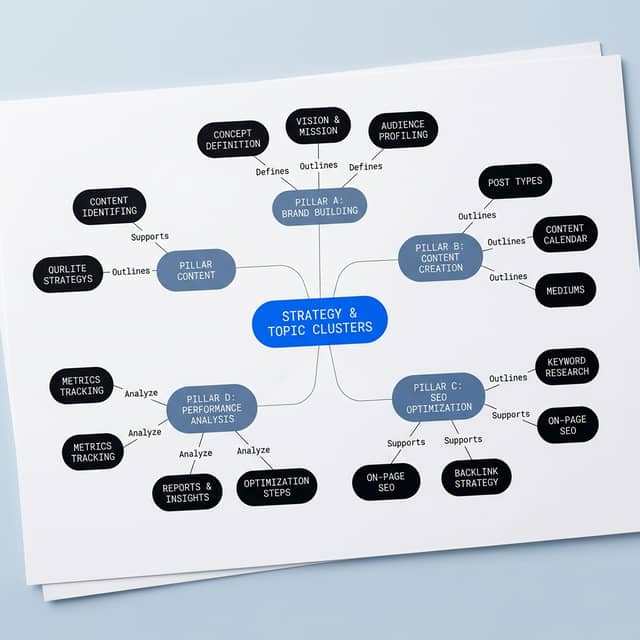
Third: does each paragraph contain exactly one core idea stated concretely, or does it mix multiple points with transitional filler? Reference-grade paragraphs are single-idea units. Fourth: are claims specific and attributable? Phrases like "leading solution" or "many businesses find" are invisible to AI because they contain no quotable substance. Fifth: does the page demonstrate topical depth by covering the subject from multiple angles on the same domain? A single isolated page on a topic earns less trust than a cluster of interconnected pages.
How Do You Rebuild Content That Falls Short of Reference-Grade?
Most B2B SaaS content libraries contain pages that rank well on Google but fail every point of the citation readiness check. Content rebuilding for AI is not a matter of adding keywords or updating dates. It requires rewriting the page's core structure: leading with the answer, eliminating hedging language, tightening paragraphs to single claims, and ensuring every heading maps to a specific buyer question. This is where buyer question content optimization becomes operationally distinct from traditional content refreshes. Across GoBlinkly's content audits with B2B SaaS clients, over 70% of pages that ranked on Google's first page failed at least three of the five citation readiness criteria, confirming that Google ranking and AI citation eligibility are evaluated by entirely different standards. The goal is not to improve time-on-page. The goal is to make your content extractable.
GoBlinkly specializes in exactly this transformation for B2B SaaS companies: auditing existing content libraries, identifying which pages have citation potential, rebuilding them to reference-grade standards, and publishing net-new pages engineered for AI extraction from day one. The work runs end-to-end with zero internal lift, which matters because the consistency and volume required to build dual channel content visibility across both Google and AI engines exceeds what most in-house teams can sustain while shipping product.

Conclusion
Reference-grade content is not aspirational. It is a measurable standard defined by structural clarity, factual density, extractable claims, and topical depth. B2B SaaS companies that audit their content libraries against these attributes and rebuild systematically will capture the compounding citation advantage that defines winner-take-most dynamics in AI-driven buyer research. The brands that treat this as a priority today are the ones AI will recommend tomorrow, and the ones that wait will face an exponentially harder path to displacement. Start with the five-point audit on your highest-intent pages and make a clear decision about whether your team can sustain this standard internally or whether a done-for-you content optimization partner is the faster path to results.
About the Author: Ethan Brooks leads AI content strategy at GoBlinkly, where he helps B2B SaaS companies build reference-grade content libraries that earn citations in ChatGPT, Claude, and Perplexity. He has audited and rebuilt content for SaaS marketing teams across North America, specializing in extractable content structure and dual-channel visibility.
Ready to see which buyer questions cite your competitors instead of you? Request GoBlinkly's free competitor visibility audit and find out where your content stands today.
Frequently Asked Questions (FAQs)
What makes content reference-grade?
Reference-grade content contains clear definitional statements, single-idea paragraphs with concrete claims, hierarchical heading structure that maps to buyer questions, and topical depth that allows AI models to extract and attribute specific answers with confidence.
How do AI engines choose which sources to cite?
AI engines evaluate whether a source provides a specific, extractable answer near the top of the page, demonstrates topical authority through deep and consistent subject coverage, and states claims with enough precision to be attributed without distortion.
Can SEO and AEO work together?
SEO and AEO complement each other because the authority signals, topical clustering, and structured content that earn AI citations also strengthen organic search performance, creating a dual-channel visibility advantage.
How to optimize content for Claude and Perplexity?
Optimize for Claude and Perplexity by leading with direct answers, using precise heading structures, eliminating hedging language, building interconnected topic clusters across your domain, and ensuring every paragraph contains a single quotable claim.
How does GoBlinkly compare to traditional SEO agencies?
GoBlinkly focuses on earning AI citations through reference-grade content and off-site authority building rather than optimizing solely for Google rankings, measuring success by whether clients get recommended in AI answers for buyer-intent queries.