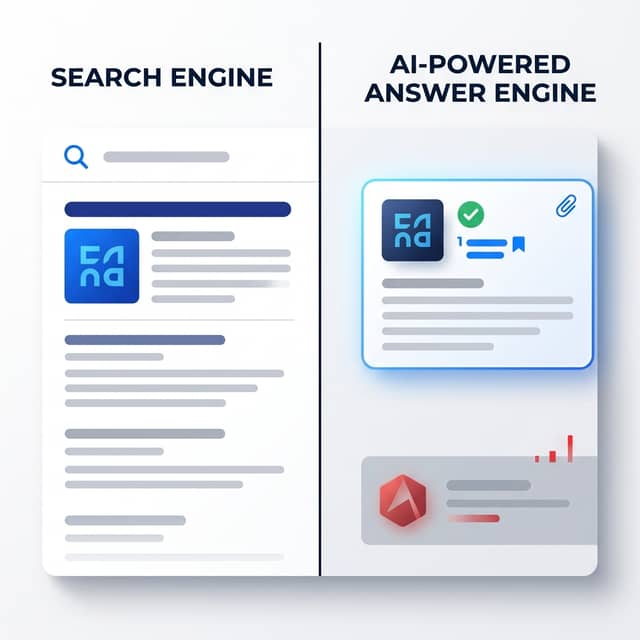
Quick answer: B2B SaaS growth now depends on dual-channel visibility, earning both Google rankings and AI answer engine citations, since AI referrals convert at roughly 4.4x the rate of standard organic traffic.
Introduction
B2B SaaS marketing no longer starts on a search engine results page. Buyers today open ChatGPT, Perplexity, or Claude and ask directly: "What's the best platform for X?" If a SaaS brand isn't part of that answer, it's invisible before a sales conversation ever begins. The shift from click-based discovery to AI-cited recommendations means SaaS demand generation must now operate across two channels simultaneously: traditional search and AI answer engines. Companies that adapt to this dual-channel reality build pipeline that compounds month over month, while those clinging to a single-channel playbook watch cost per lead climb and deal velocity stall. For more, see how B2B SaaS brands win AI recommendations.
Key Takeaway: B2B SaaS growth in 2026 and beyond depends on earning visibility in both Google results and AI answer engine citations, and the companies investing in that dual-channel approach now are the ones building a compounding advantage their competitors cannot easily replicate.
The New Rules of B2B SaaS Buyer Discovery
The buying process for B2B software has compressed and shifted upstream. Before a prospect ever books a demo, they have already formed a mental shortlist based on what they read, heard, or, increasingly, what an AI engine recommended. Understanding how this research phase works is the foundation of every strategy that follows.
Why the AI Research Phase Changes Everything
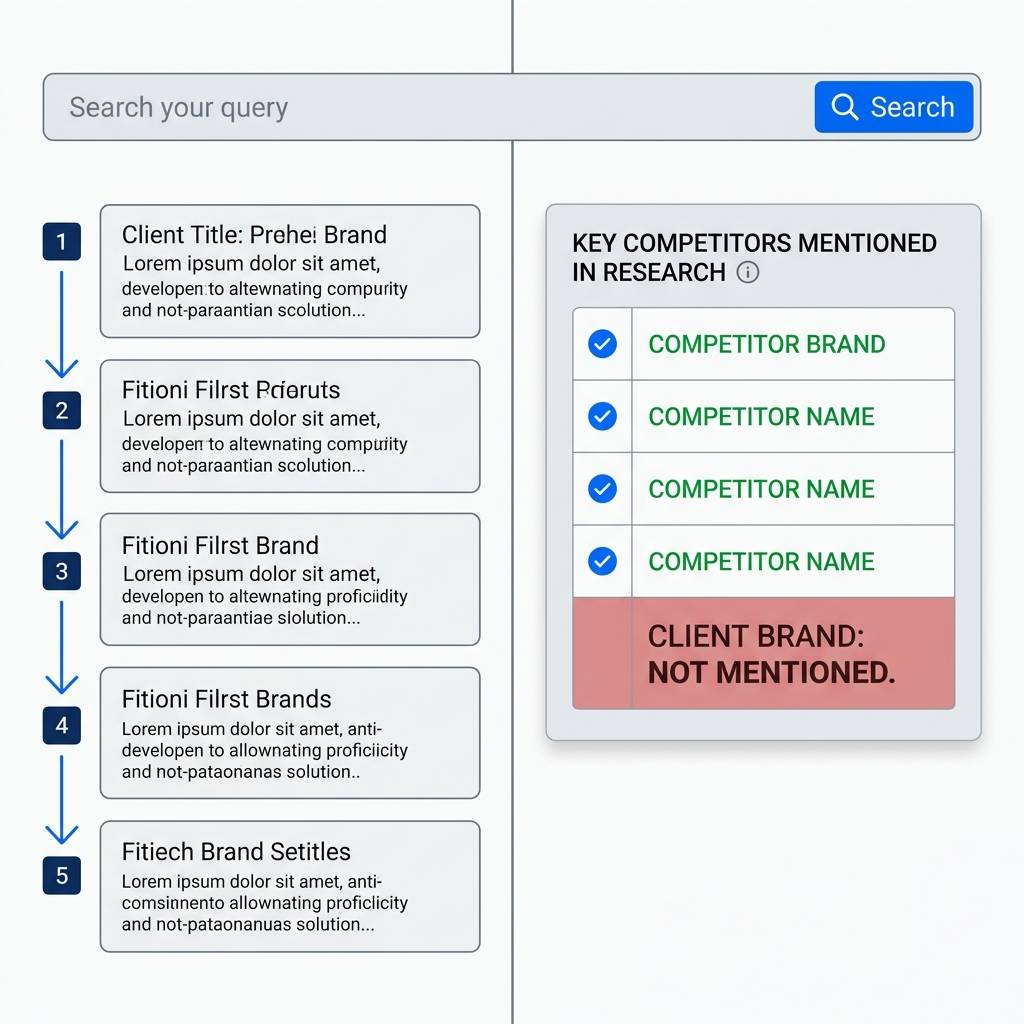
When a VP of Operations asks ChatGPT "What's the best freight management SaaS for mid-market shippers?", the model returns a curated list of three to five brands with brief justifications. That answer is pulled from content the model has already ingested: product pages, third-party reviews, comparison articles, and authoritative blog posts. If a SaaS company hasn't produced the kind of reference-grade content that AI models trust, it simply does not appear. Recent research shows AI is upending marketing on multiple fronts, displacing traditional search as a primary discovery channel for complex purchases. This shift makes the AI research phase marketing the most overlooked and highest-leverage opportunity in SaaS customer acquisition today.
Shortlist formation happens before Google: Buyers enter search only to validate a list AI already gave them
Citations outperform rankings for trust: An AI recommendation carries implicit endorsement, converting at roughly 4.4x the rate of organic search traffic
Competitors compound while you wait: Every month a rival is cited, and you are not, the gap in perceived authority widens
Content quality gates are higher: AI models prefer structured, expert-level answers over keyword-stuffed blog posts
Buyer Intent Research as a Strategic Foundation
B2B SaaS buyer intent research is the discipline of identifying the exact questions prospects ask before they ever contact sales. These are not generic keyword phrases. They are specific, high-stakes queries like "Which CRM integrates natively with HubSpot and Salesforce?" or "What payroll SaaS handles multi-province compliance in Canada?" Mapping these questions reveals the content gaps that, once filled, position a brand to be cited in both buyer question research contexts and traditional search results. Without this research, SaaS content marketing strategy becomes guesswork, and guesswork does not compound.

Building the Dual-Channel Growth Engine
SaaS growth strategies that work in 2026 share a common architecture: they treat Google and AI engines as two sides of the same visibility coin (see website traffic optimization strategies for SaaS). Strong SEO feeds the authority signals that AI models use to select which brands to cite. And AI citations drive high-intent traffic that converts faster than any paid channel. The question is how to build this engine from the ground up.
Content Strategy Built for Two Audiences
Traditional SaaS content marketing optimized for one reader: the human scanning Google results. Modern content must serve a second audience, the language model deciding which brands to surface in its answers. This means publishing content that is structured, specific, and citable. Every piece should answer a distinct buyer question with enough depth and clarity that an AI model can extract a direct recommendation from it.
The practical shift looks like this: instead of writing a 2,000-word overview titled "Everything You Need to Know About Payroll Software," produce five focused articles, each answering one buyer-intent question with expert-level precision. Academic research on AI-driven marketing transformation confirms that this shift favors brands whose information is structured, trusted, and easy for AI systems to synthesize. A sound content strategy framework should map every page to a specific query, include schema markup, and present answers in the opening paragraph so both Google's featured snippets and AI parsers can extract them cleanly.
Answer Engine Optimization: The Missing Pillar
Answer Engine Optimization for SaaS is the practice of making a brand's content, site structure, and off-site authority legible to AI models so they cite it in buyer conversations. AEO overlaps with SEO but diverges in key ways. Where SEO targets ranking factors (backlinks, page speed, keyword density), AEO targets citation factors: content structure, factual specificity, third-party validation, and the consistency of a brand's claims across the web.
The difference between AEO vs traditional SEO for SaaS is not a matter of choosing one over the other. It is a matter of sequencing. Strong technical SEO ensures a site is crawlable and authoritative enough that AI training data includes it. AEO ensures the content on that site is formatted and framed in a way that models will actually quote. Companies that treat AEO as an add-on to their B2B SEO strategy miss the point. It needs to be embedded in every content decision from the start. GoBlinkly has built its entire service model around this dual-channel approach, engineering content and site architecture so that brands earn citations on ChatGPT, Claude, Perplexity, and Gemini alongside strong Google rankings.
Scaling Authority That Compounds
Visibility without authority is fragile. A SaaS brand can produce excellent content but still be overlooked by AI engines if it lacks off-site validation. Building compounding B2B SaaS growth requires a deliberate authority strategy that extends well beyond the company's own domain.
Off-Site Signals AI Models Trust
AI models determine which brands to recommend by cross-referencing multiple sources. If a SaaS company is mentioned positively in industry publications, cited in comparison articles on trusted review sites, and referenced in cascading confidence in AI citations, the model's confidence in recommending that brand increases significantly. This is why SaaS brand positioning must extend to digital PR, guest contributions on authoritative platforms, and a systematic approach to earning mentions on third-party sources AI already trusts.
Backlinks remain critical, but their function has expanded. A backlink from a respected SaaS review site does not just improve a Google ranking. It becomes a data point that an AI model uses to validate a recommendation. The organic growth strategy that works today builds authority across both channels simultaneously, treating every earned mention as fuel for both search visibility and AI citation probability.
Measuring What Matters for SaaS Lead Generation
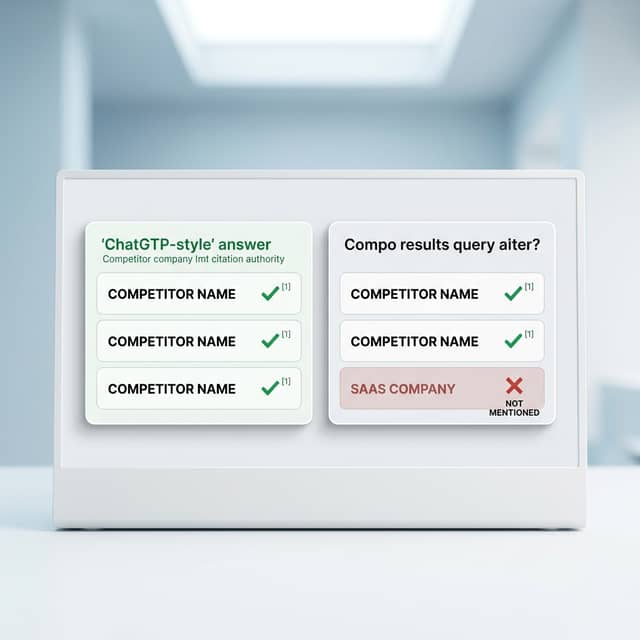
B2B SaaS lead generation metrics need to evolve alongside the channels that produce leads. Tracking organic traffic and keyword rankings still matters, but it tells only half the story. Companies serious about SaaS demand generation now monitor AI citation frequency, citation sentiment, which buyer-intent queries name their brand versus a competitor, and the conversion rate of AI-referred traffic versus other sources. GoBlinkly's approach to search optimization ROI reflects this shift, measuring success by the number and quality of citations earned rather than vanity traffic metrics. When a SaaS company can see exactly which buyer questions its competitors own in AI engines, the strategic response becomes obvious: fill those gaps with better, more authoritative answers.
Conclusion
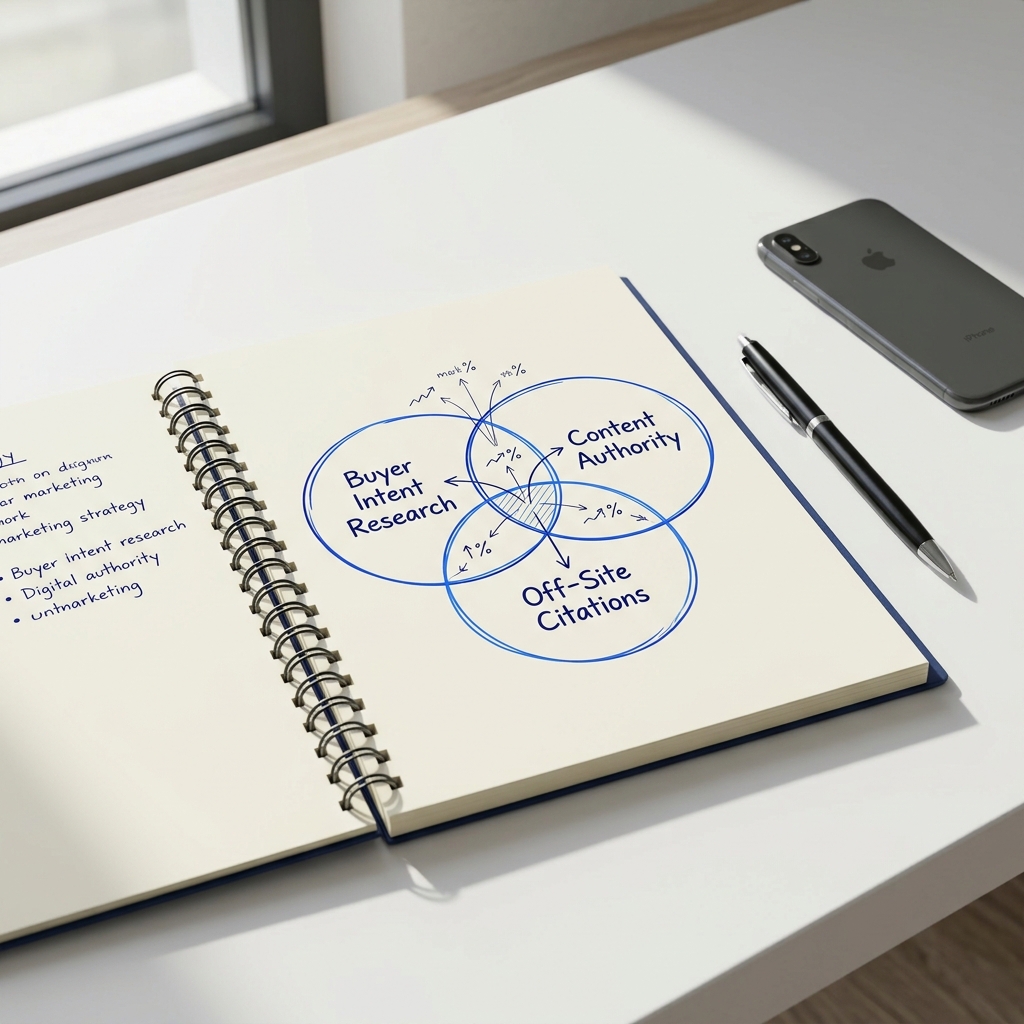
The SaaS companies that will dominate their categories over the next three to five years are the ones building dual-channel visibility right now. B2B SaaS marketing that drives real growth starts with buyer intent research, flows through structured and citable content, earns authority on trusted third-party sources, and treats AI engines as a primary channel, not an experiment. The playbook is clear: every piece of content should serve both Google and the AI models that increasingly determine which brands buyers trust. Start with the questions your buyers are asking AI today, and make sure your brand is the answer (see how to get your share of growing AI traffic).
Frequently Asked Questions (FAQs)
How does AI affect B2B SaaS buying?
AI answer engines now form buyer shortlists before prospects ever visit Google, meaning SaaS brands that are not cited in those AI responses are excluded from consideration at the earliest and most influential stage of the purchase decision.
Why do SaaS companies need AEO?
Answer Engine Optimization ensures a brand's content is structured and validated in a way that AI models can parse and cite, which is a distinct requirement from traditional SEO and necessary for appearing in the AI-driven discovery channel where buyers increasingly begin their research.
What are buyer intent questions for SaaS?
Buyer intent questions are the specific, high-stakes queries prospects ask when evaluating solutions, such as "Which project management SaaS works best for distributed teams under 50 people?", and mapping these questions is the foundation of both effective SEO and AEO strategy.
How to build SaaS authority on AI platforms?
Building authority on AI platforms requires earning consistent mentions across trusted third-party sources like industry publications, review sites, and expert roundups, because AI models cross-reference multiple external signals before deciding which brands to recommend.
Can AI referrals drive SaaS leads?
AI referrals convert at approximately 4.4 times the rate of standard organic search traffic because buyers who receive a direct AI recommendation arrive with higher trust and stronger purchase intent.
What SaaS marketing strategies work in North America?
The most effective strategies in North America combine deep buyer-intent research, dual-channel content optimized for both Google and AI engines, and systematic off-site authority building across the publications and review platforms that AI models trust most in the region.
AEO vs traditional SEO for SaaS: which is better?
Neither is better in isolation because strong SEO builds the domain authority that AI models rely on to validate citations, while AEO ensures that content is structured and framed so models will actually quote it, making both essential components of a single integrated strategy.
About the Author
David Mercer is an AI Search and Content Strategist focused on helping B2B SaaS brands earn visibility across both traditional search and AI answer engines. His research-driven approach translates complex SEO, AEO, and technical search topics into actionable strategies grounded in industry data and real-world results.