Introduction
Rising customer acquisition costs and shrinking returns on paid channels are forcing B2B SaaS companies to rethink how they build pipeline. An organic growth strategy offers a compounding alternative: every piece of content, every backlink, and every community interaction appreciates in value over time rather than vanishing the moment a budget is paused. Yet most SaaS marketing teams still treat organic as a side project, not the primary engine. With AI answer engines now reshaping how buyers discover and evaluate software, the window to build durable organic authority is open, but it will not stay open for long.
The tactics are grouped into three stages, building the content foundation, scaling authority and distribution without ad spend, and measuring what compounds, so a team can start with whichever stage is weakest instead of working through all seven at once (see how AI search is rewriting B2B content distribution).
Organic growth in B2B SaaS compounds when teams treat content, backlinks, and community as long-term equity rather than short-term campaigns. The seven tactics in this guide cover buyer-question content, Answer Engine Optimization, authority backlinks, product-led content, community loops, executive visibility, and compounding measurement. In 2026, building durable organic authority also means optimizing for AI answer engines, not just Google.

The Foundation: Why Organic Customer Acquisition Compounds
The core difference between organic growth versus paid growth comes down to asset ownership. A paid campaign rents attention; an organic system builds equity you control. For B2B SaaS companies with product-market fit, shifting investment toward organic means lowering the marginal cost of each new lead as the content library, domain authority, and brand recognition grow month over month.
Tactic 1: How Do You Build a Buyer-Question Content Engine?
Organic growth through content marketing, the core of any organic traffic strategy for Google and AI search, starts with mapping every question a buyer asks on the path from problem awareness to vendor selection. Instead of chasing high-volume head terms, build clusters of content around specific decision-stage queries that your ideal customers type, or speak, into search and AI tools. According to recent content marketing ROI research, companies that invest consistently in content see returns that accelerate over a 12- to 24-month horizon as indexing and topical authority compound.
Buyer-intent mapping: Identify 50 to 100 questions your sales team hears repeatedly and turn each into a dedicated content piece.
Content clusters: Group related articles under pillar pages to signal topical depth to both search engines and AI models.
Refresh cadence: Revisit published content quarterly with updated data, screenshots, and examples so it remains competitive in search results.
Distribution loops: Repurpose each article into LinkedIn posts, email snippets, and short-form video to multiply organic reach without creating new assets from scratch.
Tactic 2: Why Is Answer Engine Optimization a Frontier Channel for B2B SaaS?
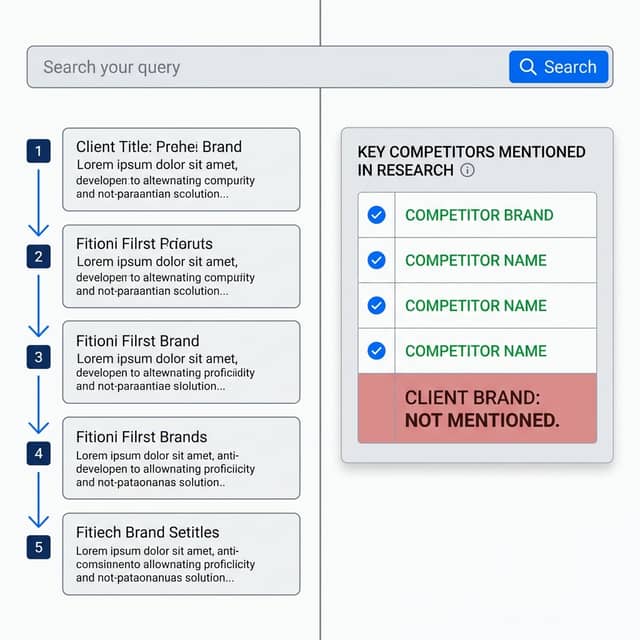
Traditional SEO versus Answer Engine Optimization represents one of the most significant shifts in B2B SaaS growth in 2026 and beyond. AI tools like ChatGPT, Perplexity, and Gemini are increasingly where buyers start their research, and the criteria these models use to cite a brand differ meaningfully from classic ranking factors. Structured data, clear entity definitions, and concise, authoritative answers at the top of a page all increase the likelihood that an AI model will surface your brand as a recommendation. Most competitors are still optimizing exclusively for blue links, which means early movers in AEO capture outsized share of this emerging discovery channel.

Scaling Authority and Distribution Without Ad Spend
Content alone does not create sustainable business growth. The second half of a mature organic engine focuses on amplifying reach, earning trust signals, and building the kind of brand gravity that pulls buyers toward you before they ever fill out a form. These five tactics turn your content foundation into a self-reinforcing growth loop.
Tactic 3: Earn Authority Backlinks at Scale
Search engines and AI models both treat high-quality backlinks as endorsements of credibility. A single link from an authoritative industry publication or SaaS review site can move the needle more than dozens of links from low-relevance directories. The latest guidance on AI search visibility confirms that brands with strong backlink profiles appear more frequently in AI-generated answers.
To earn these links consistently, focus on creating original research, benchmark reports, and tools that other writers naturally want to reference. Guest contributions on respected SaaS publications also generate contextual links while positioning your executives as subject-matter experts. The goal is to accumulate trust signals that compound across both traditional and AI-powered discovery channels.
Tactic 4: Invest in Product-Led Content
Product-led content bridges the gap between education and activation. Instead of generic thought leadership, create tutorials, workflow breakdowns, and use-case comparisons that show your product solving a real problem. This content type naturally attracts high-intent organic traffic because the reader is already looking for a solution, not just information.
The key is subtlety. A comparison page that objectively evaluates three approaches to a workflow (including your own) earns more trust than a feature page that reads like a brochure. Buyers in Canada and globally respond to transparency, and search engines reward pages with low bounce rates and strong engagement metrics. This tactic directly supports organic growth metrics like trial signups, demo requests, and assisted conversions.

Community, Measurement, and Long-Term Compounding
The final three tactics address the operational infrastructure that separates teams who dabble in organic from those who build it into a durable competitive advantage. Without community loops, proper measurement, and executive visibility, even the best content strategy stalls after the initial burst of momentum.
Tactic 5: Build Organic Community Loops
Organic communities on platforms like LinkedIn, Slack groups, and niche forums create distribution channels that do not depend on algorithmic favor. When your team actively participates in conversations where your buyers already spend time, every comment, reply, and shared insight becomes a micro-touchpoint that builds brand familiarity. The research from the G2 Answer Economy report highlights how peer recommendations in these communities increasingly influence shortlisting decisions.The organic growth benefit here is twofold.
First, community engagement generates referral traffic that converts at higher rates than cold search traffic. Second, active participation signals expertise to AI models that scrape and index forum and social content. GoBlinkly, for instance, focuses its AEO engagements on building exactly this type of multi-channel authority so that client brands appear credible wherever AI models look for answers. One GoBlinkly client in the Canadian freight and logistics space traced its first AI-sourced leads back to ChatGPT within weeks of starting an AEO program. Gartner's 2026 B2B buyer research confirms why this matters: 45 percent of buyers used generative AI to shortlist vendors before any sales contact.
Tactic 6: Develop a Founder and Executive Authority Program
People trust people before they trust logos. A founder or VP of Product who publishes consistently on LinkedIn, speaks at industry events, and contributes guest articles to recognized publications generates organic visibility that no amount of programmatic content can replicate. This authority cascades into every other tactic: their bylined articles earn better backlinks, their social posts drive community engagement, and AI models increasingly associate their name (and by extension, their company) with specific topics.
Start with a cadence of two to three LinkedIn posts per week and one long-form article per month. Over six months, the compounding effect on branded search volume and direct referral traffic becomes measurable. For B2B SaaS companies in Montreal and across Canada, this is especially powerful because the market is concentrated enough that consistent visibility quickly builds recognition among the buyers who matter.
Tactic 7: Measure What Actually Compounds
Most SaaS teams track organic growth ROI through traffic and keyword rankings alone, but these metrics miss the deeper signals of compounding value. Track share of voice in AI answer engines by monitoring whether your brand appears in responses to your top 20 buyer-intent queries. Measure branded search volume growth as a proxy for awareness. Monitor content-assisted pipeline to understand which organic touchpoints contribute to closed revenue, not just top-of-funnel visits.
The shift from vanity metrics to compounding indicators is what separates teams running organic tactics from teams running an organic growth strategy. GoBlinkly structures its client reporting around exactly these layered metrics, ensuring that leadership teams can see the connection between organic investment and revenue outcomes rather than traffic curves.
Conclusion
Organic business growth in B2B SaaS is not a single channel or a one-quarter initiative. Organic growth runs on a system of seven interconnected tactics, from buyer-question content and Answer Engine Optimization to authority backlinks, product-led content, community loops, executive visibility, and compounding measurement. The teams that win over the next two to three years will be the ones that treat organic as their primary growth engine rather than a complement to paid campaigns. Start by auditing which of these seven tactics your team already executes well, identify the two or three gaps that represent the highest leverage, and build a 90-day sprint to close them.
Ready to make your brand the answer AI recommends? Explore how GoBlinkly builds AEO systems for B2B SaaS companies.
About the author: This article was written by the GoBlinkly content team. GoBlinkly is a Montreal-based agency that helps established B2B SaaS companies get cited by ChatGPT, Claude, Perplexity, and Gemini.
Frequently Asked Questions (FAQs)
How can SaaS companies achieve organic growth?
SaaS companies achieve organic growth by investing in buyer-focused content, earning authoritative backlinks, optimizing for AI answer engines, and building community-driven distribution channels that compound over time.
What is the difference between organic and inorganic growth?
Organic growth comes from internal efforts like content marketing and product-led acquisition, while inorganic growth involves external activities such as mergers, acquisitions, or paid advertising to expand market share.
How do you measure organic growth?
Measure organic growth through branded search volume, share of voice in AI answer engines, content-assisted pipeline, organic trial signups, and the ratio of organic revenue to total customer acquisition cost.
Can AI optimization accelerate organic growth?
Yes, Answer Engine Optimization accelerates organic growth by positioning a brand as a cited recommendation in AI-generated responses, capturing buyer attention at the earliest research stage before competitors enter the conversation.
How long does organic growth take?
Most B2B SaaS companies begin seeing measurable compounding effects from a structured organic strategy within six to twelve months, with significant revenue impact typically materializing in the 12- to 24-month range.