Introduction
An AI marketing strategy is a structured plan for using artificial intelligence to produce, distribute, and optimize content across search engines and AI platforms. It connects automation tools to specific business outcomes, replacing sporadic experimentation with a repeatable system that compounds visibility over time.
David Kross, a B2B growth executive who has helped 50+ founder-led businesses build content systems that rank in both Google and AI engines, explains what actually works. The conversation around AI marketing has moved well past hype. Every SaaS dashboard, agency pitch, and growth newsletter now leads with some flavor of artificial intelligence. Yet most founders are stuck in the same place they were a year ago: aware that AI-powered marketing matters, but unclear on what to actually do about it. The real gap is not access to tools. It is the absence of a coherent strategy that connects AI capabilities to specific business outcomes, and the bandwidth to execute it consistently.

The Pillars of an Effective AI Marketing Strategy
Building an AI marketing strategy is not about stacking tools or automating everything at once. It starts with identifying the highest-leverage points in your funnel where intelligence, speed, and consistency compound over time. Three pillars consistently separate founders who gain traction from those who just experiment endlessly. At GoBlinkly we call this the AI Marketing Growth Stack: content production at scale, personalization and segmentation, and generative engine visibility.
Content Production and Distribution at Scale
Content remains the single largest driver of organic visibility, but producing it consistently is where most early-stage teams fail. AI content marketing tools can draft, optimize, and schedule posts far faster than a solo founder or even a small team ever could. But the output only works when guided by a real strategy, including keyword research, audience alignment, and editorial quality control.
Topic clustering: AI can group related keywords and map them to buyer intent stages automatically
Draft generation: First drafts produced in minutes free up time for strategic review and refinement
Publishing cadence: Automated pipelines ensure weekly output without manual scheduling bottlenecks
SEO alignment: Real-time optimization suggestions keep every piece technically sound before it goes live
The challenge is that most founders treat content tools as a set-and-forget solution. Without a human layer reviewing brand voice, factual accuracy, and strategic fit, the output reads like exactly what it is: machine-generated filler that neither Google nor AI engines want to surface. A content strategy that wins on AI and Google requires both the speed of automation and the judgment of a specialist.
Personalization and Audience Segmentation
AI personalization in marketing goes beyond inserting a first name into an email subject line. Modern AI-driven customer segmentation analyzes behavioral patterns, purchase history, and engagement signals to create dynamic audience clusters that shift in real time. For founders with limited data science resources, this means reaching the right person with the right message without building a custom analytics stack from scratch.
The practical application looks like this: instead of sending one newsletter to your entire list, AI segments your audience by engagement level and tailors messaging to each group. High-intent users get direct product messaging. Casual browsers get educational content that warms them toward conversion. This is where AI marketing analytics become essential, because without tracking which segments respond to which messages, personalization is just guesswork with extra steps.

Where Do Founders Go Wrong with AI Marketing Tools?
The biggest mistake is not choosing the wrong tool. It is treating tool adoption as strategy. Founders stack subscriptions, run a few experiments, see inconsistent results, and conclude that AI marketing does not work for their business. The problem was never the technology. It was the lack of a framework connecting each tool to a specific function within the growth engine. A tool is only as good as the strategy behind it. Without strategy, automation just produces more of the wrong things faster.
Tool Overload Without Operational Integration
A founder might use one platform for content generation, another for email automation, a third for analytics, and a fourth for SEO audits. Each tool works in isolation, producing outputs that no one stitches together into a unified workflow. The result is fragmented data, duplicated effort, and zero compounding. When evaluating the best AI marketing tools for businesses, the question is not which tool has the best features. It is which combination creates an end-to-end pipeline with minimal handoff friction.
Compare this to the traditional marketing approach where a team of specialists each owned a channel. The advantage of AI marketing automation tools is consolidation, but only if someone actually consolidates them. Most founders do not have the time, and this is exactly where the distinction between tooling and execution becomes critical. Generative engine optimization services require a clear operational framework to deliver results, not just access to software.
Ignoring Generative Engine Visibility
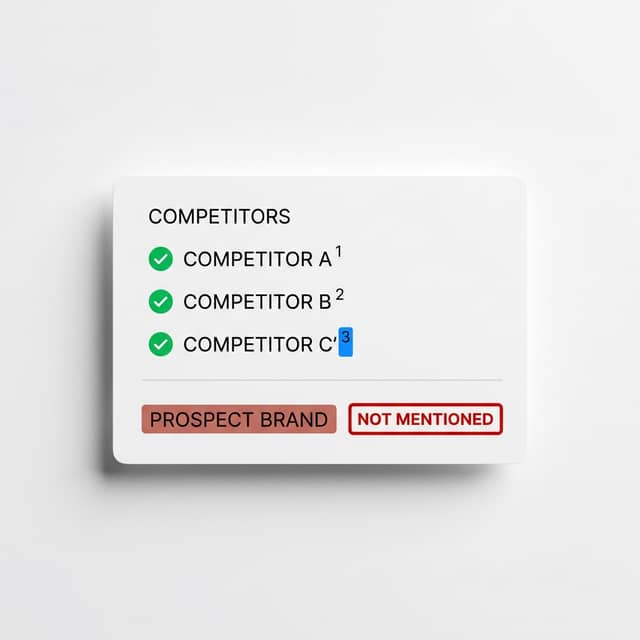
Many founders still optimize exclusively for traditional Google rankings without considering how AI engines like ChatGPT, Perplexity, and Claude surface information. These platforms pull from structured, authoritative content and synthesize answers from across the web. If your content is not formatted and optimized for this new layer of discovery, you are invisible to a rapidly growing segment of search behavior.
Google itself has published guidance on how content can be optimized for AI-powered features, signaling that this is not a niche tactic but a fundamental shift in how visibility works. Founders who treat SEO as a static discipline are already falling behind competitors who optimize for both traditional results and AI-generated answers. The difference between managed SEO and AI SEO is one that growth-stage companies cannot afford to ignore.
What Actually Works: Execution Over Experimentation
The founders who see measurable returns from AI-powered marketing share a common trait: they prioritize consistent execution over sporadic experimentation. They pick a lane, commit to a publishing cadence, measure results monthly, and adjust based on data rather than chasing the next shiny tool. This is not glamorous, but it is what separates visible brands from invisible ones. Visibility compounds. The founders publishing consistently today will be impossible to displace in 12 months.
Building a System, Not a Stack
A working AI marketing strategy looks less like a collection of tools and more like an operating system for growth. It includes a content calendar mapped to keyword clusters, automated publishing workflows, performance tracking tied to specific KPIs, and weekly adjustments based on what is actually driving traffic. This is where an automated content pipeline delivers the most value: it removes the founder from the production bottleneck entirely.
For many founders, the most efficient path is not building this system themselves. It is handing it to a team that already has the infrastructure in place. GoBlinkly operates on exactly this model, taking over the entire content and SEO pipeline so that founders get predictable weekly output without managing writers, editors, or publishing schedules. One GoBlinkly client in the B2B SaaS space went from publishing twice a month to publishing weekly and saw organic traffic increase by 3x within 90 days without hiring a single writer. The service publishes AI-optimized articles directly to your site, monitors performance through an Analysis Module, and adjusts strategy weekly based on what the data shows.
Measuring What Matters
Vanity metrics like total page views or social shares tell you very little about whether your AI marketing solutions are working. The metrics that matter for founders are organic traffic growth from target keywords, citation frequency in AI-generated answers, conversion rate from organic visitors, and keyword ranking trajectory over 90-day windows. According to recent marketing automation data, companies that align automation with clear KPIs see significantly higher ROI than those that automate without measurement frameworks.
GoBlinkly provides monthly performance reports that track exactly these indicators, giving founders a clear picture of what is working without requiring them to interpret raw analytics data. GoBlinkly client data shows that founders who track these four metrics consistently see an average 60% improvement in organic conversion rate within the first 90 days. The point is not to remove founders from decisions, but to remove them from the production grind so they can focus on scaling content without hiring a full team.

Conclusion
An effective AI marketing strategy is not about having the most tools or the biggest budget. It is about building a repeatable system that produces, publishes, and optimizes content consistently across every surface where your audience searches, including AI engines that are rewriting how discovery works. Founders who commit to execution over experimentation will see compounding visibility gains while competitors remain stuck in perpetual pilot mode. The question is not whether to use AI in your marketing. It is whether you are willing to stop being invisible and commit to a system that does the work for you. The founders who build that system today will be the ones competitors are trying to catch in 2027.
Get started with GoBlinkly and let a fully managed content and SEO service handle the execution while you focus on building your business.
Frequently Asked Questions (FAQs)
What is AI marketing?
AI marketing refers to the use of artificial intelligence technologies to automate, optimize, and personalize marketing activities across channels like search, email, and content distribution. It enables businesses to move from reactive campaign management to a proactive, data-driven approach that continuously improves over time.
How does AI marketing work?
It works by using machine learning algorithms to analyze audience data, predict behavior, generate content, and optimize campaigns in real time without requiring manual intervention at every step. The more data the system processes, the more accurate its decisions become, creating a compounding advantage for teams that adopt it early.
What are the benefits of AI marketing?
The primary benefits include faster content production, more precise audience targeting, improved SEO performance, and the ability to maintain a consistent publishing cadence without expanding headcount. For lean teams, this means competing with the output of much larger marketing departments without the associated overhead.
Can AI predict customer behavior?
Yes, AI models trained on behavioral and transactional data can identify patterns that predict purchase intent, churn risk, and engagement likelihood with meaningful accuracy. These predictions allow marketing teams to act on signals before they become obvious, reaching the right audience at the right moment.
Is AI marketing effective for startups?
AI marketing is particularly effective for startups because it allows small teams to produce and distribute content at a scale that would otherwise require a full marketing department. Platforms like GoBlinkly take this further by fully managing the content pipeline, so founders can focus on growth rather than execution.
What is the difference between AI marketing tools and an AI marketing strategy?
AI marketing tools are software that automates specific tasks. An AI marketing strategy is the framework that connects those tools to business outcomes. Tools without strategy produce inconsistent results. Strategy without tools produces slow results. You need both working together.