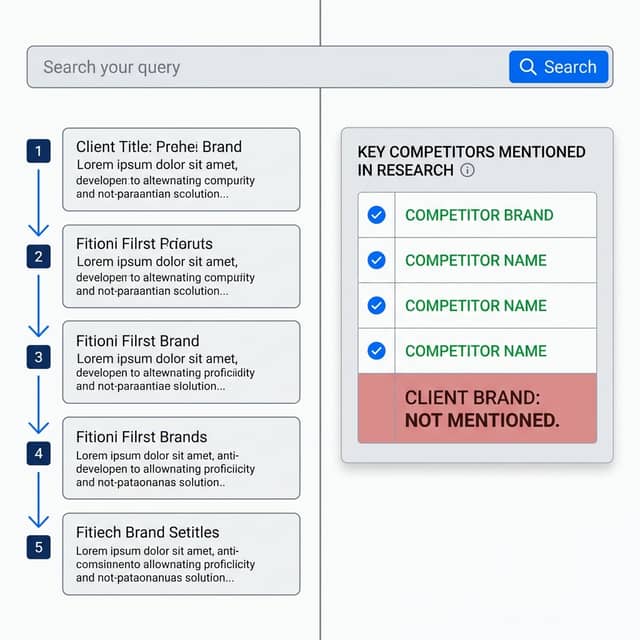
Quick answer: Digital PR for SaaS means earning mentions on trusted third-party publications and platforms, since earned media now accounts for roughly 25% of all AI-generated citations, making it the fastest way to be recommended by AI answer engines
Introduction
Digital PR for SaaS has shifted from a nice-to-have brand awareness play to a core growth lever that determines whether buyers, and the AI engines advising them, consider your product at all. In 2026, tools like ChatGPT, Perplexity, and Gemini don't just surface links; they recommend specific vendors based on how often credible third-party sources vouch for a brand. A strong B2B digital PR strategy creates exactly that kind of third-party evidence, earning mentions on the publications, podcasts, and data roundups that answer engines already trust. Without it, a competitor with a weaker product but stronger off-site presence will keep compounding citations while your brand stays invisible in the AI research phase.
Key Takeaway: Earned media on trusted third-party sources is now the primary way SaaS companies earn AI citations and organic search authority, and the compounding nature of digital PR means every month of inaction widens the gap between you and competitors already investing.

Why Digital PR Matters More Than Ever for SaaS Companies
Traditional marketing channels are losing ground in B2B software buying. Buyers start with AI answer engines and search queries, and those systems decide which brands to recommend based on the density and quality of independent mentions across the web. Digital PR is the discipline that creates those mentions deliberately, turning editorial coverage, data citations, and expert commentary into the authority signals that algorithms rely on.
The AI Citation Connection
Research shows that earned media accounts for roughly 25% of all AI-generated citations, making PR's role in SEO far more significant than most SaaS teams realize. When a respected publication references a product in a relevant context, answer engines treat that as a trust signal and are more likely to include that product in recommendations. This is different from paid advertising or even organic rankings. It is third-party authority building at its most direct: real editorial sources telling AI models that this company is credible.
Mention frequency: AI engines weigh how often a brand appears across independent, high-authority domains when deciding what to cite
Source credibility: A single mention on a respected industry publication carries more weight than dozens of low-quality directory listings
Contextual relevance: Citations that appear alongside specific buyer-intent topics (pricing, features, comparisons) trigger AI ranking factors more effectively than generic brand awareness coverage
Recency: AI models favor fresh, regularly updated mentions, meaning one-off campaigns lose their signal over time without ongoing effort
Digital PR vs Traditional PR: What SaaS Leaders Need to Know
Traditional PR focuses on press releases, media relationships, and brand narrative. It prioritizes impressions and share of voice. Digital PR shares some of those tactics but optimizes for measurable outcomes: backlinks from high-domain-authority sites, mentions in contexts that match buyer queries, and placement on sources that AI trust signals already weight heavily. The difference between digital PR and traditional PR comes down to intent. Traditional PR asks "did people see this?" while digital PR asks "does this make search and AI engines trust us more?" For SaaS companies where pipeline depends on being discovered during research, that distinction changes everything.

Building a Digital PR Strategy That Compounds
A credible earned media for SaaS program doesn't rely on a single viral moment. It is a system that generates a growing body of third-party evidence, month over month, until AI engines and search algorithms have no choice but to recognize the brand as a category authority. The practical challenge is execution, because most SaaS teams don't have the bandwidth or media relationships to sustain this alongside product development and sales.
The Core Components of an Effective Program
Every successful digital PR strategy for SaaS companies shares a few structural elements that separate it from ad-hoc outreach or sporadic guest posting. These components work together; isolating just one rarely moves the needle.
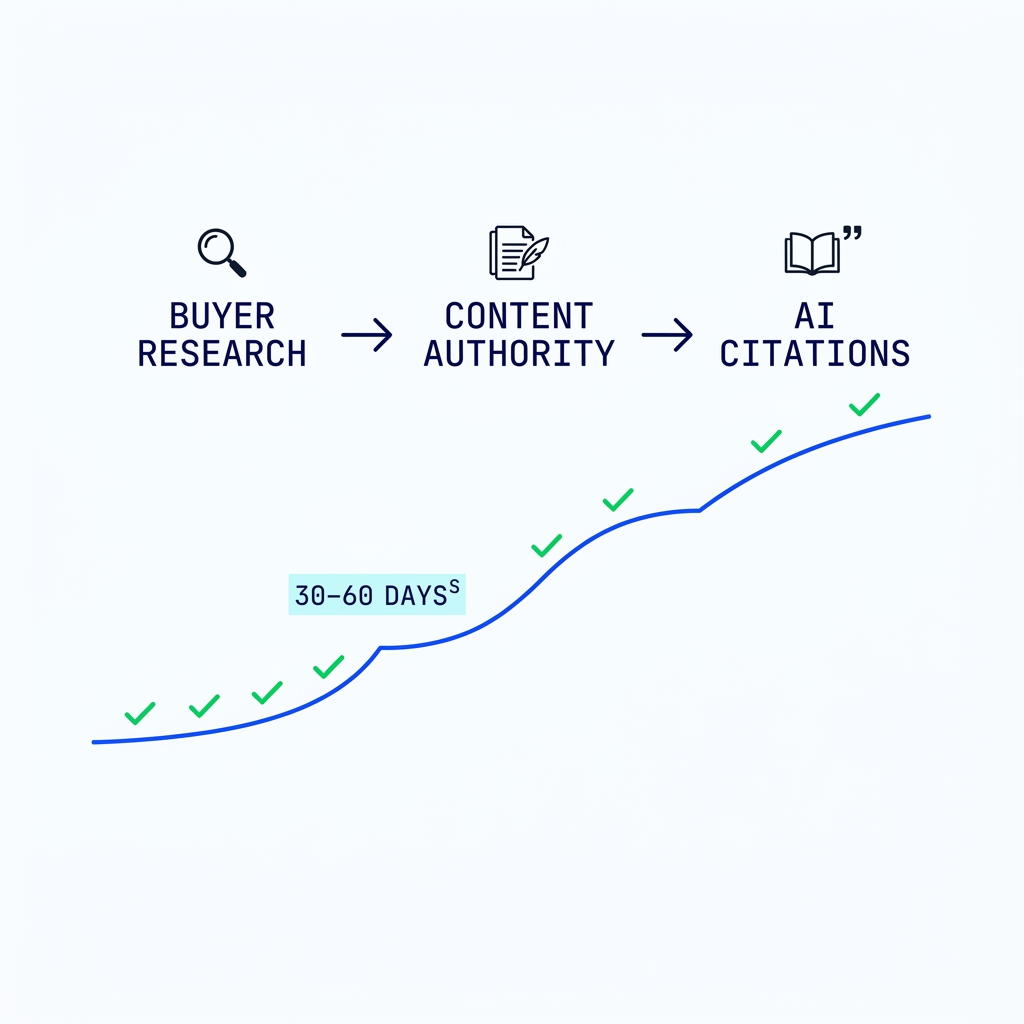
The first component is buyer-question research. Before pitching any publication or creating any thought leadership content, the best programs map the exact questions buyers are asking AI engines and search tools in the target category. This research ensures that every earned media placement addresses a query that actually influences purchasing decisions, not just industry curiosity. The second component is a consistent AEO strategy paired with ongoing content production. Rather than publishing a batch of articles and stopping, an effective program treats authority building as a recurring publishing cadence. Each piece of coverage or contributor article adds another node of trust. The third component is building on-site content that engines can parse and reference. Off-site authority means little if the brand's own site doesn't clearly communicate expertise on the topics being covered.
Looking at effective digital PR campaigns in practice, the common thread is that they combine original data, expert commentary, and strategic distribution to earn links and mentions from sources that matter to both search engines and AI models.
Why Compounding Authority Beats One-Off Campaigns
A single well-placed article generates a temporary signal. A sustained program creates a pattern that algorithms recognize as genuine category authority. After three to six months of consistent earned media, the backlink-building service effect kicks in: each new mention lands on a foundation of existing trust, making subsequent placements easier to earn and more impactful when they arrive. This is why SaaS companies that start digital PR early build a moat. The organic growth strategy becomes self-reinforcing as more sources link to the brand, AI engines cite it more frequently, and competitors find it exponentially harder to catch up.
The data supports this compounding effect. AI referrals convert at roughly 4.4 times the rate of organic search traffic, according to Semrush's 2026 research. That means each additional citation doesn't just improve visibility; it improves the quality of the pipeline entering the funnel. For SaaS teams evaluating where to allocate budget, few channels offer both increasing returns over time and higher-quality leads from day one.
Evaluating a Digital PR Agency for SaaS
Most SaaS teams lack the internal bandwidth to sustain a digital PR program while shipping product and closing deals. That makes choosing the right digital PR agency a high-stakes decision, because the wrong partner delivers vanity metrics while competitors build real authority. Understanding what to look for, and what to avoid, separates productive partnerships from expensive distractions.
What to Look for in a Done-for-You Partner
The best digital PR agencies for SaaS understand that the end goal is not press coverage for its own sake, but measurable authority signals that move both search rankings and AI engine recommendations. When evaluating a done-for-you PR service, look for agencies that can demonstrate a clear connection between their work and search visibility outcomes. Ask whether they track AI citations as a KPI, not just link counts or media impressions.
The operational model matters too. SaaS PR services worth considering should minimize the internal lift required from the client team. Understanding how digital PR fundamentals work helps evaluate whether an agency's process is rigorous or superficial. A credible partner handles buyer-question research, content creation, media outreach, and ongoing optimization without requiring weekly calls or heavy client involvement. GoBlinkly, for example, structures its entire service around the principle that the client grants access once and the agency handles everything from site optimization to off-site authority building, with first citations typically landing within 30 to 60 days.
Red Flags That Signal the Wrong Fit
Not every agency operating in this space delivers real authority building for SaaS companies. A digital PR agency that focuses primarily on press release distribution without earned editorial placement is selling a dated model. Similarly, agencies that promise specific link counts without connecting those links to buyer-intent topics are optimizing for a metric that doesn't directly improve citation likelihood. Watch for agencies that can't explain how their work influences AI answer engines, because that gap reveals a fundamental misunderstanding of where B2B discovery is heading. GoBlinkly's approach of tracking AI citations across every answer engine directly illustrates what meaningful measurement looks like in this space.
Conclusion
Digital PR for SaaS is no longer optional for companies that want to be discovered, recommended, and chosen. The brands building third-party authority today are the ones AI engines cite tomorrow, and the compounding nature of this work means early movers create advantages that late entrants struggle to close. Whether building an in-house program or partnering with a specialized agency, the priority is the same: earn real editorial mentions on the sources that search and AI engines already trust, do it consistently, and measure what matters. The SaaS companies treating digital PR as a core channel, rather than a marketing experiment, are the ones building the authority that gets cited.
Frequently Asked Questions (FAQs)
What is digital PR for SaaS companies?
Digital PR for SaaS companies is the practice of earning editorial coverage, backlinks, and brand mentions on high-authority third-party publications to build the trust signals that search engines and AI answer engines use to rank and recommend software vendors.
How does digital PR build authority for B2B brands?
Digital PR builds authority for B2B brands by generating consistent, credible mentions across independent publications, creating a pattern of third-party validation that algorithms interpret as genuine category expertise.
Why is digital PR important for SaaS growth?
Digital PR is important for SaaS growth because AI answer engines and search algorithms increasingly rely on off-site authority signals to decide which products to recommend during the buyer research phase.
What is the difference between digital PR and traditional PR?
Traditional PR prioritizes media impressions and narrative control, while digital PR optimizes for measurable outcomes like backlinks from authoritative domains and mentions in contexts that improve search rankings and AI citation likelihood.
How much does digital PR cost for SaaS companies?
Digital PR costs for SaaS companies typically range from $2,500 to $7,500 or more per month depending on scope, with pricing influenced by the number of target publications, content volume, and whether AI citation tracking is included.
Can digital PR help SaaS brands get cited by AI engines?
Yes, because AI engines source their recommendations heavily from trusted third-party publications, and earned media on those sources directly increases the probability that a SaaS brand appears in AI-generated answers.
How long does digital PR take to show results for SaaS?
Most SaaS companies begin seeing initial authority signals and citations within 30 to 90 days, with meaningful compounding effects becoming visible after three to six months of sustained effort.
About the Author
David Mercer is an AI Search and Content Strategist focused on helping B2B SaaS brands earn visibility across both traditional search and AI answer engines. His research-driven approach translates complex SEO, AEO, and technical search topics into actionable strategies grounded in industry data and real-world results.