Quick Answer: Website traffic optimization now means building visibility across both Google and AI engines like ChatGPT, not just one channel. Flat traffic often signals a structural mismatch, since content built for Google rankings may lack the direct-answer format AI models need to cite it. SEO and AEO reinforce each other, so companies with only one piece in place stay largely invisible to AI-generated shortlists.
Introduction
Website traffic optimization for B2B SaaS companies has fundamentally changed. Buyers now get answers from ChatGPT, Perplexity, and Gemini before they ever type a query into Google, which means the companies still optimizing for a single discovery channel are losing pipeline they never see. The real growth lever in 2026 is a dual-channel visibility strategy that makes your brand discoverable across both traditional search and AI answer engines simultaneously. Most SaaS teams already produce decent content; the problem is that content isn't structured to be parsed, cited, or recommended by the AI models that increasingly shape purchase decisions.
Key Takeaway: Scalable B2B SaaS traffic growth now requires optimizing for two discovery layers at once: Google's search results and the AI answer engines that shape buyer research before a click ever happens.

Why Traditional SEO Alone No Longer Drives Scalable Traffic
For years, organic traffic increase for SaaS companies meant one thing: rank higher on Google. That playbook still matters, but it no longer captures the full buyer journey. AI answer engines now intercept high-intent questions and deliver synthesized recommendations, often without the user clicking through to any website at all. Understanding this shift is the first step toward building a traffic optimization strategy that scales beyond a single channel.
The AI Discovery Layer Changes Buyer Behavior
When a VP of Engineering asks ChatGPT "what's the best freight management platform for mid-market logistics companies," the answer comes back with specific brand recommendations, not a list of blue links. Research from Semrush shows that AI engines treat citations differently than search engines, often pulling from sources the user never directly visits. This means a SaaS company can have strong Google rankings and still be invisible in the AI research phase where many B2B buyers now start.
Zero-click answers: AI engines synthesize responses from multiple sources, reducing the need for users to click through to individual pages
Citation-based trust: Being named as a recommendation in an AI response carries more weight than appearing on page one of a search result
Intent interception: Buyer intent keyword research reveals that high-value commercial queries are increasingly answered by AI before reaching Google
Compounding invisibility: Companies not cited in AI answers lose ground each month as competitors build citation authority that compounds over time
What Flat Traffic Actually Signals
Flat or declining organic traffic in B2B SaaS rarely means the content is bad. More often, it signals a structural mismatch between how content is built and how discovery engines now parse information. Pages optimized purely for Google's ranking algorithm may lack the clear, direct answer formatting that AI models need to extract and cite. If your organic traffic is flat, the root cause often sits in architecture and content structure rather than keyword volume.

Building a Dual-Channel Optimization Framework
A SaaS traffic generation strategy that actually scales treats Google and AI answer engines as two distinct but interconnected channels. Strong SEO creates the foundation for organic growth, while answer engine optimization for B2B ensures that same content gets parsed, cited, and recommended inside AI responses. The operational framework below breaks this into concrete execution layers.
SEO vs. AEO: Where They Overlap and Diverge
The distinction between AEO and SEO for SaaS companies is not a matter of choosing one over the other. Both share core requirements: technically sound sites, high-quality content, and organic authority signals. Where they diverge is in content formatting, the role of third-party citations, and what "ranking" even means. The following table breaks down the key operational differences.
Dimension | Traditional SEO | Answer Engine Optimization (AEO) |
|---|---|---|
Primary goal | Rank on Google SERPs | Get cited as a recommendation in AI responses |
Content format | Long-form, keyword-dense pages | Direct-answer paragraphs, structured data, parsable sections |
Authority signals | Backlinks from high-DA domains | Third-party mentions on sources AI models trust |
Measurement | Rankings, click-through rate, organic sessions | Citation frequency, AI referral traffic, recommendation share |
Time to compound | 6 to 12 months for competitive terms | 30 to 60 days for initial citations, compounding monthly |
The most important takeaway: AI-powered SEO optimization and traditional search optimization reinforce each other. Content that earns AI citations also tends to rank well on Google because both channels reward clear, authoritative, well-structured information. Treating them as separate initiatives doubles the work; treating them as one integrated framework compounds the returns.
Content Optimization for Answer Engines
Content optimization for answer engines starts with structure, not keywords. AI models parse content by looking for direct answers to specific questions, clear entity relationships, and verifiable claims backed by data. Google's own guidance on optimizing websites for generative AI features reinforces that technical clarity and well-organized content architecture are prerequisites for AI discoverability.
Every page targeting a buyer question should open with a direct answer in the first two sentences, then layer in supporting evidence. Building website authority also requires investment beyond your own domain. AI models heavily weight third-party sources when deciding which brands to recommend. A content strategy framework that includes digital PR, contributed articles on industry publications, and original research data gives AI engines multiple independent signals that your brand is trustworthy.
This is where managed execution often outperforms DIY approaches, since the off-site authority layer demands consistent, specialized effort that most internal teams cannot sustain alongside product work. GoBlinkly's off-site authority work with B2B SaaS clients shows that brands that earn five or more contextual mentions on trusted third-party sources within 60 days of launching a structured program consistently see their first AI engine citations within that same window.
Managed Execution vs. DIY: What Actually Moves the Needle
Understanding the strategy is one thing. Executing it consistently across both channels while shipping product is another. The decision between managed SEO services for SaaS and building internal capacity depends on three factors: available headcount, the speed at which competitors are building citation authority, and how clearly you can measure traffic optimization success today.
Where DIY Approaches Break Down
Most B2B SaaS companies have someone, whether a founder, a head of marketing, or a generalist content hire, who handles SEO. That person can usually maintain a blog calendar and track Google rankings. The breakdown happens at the system level: buyer-question research across four AI engines, site architecture rebuilds for parsability, reference-grade content production at scale, and ongoing off-site authority campaigns on the publications AI models actually trust.
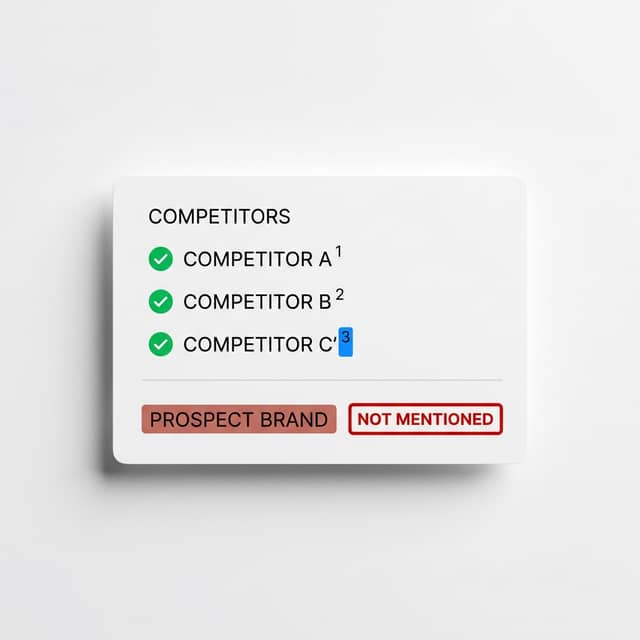
Each of those layers requires a different skill set and sustained weekly execution. Internal teams typically excel at one or two, then stall on the rest. The result is partial coverage: strong Google presence but zero AI citations, or great content but no off-site authority to back it up. Research into how AI answer engines choose sources to cite confirms that citation authority compounds, meaning every month of incomplete execution widens the gap between you and competitors who are running the full system. In GoBlinkly's citation audits for B2B SaaS clients, companies running a partial system (strong content but no off-site authority, or strong authority but unstructured pages) are absent from AI-generated vendor shortlists in more than 75% of audited buyer-intent queries.
What Managed Execution Delivers
A B2B SaaS growth agency focused on dual-channel visibility handles the end-to-end workflow: research, architecture, content, authority building, and monthly optimization. GoBlinkly operates this model specifically for B2B SaaS companies, running buyer-question research, rebuilding sites for AI parsability, producing reference-grade content, and earning off-site authority on trusted third-party sources. The firm reports first citations landing within 30 to 60 days, with AI referral traffic converting at roughly 4.4x the rate of traditional organic search. For teams that need to win on both AI and Google without pulling engineering or product resources, the managed model removes the operational bottleneck entirely.

Conclusion
Website traffic optimization in 2026 demands more than ranking on Google. B2B SaaS companies that build a dual-channel system, covering both traditional search and AI answer engines, will capture buyers at both discovery layers and compound that advantage month over month. The companies seeing the strongest organic traffic increase are those treating content structure, off-site authority, and AI parsability as a single integrated operation rather than separate projects. Whether you build internally or partner with a firm like GoBlinkly, the critical step is auditing your current AI visibility and closing the gap before competitors lock in citation authority that becomes increasingly difficult to displace.
B2B SaaS teams ready to build dual-channel visibility should follow this sequence:
Audit your current AI visibility by querying ChatGPT, Claude, Perplexity, and Gemini with your five highest-intent buyer questions and recording which competitors appear.
Identify the buyer queries where competitor citations are weakest and your content is closest to answering directly. These become your first content priorities.
Restructure or rewrite one page per week to open each section with a direct, quotable answer and add descriptive H2 headings that mirror buyer questions.
Earn two external mentions in the next 60 days: a G2 profile update, a contributed article, or a mention in an industry publication AI models already cite.
Run the citation audit monthly and track whether your brand appears in more engines and more queries over time.
About the Author: David Kross is a Content Operations Strategist at GoBlinkly, where he leads dual-channel SEO and AEO programs for B2B SaaS companies. He specializes in helping software brands build compounding visibility across both Google search rankings and AI answer engine citations.
Frequently Asked Questions (FAQs)
How do you optimize a website for answer engines?
Structure each page with direct answers in the opening sentences, use clear headings, include verifiable data, and build third-party authority on publications that AI models already trust as citation sources.
Why is website traffic optimization important for B2B SaaS?
B2B SaaS buyers research solutions through both Google and AI answer engines before contacting sales, so companies invisible in either channel lose qualified pipeline to competitors who are present in both.
How long does it take to see organic traffic increase?
Traditional SEO improvements typically show measurable traffic gains in 3 to 6 months, while AI citation results can appear within 30 to 60 days when content and authority are built simultaneously.
What is a dual channel visibility strategy?
A dual channel visibility strategy optimizes a brand's content and authority signals to be discoverable across both Google search results and AI answer engine responses, treating them as interconnected rather than separate channels.
How do managed SEO services improve SaaS traffic growth?
Managed services provide consistent execution across buyer-question research, site architecture, content production, and off-site authority building, which eliminates the skill gaps and bandwidth constraints that cause internal teams to stall.
Can answer engine optimization replace traditional SEO for SaaS?
No, AEO and SEO reinforce each other because the authority and content quality that earn AI citations also improve Google rankings, making an integrated approach significantly more effective than either alone.
How do you measure website traffic optimization success?
Measure traditional metrics like organic sessions and keyword rankings alongside AI-specific metrics such as citation frequency across ChatGPT, Perplexity, and Gemini, AI referral traffic volume, and recommendation share for target buyer questions.