Introduction
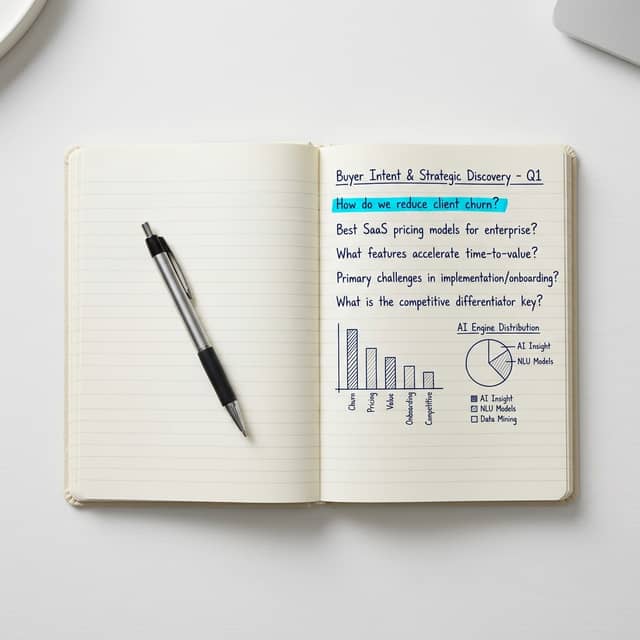
Buyer question research is the process of identifying the exact prompts B2B buyers type into AI engines like ChatGPT, Perplexity, Gemini, and Claude when evaluating vendors. Without it, every piece of content your team creates is built on assumptions rather than evidence of what buyers are actually asking. Every B2B SaaS company wants to be the brand that AI recommends. Most invest in content, backlinks, and technical fixes, then wonder why ChatGPT, Perplexity, Claude, and Gemini never mention them.
The gap is almost always the same: no one mapped the actual questions buyers are typing into those engines before creating a single page. Buyer question research is the foundation of any credible optimization strategy, and without it, every piece of content is built on assumptions rather than evidence. The companies getting cited today started by knowing exactly what their buyers ask, down to the phrasing, the intent, and the stage of the buying journey.

Why Buyer Question Research Sits at the Top of the AEO Workflow
Answer engine optimization only works when the content you publish directly answers the prompts buyers submit to AI. Unlike traditional search, where ranking for broad keywords can still capture traffic, AI engines synthesize a direct response. If your content does not map to the question being asked, it will never be selected as a source. That is why the research phase is not optional preparation; it is the single step that determines whether everything downstream produces citations or gets ignored, according to recent research on citation failure in generative engines.
How AI Engines Select Sources Differently Than Google
Google matches pages to keywords and weighs signals like backlinks and page authority. AI answer engines work differently. They parse a conversational prompt, identify the core intent, then pull from sources that directly and clearly answer that specific question. A comparison of AI SEO versus AEO reveals that pages optimized for keyword density often fail in AI contexts because they lack the precise, structured answers these models look for. According to academic research on generative engine optimization, the content most frequently cited shares a common trait: it answers a narrow question thoroughly, in plain language, with clear structural chunking that supports extraction.
Intent specificity: AI models prioritize sources that match the exact intent of the prompt, not just the topic.
Conversational phrasing: Buyers ask AI questions the way they would ask a colleague, making natural-language research essential.
Stage-aware answers: A question from someone evaluating vendors requires different depth than one from someone learning a category.
Structural clarity: Content organized with clear headings, definitions, and supporting data gets parsed and cited more reliably.
What Happens When You Skip the Research Phase
Without buyer question research, content teams default to internal assumptions or traditional keyword data. They produce articles that may rank on Google but address questions no buyer is actually asking an AI engine. The result is invisible effort: pages that exist but never surface when a prospect types "What is the best [category] tool for [use case]?" into ChatGPT. That disconnect compounds. Every month without accurate question mapping is a month where competitors who did the work accumulate citations that are hard to displace.

How to Research Buyer Questions for AEO
Effective buyer question research is not a brainstorming session. It is a systematic process that combines direct AI engine querying, competitive citation analysis, and intent mapping across the buying journey. The goal is to build a complete question map, organized by stage and intent, that feeds directly into your reference-grade content strategy and site architecture.
The Three Steps of Effective Buyer Question Research
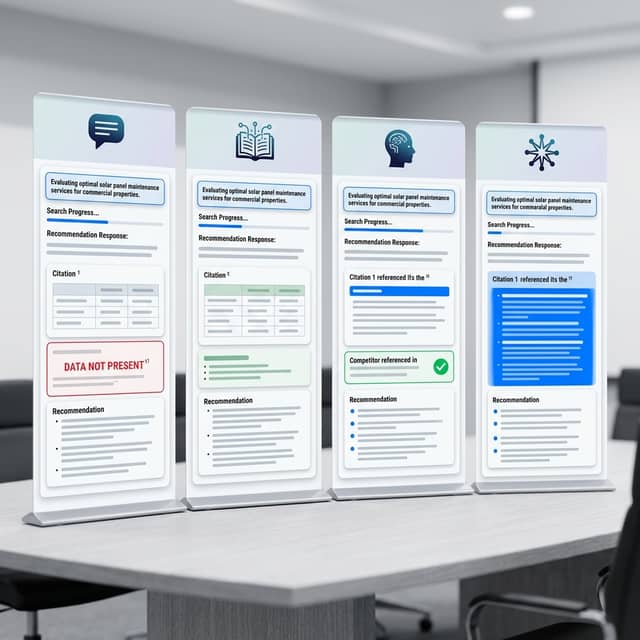
The research process follows three repeatable steps that any B2B SaaS team can execute. First, direct engine querying: submit stage-specific prompts into each of the four major AI engines and record which brands are cited, which sources are referenced, and which questions return no clear recommendation. This reveals both competitive threats and citation opportunities. Second, competitive gap analysis: compare the questions where competitors appear against the questions where no brand dominates.
These uncontested queries are the highest-value targets for new content because the citation position is still open. Third, intent classification: sort every question by buying stage, from problem identification through supplier selection, and assign a content format to each. A problem-stage question needs an educational answer. A supplier-selection question needs a direct comparison that positions your brand as the credible choice. Running this process across all four engines every quarter keeps your question map current as buyer language and AI retrieval behavior evolve.
Building a Buyer Question Map Across the Buying Journey
Start by identifying the stages your buyers move through before a purchase decision. Gartner's research on the B2B buying journey shows that buyers cycle through problem identification, solution exploration, requirements building, supplier selection, validation, and consensus creation. Each stage generates distinct questions that buyers now route through AI engines.
For a B2B SaaS company selling, say, spend management software, the question map might look like this. At the problem stage: "Why is our procurement process so slow?" At solution exploration: "What tools automate procurement for mid-market companies?" At supplier selection: "Which spend management platforms integrate with NetSuite?" Each of these is a citation opportunity, and each requires a different content approach. Without this map, your content strategy (see AEO content strategy: what actually gets you cited) is shooting blind. The most thorough approach involves querying each major AI engine (ChatGPT, Perplexity, Claude, Gemini) with variations of these questions and recording which brands appear, which sources are cited, and where gaps exist.
Turning Raw Buyer Questions Into an AI Recommendation Strategy
Once you have a raw list of 50 to 100 buyer questions, the next step is prioritization. Not every question carries equal weight. High-intent questions at the supplier selection and validation stages tend to drive pipeline more directly. Questions at the exploration stage build brand awareness inside AI engines, which compounds over time. Categorize each question by intent, stage, and competitive density (how many brands already appear in AI answers for that prompt).
This prioritized list becomes the blueprint for everything that follows: which pages to create or restructure, what authority backlink strategy to pursue, and where to focus digital PR efforts. It also reveals content gaps that organic research alone might miss. A question like "Is [competitor] better than [your brand] for enterprise teams?" is one you will never find in a traditional SEO keyword research tool, but it is exactly the kind of prompt that drives purchasing decisions inside AI engines. The best practices for AI answer engine optimization always start here, with questions, not keywords.

Conclusion
Buyer question research is not a preliminary task you rush through before the "real" work begins. It is the strategic foundation that determines whether your AEO strategy generates AI citations or produces content that never gets cited. By systematically mapping what buyers ask, when they ask it, and which engines already answer, you create a question-driven blueprint that aligns content, site structure, and authority building toward measurable outcomes.
For B2B SaaS teams that lack the internal capacity to sustain this work, GoBlinkly runs this entire process end-to-end as part of its dual channel visibility framework, from initial question mapping through ongoing citation tracking and content optimization. The companies winning AI citations in 2026 are the ones that started with research, not assumptions. B2B SaaS teams that invest in buyer question research now build a compounding advantage. Every citation earned today increases the likelihood of appearing in future AI model training data, making early research the highest-return activity in any AEO strategy.
Ready to see which buyer questions already name your competitors instead of you? Request GoBlinkly's free competitor visibility audit and get the research that makes every optimization decision count.
About the author: David Mercer is AI Search and Content Strategist at GoBlinkly, where he helps B2B SaaS companies map buyer questions and build citation authority across ChatGPT, Perplexity, Gemini, and Claude.
Frequently Asked Questions (FAQs)
What questions do your buyers ask AI?
Buyers ask AI engines comparison questions, vendor selection prompts, feature-specific queries, and problem-identification questions at every stage of the B2B buying journey.
How does answer engine optimization work?
Answer engine optimization works by researching buyer questions, creating content that directly answers those questions, structuring it for AI parsing, and building authority on third-party sources that AI models already trust.
Why do AI recommendations convert better?
AI recommendations convert better because buyers who receive a direct, trusted answer from an AI engine arrive at a vendor's site with higher intent and pre-built confidence, converting at roughly 4.4x the rate of organic search visitors.
How to research buyer questions for AEO?
Research buyer questions for AEO by querying each major AI engine with variations of stage-specific prompts, recording which brands are cited, identifying gaps in coverage, and prioritizing questions by intent and competitive density.
How does AEO compare to traditional search optimization?
AEO focuses on earning direct citations inside AI-generated answers by matching specific buyer prompts, while traditional search optimization targets keyword rankings on search engine results pages.
What is buyer question research in AEO?
Buyer question research in AEO is the process of systematically identifying the exact prompts buyers type into AI engines at each stage of the purchasing journey, then mapping those questions to content that earns direct citations inside AI-generated answers.