Quick Answer
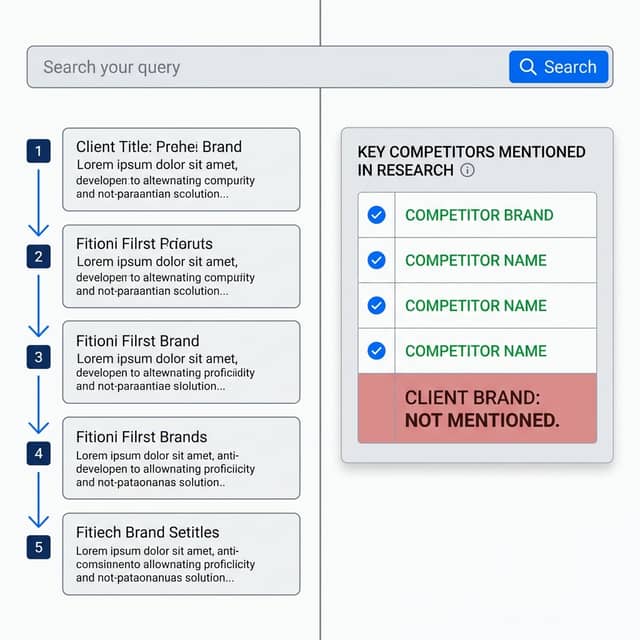
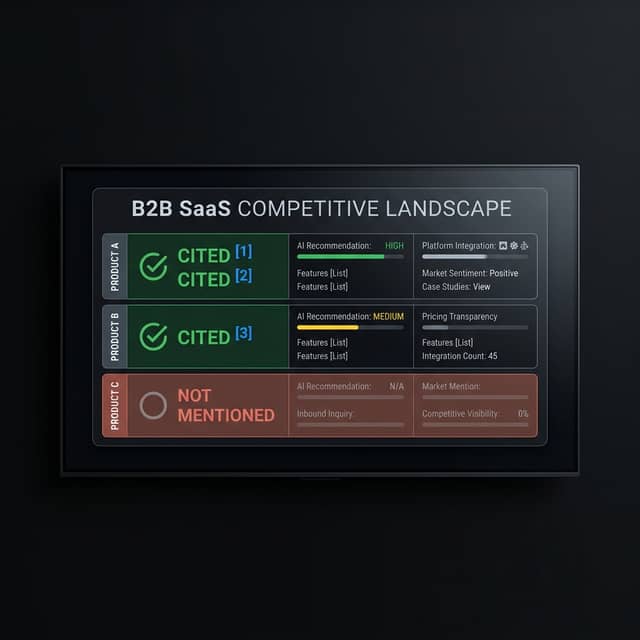
To earn citations from ChatGPT and other AI engines, focus on off-site authority signals the models already trust: authoritative backlinks, digital PR placements on industry publications, and founder visibility on third-party platforms. AI answer engines cite brands that appear repeatedly across trusted external sources, so off-site authority building has become the single highest-leverage input for AI citation marketing.
Introduction
AI answer engines no longer rank pages; they select sources. When a B2B buyer asks ChatGPT, Claude, Perplexity, or Gemini which vendor to trust, the model draws from a pool of external references it has already validated as credible. That means your own website, no matter how polished, is only one input in a much larger signal graph. Companies winning AI mentions for business queries have quietly reallocated budget from purely on-page work toward earning authority on the third-party sources those models weigh most heavily.
Key Takeaways:
AI engines cite brands that appear consistently across trusted third-party sources, not just brands with the best on-page content.
Off-site authority building spans backlinks, digital PR placements, and founder visibility, and each channel feeds citation likelihood differently.
Tracking AI citations directly, rather than relying on rankings or traffic, is the only reliable measure of whether off-site efforts are working.

Why Off-Site Signals Drive AI Citations
Large language models are trained and grounded on public web data, and their citation logic favors sources that show up repeatedly across independent, high-trust domains. A single backlink from a niche blog does little; a pattern of mentions across recognized publications, industry directories, and expert commentary tells the model your brand is a legitimate answer to a specific buyer question. Understanding how authority and first-party signals are weighted is the starting point for any serious off-site strategy.
The Signals AI Engines Actually Weight
Not every off-site signal carries the same weight. Prioritize the ones with a direct line to citation frequency, and treat the rest as supporting infrastructure. Building brand authority in LLMs requires understanding which AI trust signals the models actually parse and reward.
Authority backlinks: Links from domains with established topical relevance, editorial standards, and consistent crawl history.
Digital PR placements: Named mentions in trade publications, business press, and analyst commentary tied to buyer-intent queries.
Founder visibility: Bylined articles, podcast appearances, and expert quotes that connect a real person to your category.
Third-party listings: Presence on comparison sites, review platforms, and industry directories the models already trust.
Consistent entity data: Matching brand descriptions, categories, and offerings across every external source.
Off-Site Authority vs. Traditional SEO Link-Building
Off-site authority for AI citations shares surface tactics with traditional SEO but optimizes for a different outcome. Traditional link-building chases PageRank and ranking lift; AEO link-building chases named mentions in contexts the model will retrieve. That distinction changes which placements matter, how anchor text is written, and what counts as a win. For a deeper structural view, review our guide to mastering AI citations as the framework for prioritizing off-site work.

How to Execute Off-Site Authority Building
Execution is where most B2B SaaS teams stall. The playbook is not complicated, but it requires coordinated effort across content, PR, and founder-led activity, sustained monthly rather than as a one-off campaign.
Comparing the Core Off-Site Channels
Each off-site channel has a different cost profile, timeline, and citation impact. The table below helps you decide where to concentrate effort first based on your resource constraints and category maturity.
Channel | Typical Timeline | Citation Impact | Best For |
|---|---|---|---|
Authority Backlinks | 30-90 days | High and compounding | Categories with clear buyer-question patterns |
Digital PR Placements | 60-120 days | High for named-brand queries | Established SaaS with newsworthy proof points |
Founder Authority | 90-180 days | Medium, strong on comparison queries | Founder-led brands with subject expertise |
Third-Party Listings | 15-45 days | Medium, high floor | Every B2B SaaS as baseline coverage |
The takeaway: third-party listings give you a fast baseline, authority backlinks compound the fastest, and digital PR plus founder visibility separate cited brands from ignored ones once the baseline is set. Most teams should sequence in that order. GoBlinkly's own tiering reflects this, with 10 to 25 authority backlinks per month feeding into getting cited by AI alongside digital PR at higher plans.
Founder Visibility and Digital PR in Practice
Founder-led content works because AI models associate named experts with specific categories, and that association carries into recommendation contexts. Publish bylined pieces in trade outlets your buyers actually read, appear on podcasts where the host names your category, and respond to reporter queries through platforms like Qwoted or Featured. Digital PR extends the same logic to the brand itself, targeting business press and analyst mentions rather than SEO-first placements. A useful primer on modern backlink quality standards covers the qualitative bar these placements need to clear.
Tracking Whether Off-Site Work Is Producing Citations
Off-site authority is only worth funding if you can prove it moves the citation needle. That means measuring named mentions across ChatGPT, Claude, Perplexity, and Gemini for the buyer-intent queries you care about, and correlating changes to specific off-site actions.
Building a Citation Tracking System
Start by defining 20 to 40 buyer-question queries a real prospect would ask an AI engine before shortlisting vendors. Log baseline citation status for each query across all four major engines, then re-run monthly to detect movement. Research on trust mechanisms in AI systems reinforces why consistent, repeated exposure across trusted sources shifts model behavior over time. Deeper context on LLM brand recommendations can help refine which queries to prioritize.
Turning Data Into Decisions
Once tracking is in place, tie every new citation back to the off-site action that likely produced it: a specific backlink, a PR placement, a founder interview, or a listing update. The pattern that emerges within 60 to 90 days tells you where to double budget and where to cut. Understanding AI engine recommendation selection logic is what separates teams that guess from teams that compound.

Conclusion
Off-site authority building is the most under-invested lever in B2B SaaS visibility right now, and it is the one AI engines weigh most heavily when deciding who to cite. The mechanics are not mysterious: earn authoritative backlinks, secure digital PR placements, build founder visibility, and maintain consistent third-party presence, then measure citation lift directly rather than through proxy metrics. Teams that treat this as a monthly discipline rather than a campaign start seeing citation compounding within 60 to 90 days. For companies without internal capacity to sustain the work, a managed AEO partner like GoBlinkly can operate the full off-site motion end-to-end. The brands cited by AI in 2026 are the ones investing in off-site authority today.
Ready to see which buyer questions name your competitors instead of you? Run a free competitor visibility audit with GoBlinkly to map exactly where off-site authority gaps are costing you AI citations.
Frequently Asked Questions (FAQs)
How do I get my brand mentioned by AI?
Earn consistent named mentions across authoritative third-party sources such as trade publications, industry directories, and expert commentary, since AI engines pull citations from patterns of external validation rather than a single website.
Why is my company not cited in ChatGPT?
Your company is likely absent from the external sources ChatGPT trusts for your category, meaning off-site authority signals like backlinks, digital PR, and founder visibility have not yet reached the threshold the model uses to select cited brands.
What is Answer Engine Optimization?
Answer Engine Optimization is the practice of engineering both on-site and off-site signals so AI engines like ChatGPT, Claude, Perplexity, and Gemini cite your brand when buyers ask category-defining questions.
Is AEO different from traditional SEO?
Yes, AEO optimizes for named citations inside AI-generated answers while traditional SEO optimizes for ranked positions on search engine results pages, and the two use overlapping tactics but measure entirely different outcomes.
How do I track AI citations for B2B SaaS?
Define 20 to 40 buyer-intent queries, log baseline citation status across ChatGPT, Claude, Perplexity, and Gemini, and re-run the checks monthly to correlate citation movement with specific off-site actions.
Can you pay to be recommended by AI?
No direct pay-to-cite mechanism exists inside major AI engines, but investment in off-site authority building, digital PR, and AEO services measurably increases the probability of being cited over time.
Does SEO help with getting AI mentions?
Strong SEO contributes to AI mentions because many trusted sources AI engines cite also rank well in traditional search, which is why a dual-channel approach outperforms either discipline in isolation.
About the Author
David Kross is a Content Operations Strategist focused on scalable content systems, search performance, and measurable organic growth. His work centers on translating search intent and off-site authority signals into operational frameworks B2B SaaS teams can execute against. He writes about content scaling, SERP analysis, and the performance analytics that connect off-site investment to pipeline outcomes.