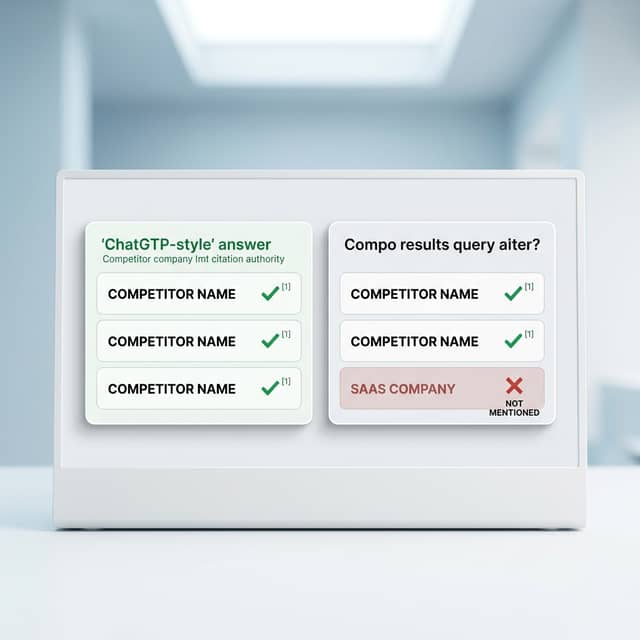
Quick answer: To get cited on Perplexity as a B2B SaaS brand, structure content for direct, factual answers, build third-party authority on sources Perplexity already trusts, and monitor which buyer questions currently name your competitors instead of you.
Introduction
Perplexity AI has become one of the most consequential answer engines for B2B buyers who research software solutions before ever speaking to a sales rep. Unlike traditional search results that serve ten blue links, Perplexity synthesizes a direct answer and attributes citations to the sources it trusts most, meaning the brands it cites capture buyer attention while uncited competitors simply do not exist in that conversation. For B2B SaaS companies that have invested heavily in Google rankings, this creates a growing blind spot: strong SEO performance does not automatically translate into Perplexity citations. The gap between ranking on page one and being recommended inside an AI-generated answer is where pipeline is quietly being won or lost.
Key Takeaway: To get cited on Perplexity as a B2B SaaS brand, you need content that is structured for direct answers, backed by third-party authority signals, and optimized for the specific way answer engines parse and select sources, not just optimized for Google's ranking algorithm.
Why Perplexity Citations Matter More Than Rankings for B2B SaaS
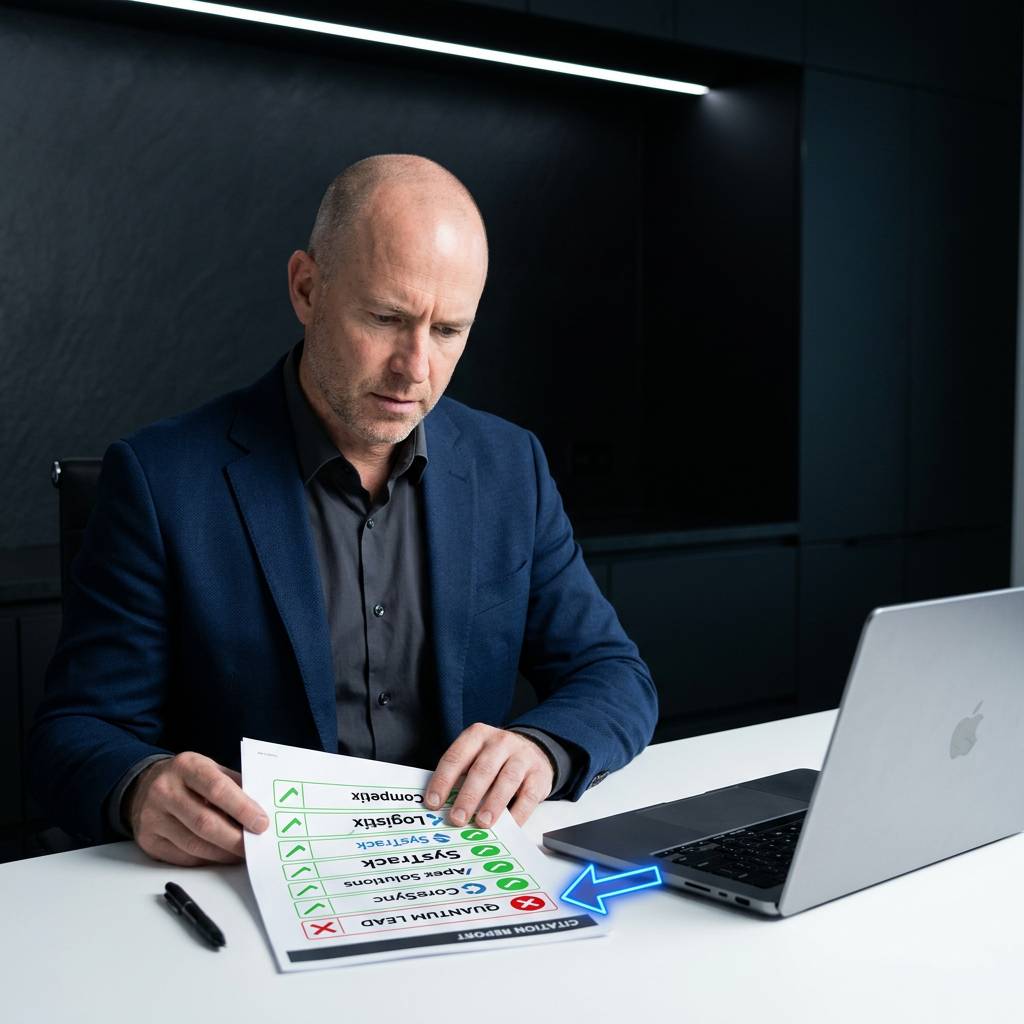
Traditional SEO earns you a position in a list. Perplexity AI recommendations earn you a position inside the answer itself, complete with a named citation that a buyer can click. That distinction reshapes how B2B decision-makers discover, evaluate, and shortlist software vendors during early-stage research.
How Buyers Use Perplexity Differently Than Google
When a VP of Operations types "best freight TMS for mid-market carriers" into Perplexity, the engine does not return a page of ads and organic links. It returns a synthesized paragraph naming specific tools, explaining why each fits, and linking directly to the sources it drew from. This means the buyer's first impression of your brand may be a citation inside a trusted answer, not a meta description they scroll past. Research shows that 90% of B2B buyers click on citations in AI-generated answers, making citation placement a direct pipeline driver. The implications are significant:
Trust transfer: Perplexity's citation acts as an implicit endorsement, giving the cited brand borrowed authority from the engine itself
Zero-click discovery: Buyers form shortlists before they ever visit your website because the answer engine has already positioned you
Competitor displacement: If your competitor is cited and you are not, the buyer may never even encounter your brand during the research phase
Higher conversion intent: Traffic from AI answer engines converts at roughly 4.4x the rate of standard organic search, according to Semrush data from 2026
AEO vs SEO: The Core Difference
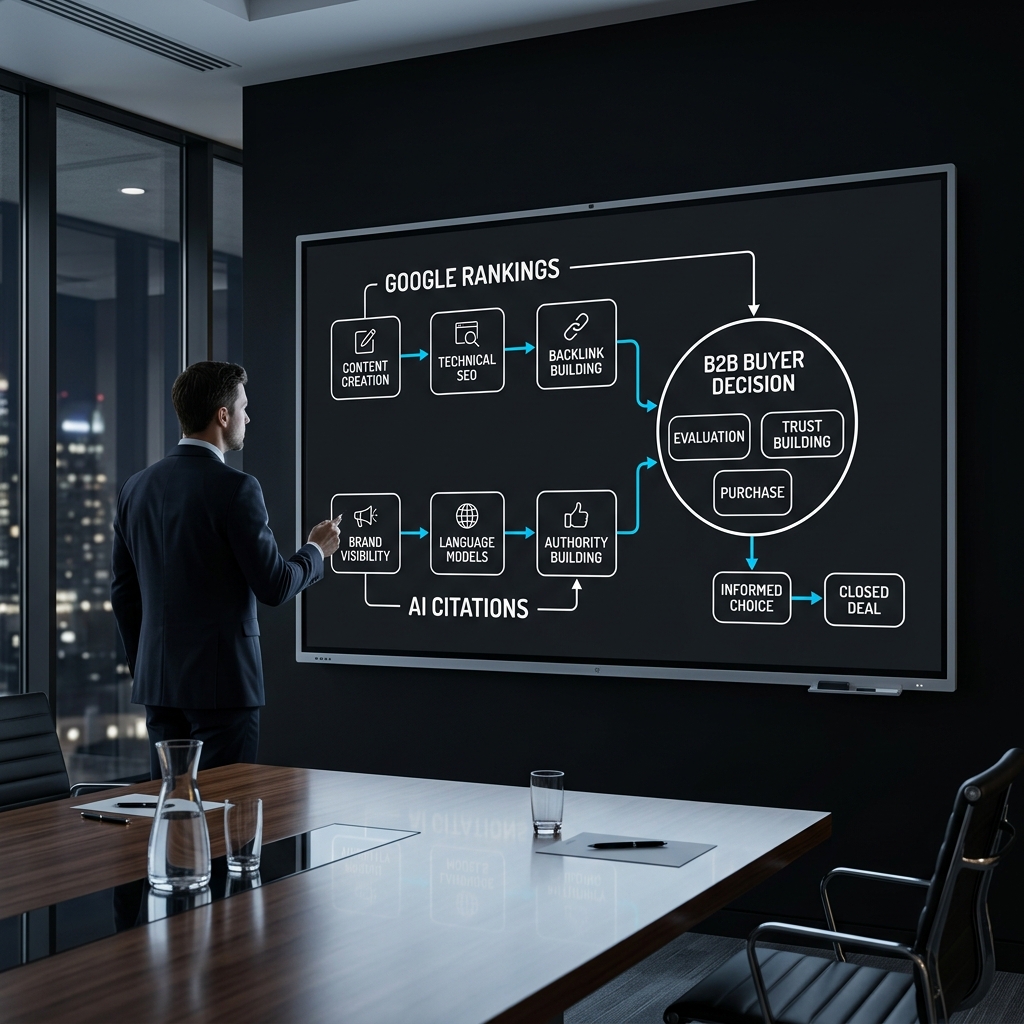
SEO optimizes content so that Google's algorithm ranks it highly based on backlinks, keyword relevance, and technical signals. Answer engine optimization targets a fundamentally different selection process: the AI model's decision about which source to cite when generating a direct answer. A page can rank first on Google for a query and still be ignored by Perplexity if it lacks the structural clarity, authority signals (see why AI models trust some citations over others), or factual density the model needs to extract a quotable passage. The table below breaks down the practical differences between optimizing for each channel.
Factor | Traditional SEO (Google) | Answer Engine Optimization (Perplexity) |
|---|---|---|
Goal | Rank on page 1 of search results | Get cited inside the generated answer |
Content format | Long-form, keyword-rich pages | Concise, factual, directly quotable passages |
Authority signals | Backlinks and domain authority | Third-party mentions on sites AI already trusts |
User experience | Click-through to your page | Brand exposure inside the answer itself |
Measurement | Rankings, organic traffic, CTR | Citation frequency, named mentions, referral quality |
The key takeaway is that both channels matter, but they reward different content characteristics. A perplexity SEO strategy that only mirrors your Google playbook will underperform because the selection logic is structurally different.

How to Optimize Content for Perplexity Citations: A Practical Playbook
Getting cited on Perplexity requires deliberate structural and strategic work across your own site and across the third-party ecosystem that AI models draw from. The following steps reflect how AI answer engines select and prioritize sources based on analysis of thousands of citations.
Step 1: Restructure Your Content for Direct Extraction
Perplexity favors content it can extract cleanly. That means your pages need to answer buyer questions (see buyer question research: the missing step in AEO strategy) in self-contained, factual passages rather than burying the answer beneath long introductions. Start by auditing your most important landing pages and blog posts for what could be called "citation readiness." Each page should contain at least one passage of two to four sentences that directly answers a specific question a buyer would ask. Use clear headers that mirror natural language queries, such as "What does [product] do?" or "How does [product] compare to [competitor]?"
Structure matters at the code level too. Clean semantic HTML, proper heading hierarchy, schema markup for FAQs and product information, and fast page loads all contribute to how easily an AI model can parse your content. If your website ranking pages are built primarily for human skimming with heavy imagery and minimal structured text, answer engines will struggle to extract anything citable.
Step 2: Build Authority Where AI Models Already Look
Perplexity does not only pull from your own domain. A significant portion of its citations come from third-party sources: review platforms like G2 and Capterra, industry publications, comparison articles, and community discussions on Reddit and LinkedIn. A study of AI citation patterns found that platforms like Reddit, Wikipedia, Amazon, Forbes, and Business Insider are among the most frequently cited sources across major answer engines. This means your AI-optimized content strategy must extend well beyond your blog.
Earning perplexity business citations requires building a presence on the exact sites these models trust. That includes maintaining updated and review-rich profiles on B2B review platforms, contributing expert commentary to industry publications, participating meaningfully in relevant Reddit threads and LinkedIn discussions, and securing mentions in recommendation-style content that third parties publish. Each of these touchpoints becomes a potential source Perplexity can cite, compounding your visibility over time.
Scaling Your Perplexity Citation Strategy
One-time optimization gets you started, but sustained citations require ongoing investment in content, authority building, and monitoring. The brands that dominate AI answers treat this as a compounding channel, not a one-off project.
Tracking and Measuring Citation Performance
Unlike Google Search Console, there is no native dashboard that shows how often Perplexity cites your brand. This makes tracking AI citations across every answer engine a manual process unless you use specialized tooling. Start by identifying the 20 to 30 highest-intent buyer questions in your category and running them through Perplexity weekly. Document which brands are cited, which sources are referenced, and where your content appears or does not appear.
This audit process is exactly what GoBlinkly automates as part of its managed AEO services. Their competitor visibility audit maps which buyer-intent queries cite competitors instead of you across every major answer engine, giving SaaS teams a clear picture of the citation gap before any optimization begins. That baseline becomes the scoreboard for measuring progress as citations compound month over month.
Why Managed AEO Outperforms DIY for Most SaaS Teams
The challenge with answer engine authority building is that it requires simultaneous execution across multiple fronts: site restructuring, content production, off-site authority campaigns, and ongoing citation monitoring. Most B2B SaaS marketing teams already have full plates managing demand generation, product marketing, and traditional SEO. Adding a sustained AEO program on top of that rarely gets the consistent attention it needs to produce results. GoBlinkly's Dual Channel Visibility Framework addresses this by treating SEO and AEO as a single managed engagement, where strong Google performance feeds the authority signals that answer engines use to select citations, and AEO wins deals that traditional search alone cannot reach.
Conclusion
Getting cited on Perplexity is not a matter of luck or simply having great content. It requires deliberate structural optimization of your site, strategic authority building on the third-party platforms AI models trust, and consistent monitoring to track where your brand appears and where it does not. The B2B SaaS brands that treat answer engine optimization as a core channel now will build a compounding advantage that late adopters will struggle to close. Whether you run this internally or work with a managed AEO partner like GoBlinkly, the critical first step is the same: audit the buyer questions that matter most in your category and find out who Perplexity is recommending today.
Frequently Asked Questions (FAQs)
How do you get cited on Perplexity?
You get cited by publishing content that directly answers buyer-intent queries in a structurally clear, factual format and by building authority on the third-party sources Perplexity already trusts.
How does Perplexity recommend sources?
Perplexity recommends sources by crawling the web in real time, evaluating content relevance, factual density, source authority, and structural clarity to select the passages it cites in generated answers.
Why does Perplexity cite certain companies over others?
Perplexity prioritizes companies that have clear, directly quotable content on their own sites and strong mentions across trusted third-party platforms like G2, industry publications, and community forums.
Can you improve Perplexity citations for your SaaS brand?
Yes, you can improve citations by restructuring site content for extraction, building review and editorial presence on platforms AI models reference, and consistently monitoring which queries name your competitors instead of you.
How do AI answer engines choose which sources to cite?
AI answer engines evaluate a combination of content structure, factual specificity, domain authority, third-party corroboration, and recency to determine which sources best answer a given query.
How do ChatGPT and Perplexity differ in how they cite sources?
ChatGPT citations rely heavily on training data and browsing plugins, while Perplexity performs real-time web searches for every query, making fresh and well-structured content more likely to earn a citation on Perplexity.
What is the best answer engine for B2B SaaS visibility?
Perplexity is currently the most citation-rich answer engine for B2B SaaS because it searches the live web and attributes named sources directly in its answers, giving cited brands immediate visibility during the buyer research phase.
About the Author
David Mercer is an AI Search and Content Strategist focused on helping B2B SaaS brands earn visibility across both traditional search and AI answer engines. His research-driven approach translates complex SEO, AEO, and technical search topics into actionable strategies grounded in industry data and real-world results.