Quick Answer
Google AI Overviews now answer buyer questions directly in the search results, naming a handful of vendors before anyone clicks through to a website. B2B SaaS brands get skipped because their content is not structured, sourced, or referenced in the third-party places AI models draw from, which is exactly the gap a managed AEO partner like GoBlinkly closes through its Dual Channel Visibility Framework and 90-Day Promise.
Introduction
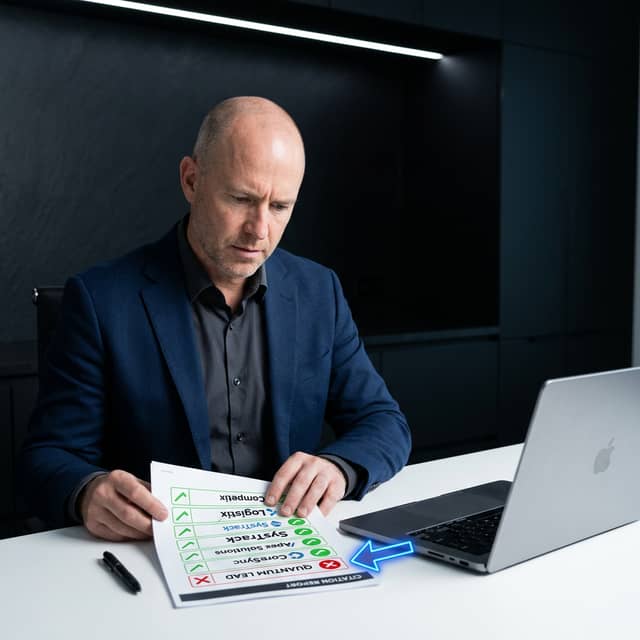
Buyers evaluating B2B software in 2026 rarely start with ten blue links anymore. They ask ChatGPT, Gemini, Perplexity, or Google itself, and an AI Overview names two or three vendors before a single link is clicked. That shortlist is now the shortlist, and if a SaaS brand is missing from it, the sales conversation is already lost to a competitor the buyer never had to compare on merit. The uncomfortable truth is that strong Google rankings no longer guarantee a mention, because AI systems select citations using signals most SEO programs were never designed to influence.
Key Takeaways:
Google AI Overviews and other answer engines now decide the vendor shortlist before buyers reach a website.
SaaS brands get skipped when their content lacks structured answers, third-party validation, and reference-grade sourcing.
A dual-channel approach that pairs SEO with answer engine optimization is what earns citations in Google, ChatGPT, Perplexity, and Gemini.

How Google AI Overviews Rewrote the B2B Buying Journey
Google AI Overviews are AI-generated summaries that appear above traditional results, pulling from a curated set of sources the model considers authoritative. For B2B SaaS, that means the buyer's first impression of the vendor landscape is written by a machine, and only the brands named inside that summary get considered. Recent B2B buying research shows discovery, evaluation, and shortlisting are now happening inside AI environments vendors do not own or control.
What Changed in the Search Result
The click-through economy has been replaced by a citation economy, where being named matters more than ranking first. The specific mechanics behind this shift are worth understanding before any fix can be implemented.
Answer-first layout: Google now leads with an AI summary that answers the query directly.
Named vendor lists: The overview surfaces two to five brands as recommended options.
Compressed research: Buyers no longer visit five vendor sites; they read the overview and move on.
Cross-engine parity: ChatGPT, Perplexity, and Gemini behave similarly, so exclusion is systemic.
The result is a smaller consideration set formed before any marketing touchpoint. For a deeper look at the underlying Google AI Overviews mechanics, the shift is structural rather than cosmetic.
Why AI Search Optimization Is Not Just SEO Renamed
Traditional SEO optimizes for a ranking algorithm that rewards keywords, backlinks, and page authority. Answer engine optimization optimizes for how large language models extract, trust, and cite sources, which is a different problem with different levers. A brand can rank in position one and still be absent from every AI answer, because the model chose a competitor with clearer structured answers or stronger third-party validation.
Why Your SaaS Is Getting Skipped in AI Answers
Exclusion from AI answers is rarely random. Models weight signals that most in-house teams have never systematically built, and competitors who invested early are compounding a lead every month.
The Signals AI Models Actually Weight
Understanding why ChatGPT cites competitors starts with recognizing that citation decisions rest on a specific set of inputs. According to B2B trust research, the share of B2B tech buyers trusting what they read in AI tools "very often" has more than doubled year over year, which raises the stakes on which sources models draw from.
Structured answers: Content that directly answers buyer questions in scannable format.
Third-party validation: Mentions on review sites, publications, and analyst sources the model already trusts.
Reference-grade depth: Pages built to be quoted, with specific data, definitions, and comparisons.
Consistent entity signals: Clear, repeated associations between the brand and its category across the web.
Freshness and maintenance: Regular updates that keep the source in the model's active retrieval set.
SEO Rankings Do Not Translate to AI Citations
Plenty of SaaS brands rank on page one for their category and are still invisible when a buyer asks Perplexity for the best option. That gap is what makes AI-driven buyer research a distinct discipline, and the mismatch is measurable across engines.
Below is a side-by-side view of how the two channels compare on the levers that matter to a B2B SaaS marketing strategy.
Dimension | Traditional SEO | Answer Engine Optimization |
|---|---|---|
Primary goal | Ranking on Google SERPs | Citations in AI answers |
Success metric | Position and organic traffic | Named mentions across engines |
Content style | Keyword-optimized pages | Reference-grade, quotable content |
Authority signal | Backlinks and domain authority | Third-party mentions on model-trusted sources |
Conversion behavior | Standard organic conversion rates | Significantly higher intent per visit |
The takeaway is that AEO vs traditional SEO is not a swap; it is an expansion, and brands that treat the two as one discipline miss the specific work required for each.
How GoBlinkly's Dual Channel Visibility Framework Closes the Gap
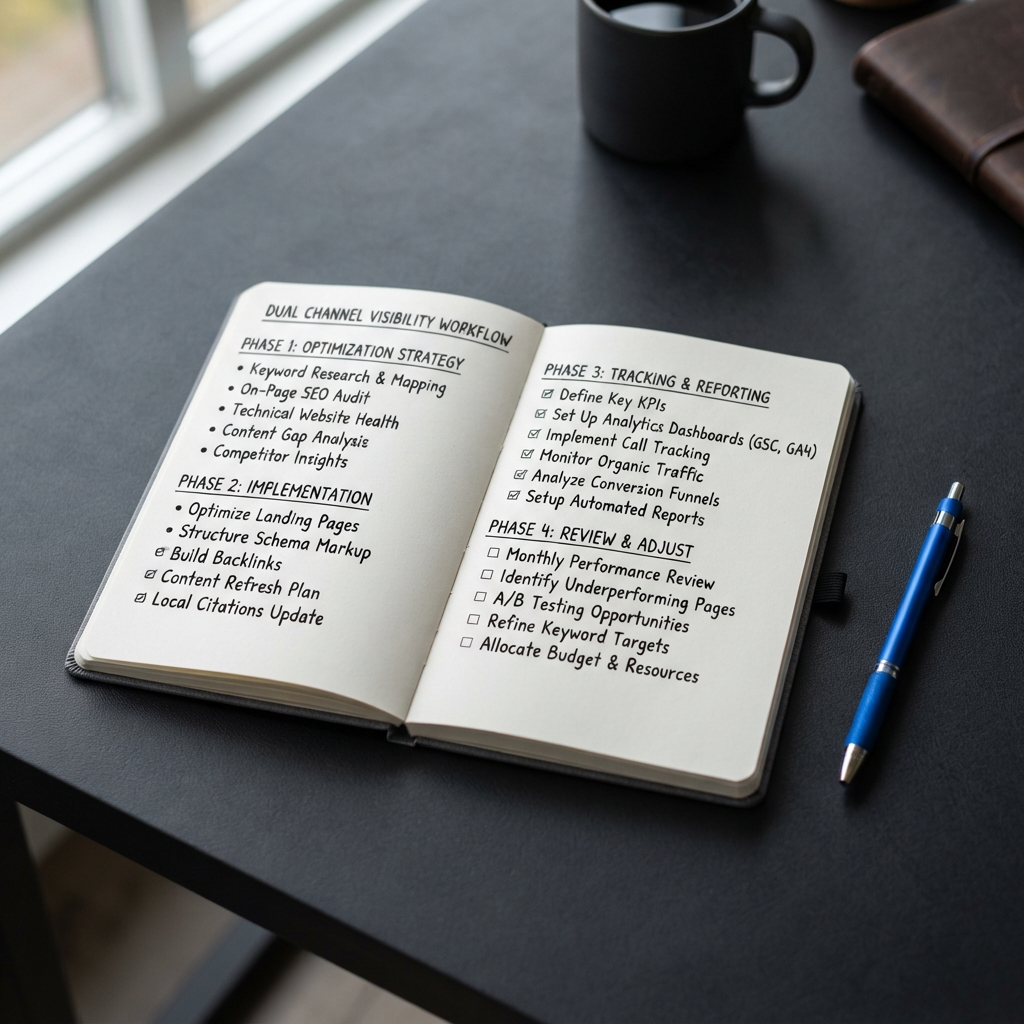
Fixing AI invisibility requires a system that treats Google and answer engines as connected surfaces rather than separate channels. GoBlinkly runs a fully managed program built around that principle, so the client grants access once, and the work of getting cited happens in the background.
What the Managed Engagement Actually Includes
The framework covers buyer-question research, on-site rebuilds, reference-grade content, and off-site authority on the exact sources AI models already trust. A Microsoft Clarity conversion study found Copilot referrals convert at 17x the rate of direct traffic and Perplexity at 7x, which is why capturing AI referral traffic is now a business-critical channel rather than a nice-to-have. Buyers who understand competitor AI citations see quickly why compounding matters.
First citations typically land in 30 to 60 days with GoBlinkly and grow from there as authority accumulates across engines. The engagement is transparent by design, with published pricing at $2,500, $4,500, and $7,500 per month tiers, no contact-sales wall, and clients own everything produced.
The 90-Day Promise and Proof
Every tier is backed by a written guarantee: if a client is not cited on ChatGPT for at least three industry-relevant, buyer-intent queries within 90 days, the engagement is refunded in full, and the client keeps all work produced. Truxweb, a GoBlinkly client, went from absent in AI answers to cited and generating its first AI-sourced leads within roughly three weeks. That is the outcome that matters, because it turns AI citation building into a pipeline rather than a vanity metric.

Conclusion
The B2B buying journey has moved upstream of the click, and the brands named in AI answers are the ones being shortlisted for real revenue. Waiting lets competitor citations compound, generalist SEO agencies optimize for the wrong algorithm, and in-house builds stall against product deadlines. A managed AEO program that treats SEO and answer engines as one dual-channel system is now the practical way to close the gap. The window to act is now, because every month of absence hands more of the AI-mediated shortlist to someone else.
Want to see exactly which buyer questions name a competitor instead of you? Book a free competitor visibility audit with GoBlinkly and get a category-by-category breakdown across ChatGPT, Perplexity, Gemini, and Google before you commit to anything.
Frequently Asked Questions (FAQs)
What is answer engine optimization?
Answer engine optimization is the practice of getting a brand cited as a recommended source inside AI-generated answers on engines like ChatGPT, Gemini, Perplexity, and Google AI Overviews (see content marketing that gets B2B SaaS cited by ChatGPT).
Why is my competitor cited in AI answers instead of me?
Competitors get cited when their content is more structured, more referenced by third-party sources, and better aligned with the buyer questions AI models are trained to answer.
Can GoBlinkly get my SaaS cited in 90 days?
Yes, GoBlinkly's 90-Day Promise guarantees citations on ChatGPT for at least three buyer-intent queries within 90 days or the engagement is refunded in full and the client keeps all work.
What is the difference between SEO and AEO?
SEO targets rankings and clicks on search engine results pages, while AEO targets named citations inside AI-generated answers where buyers form vendor shortlists.
How do I get cited in Perplexity answers?
Getting cited in Perplexity requires reference-grade content, structured buyer-question answers, and off-site mentions on the third-party sources Perplexity actively retrieves from.
Does GoBlinkly serve AI search optimization clients outside the United States?
Yes, GoBlinkly provides answer engine optimization for UK software firms, Canadian SaaS brands, and B2B companies across other English-language markets worldwide.
How does AI-driven lead generation work?
AI-driven lead generation captures buyers during their AI research phase, where citations in answer engines drive high-intent visits that convert at multiples of standard organic traffic.
About the Author
Aiden Cross is Head of AEO and Organic Growth, focused on helping B2B brands get discovered across Google, ChatGPT, Gemini, and Perplexity. He specializes in building scalable content systems, topical authority, and search intent alignment that turn AI visibility into measurable pipeline. His work centers on the frameworks and signals that determine which brands answer engines choose to cite.