Quick Answer: Website ranking in 2026 rests on three pillars: content that fully satisfies search intent, technical site health (Core Web Vitals, crawlability), and backlink quality over volume. AEO adds a parallel layer, since AI engines reward clear, extractable answers over just backlinks. A page can rank well on Google and still never appear in an AI answer, so both need attention.
Introduction
Most B2B SaaS teams know that website ranking matters, but few can pinpoint exactly which signals Google and AI answer engines reward in 2026. The gap between knowing SEO is important and understanding what to prioritize is where months of effort get wasted on tactics that no longer move results. Ranking algorithm factors have shifted significantly toward content authority, technical health, and how well a page satisfies buyer intent, while surface-level tricks like keyword density manipulation and bulk link purchases have become liabilities. The companies that improve website ranking consistently are the ones treating it as a system of compounding signals, not a checklist of one-time fixes.
Key Takeaway: The ranking signals that drive measurable organic growth in 2026 center on three pillars: technical site health, content that directly satisfies search intent, and off-site authority earned through quality over volume. Managing all three simultaneously is where most teams stall.

On-Page and Content Signals That Drive SEO Ranking
On-page SEO ranking is the foundation of visibility, but the bar for what counts as "optimized" has risen dramatically. Google's systems no longer reward pages that simply include a target keyword in the right places. They evaluate whether a page comprehensively answers the question behind the query, how clearly it structures that answer, and whether the content demonstrates genuine expertise.
What On-Page Signals Google Actually Weighs
The most impactful on-page factors in 2026 go well beyond title tags and meta descriptions. They reflect how well a page is built to serve a specific searcher and how much topical depth it covers relative to competing results. Here are the content ranking signals that consistently correlate with higher positions.
Search intent alignment: Pages that match the format and depth a searcher expects (comparison table, step-by-step guide, or definition) outrank those that guess wrong on intent.
Topical completeness: Covering related subtopics within a single page or across a tightly linked cluster signals authority on the subject, which Google rewards through on-page SEO best practices that go beyond individual keywords.
Structured headings and HTML semantics: Clean heading hierarchies and schema markup help search systems parse content, making it easier for both Google and AI engines to extract relevant answers.
First-party expertise signals: Original data, proprietary frameworks, or author credentials that demonstrate E-E-A-T (Experience, Expertise, Authoritativeness, Trustworthiness) directly influence how Google's ranking results guide and prioritize results.
Content Depth vs. Content Length
A common misconception is that longer content automatically ranks higher. In practice, depth and length are not the same thing. A 3,000-word article padded with generic filler will lose to a 1,200-word page that answers every angle of the query with precision. Google's helpful content systems actively demote pages that appear to exist primarily for search engine ranking rather than to serve the reader. The operational takeaway: write as much as the topic demands, then stop. Every section should address a distinct subtopic or question. If it doesn't, it's diluting the page's focus and weakening its performance.

Technical Health and Off-Site Authority
Even the best content will underperform if the site delivering it has technical problems that prevent crawling, indexing, or fast rendering. Similarly, Google still treats backlinks as one of the strongest external validation signals, but the quality threshold has risen sharply. These two pillars, technical SEO foundations and off-site authority, determine whether good content actually reaches the positions it deserves.
Technical SEO Ranking Factors That Matter Most
Technical SEO ranking covers everything that affects how search engines discover, render, and evaluate a site's pages. The signals below are not optional optimizations; they are prerequisites. A site with slow Core Web Vitals, broken internal links, or rendering issues is handicapped before content quality even enters the equation.
The following table compares the most critical technical factors and their relative impact on ranking performance, along with how commonly B2B SaaS sites get them wrong.
Technical Factor | Ranking Impact | Common SaaS Failure Point | Fix Difficulty |
|---|---|---|---|
Core Web Vitals (LCP, CLS, INP) | High, direct ranking signal | Unoptimized images, heavy JS frameworks | Medium |
Crawlability and indexation | Critical, prerequisite | Blocked resources in robots.txt, orphan pages | Low to Medium |
Mobile responsiveness | High, mobile-first indexing | Desktop-designed SaaS dashboards used as landing pages | Medium |
Internal linking structure | High, distributes authority | Flat architecture with no topical clustering | Low |
HTTPS and security headers | Moderate, trust baseline | Mixed content warnings, expired certificates | Low |
The highest-leverage fix for most B2B SaaS sites is internal linking structure. It costs nothing, requires no engineering resources beyond CMS access, and directly improves how search engines understand topical relationships across the site. Teams that build deliberate technical SEO strategies around crawl efficiency and link equity flow consistently outperform competitors who treat technical health as a one-time audit. In GoBlinkly's technical audits for B2B SaaS clients, more than 65% of sites have at least one critical indexation issue suppressing their highest-value pages, typically introduced through CMS updates, staging environment leaks, or misconfigured robots.txt files that went undetected for months.
How Backlink Quality Outweighs Quantity
The backlink ranking factor has evolved from a volume game to a quality and relevance game. Google's systems now evaluate the topical relevance of the linking domain, the editorial context of the link, and whether the backlink pattern looks natural or manufactured. A single link from a respected industry publication or a relevant B2B resource page carries more weight than dozens of links from generic directories or unrelated blogs.
For B2B SaaS companies in the United States and globally, competitor ranking analysis often reveals that the top-ranking pages in their category have fewer total backlinks but significantly higher domain-relevance scores on those links. The actionable shift: stop chasing link volume and start earning placements on the Ahrefs' 2026 guide to AI overview citations in the category.
AEO and the New Layer of Visibility
Answer Engine Optimization represents a fundamentally different visibility channel than traditional Google ranking, and the signals that drive citations in AI answer engines like ChatGPT, Perplexity, and Gemini overlap with but are not identical to Google ranking factors. Understanding both is no longer optional for B2B SaaS teams that want to capture buyers during the AI research phase.
Where AEO and Traditional SEO Diverge
Traditional search engine ranking rewards pages that satisfy a query within Google's index. AI answer engines work differently: they synthesize answers from training data, real-time retrieval, and content structured for AI extractability, then cite the sources they trust most. This means a page can rank well on Google but never appear in an AI-generated answer, and vice versa. The table below breaks down the key differences between how each channel evaluates content.
Signal Category | Traditional SEO (Google) | AEO (AI Answer Engines) |
|---|---|---|
Primary goal | Rank a URL on a SERP | Get cited as a trusted source in an AI answer |
Content format | Comprehensive pages optimized for keywords | Clear, extractable statements that can be quoted directly |
Authority signals | Backlinks, domain authority, E-E-A-T | Brand mentions across trusted third-party sources, entity recognition |
Technical requirements | Crawlability, Core Web Vitals, schema | Structured data, clean HTML, AI bot access permissions |
Measurement | Rankings, clicks, impressions | Citation frequency, mention context, recommendation positioning |
The practical takeaway is that AEO vs traditional SEO is not an either/or decision. Both channels feed each other. Strong SEO content that earns backlinks and brand mentions simultaneously builds the trust signals AI engines rely on when choosing which brands to recommend. Teams that treat these as separate projects end up duplicating effort or, worse, optimizing for one channel while starving the other.
Why Most Teams Struggle to Execute Both
The challenge for B2B SaaS companies is operational, not strategic. Most marketing teams understand that search ranking and AI citations both matter. The breakdown happens in execution: maintaining SEO content that ranks on both Google and AI requires ongoing content production, technical monitoring, backlink acquisition, and citation tracking across multiple engines simultaneously. This is where a managed approach like GoBlinkly's dual-channel framework becomes relevant. By handling buyer-question research, site optimization, content production, and off-site authority building as a single integrated system, teams avoid the fragmentation that causes most in-house efforts to stall after the initial audit.
GoBlinkly's model specifically targets the compounding nature of these signals, where each month's work amplifies the last rather than starting from scratch. GoBlinkly's ranking signal audits for B2B SaaS clients consistently show that brands managing all five technical, on-page, backlink, AEO, and citation signals as a unified system outrank single-channel competitors within 90 days of launch, not because of any single tactic, but because compounding removes the ceiling that isolated optimization creates.
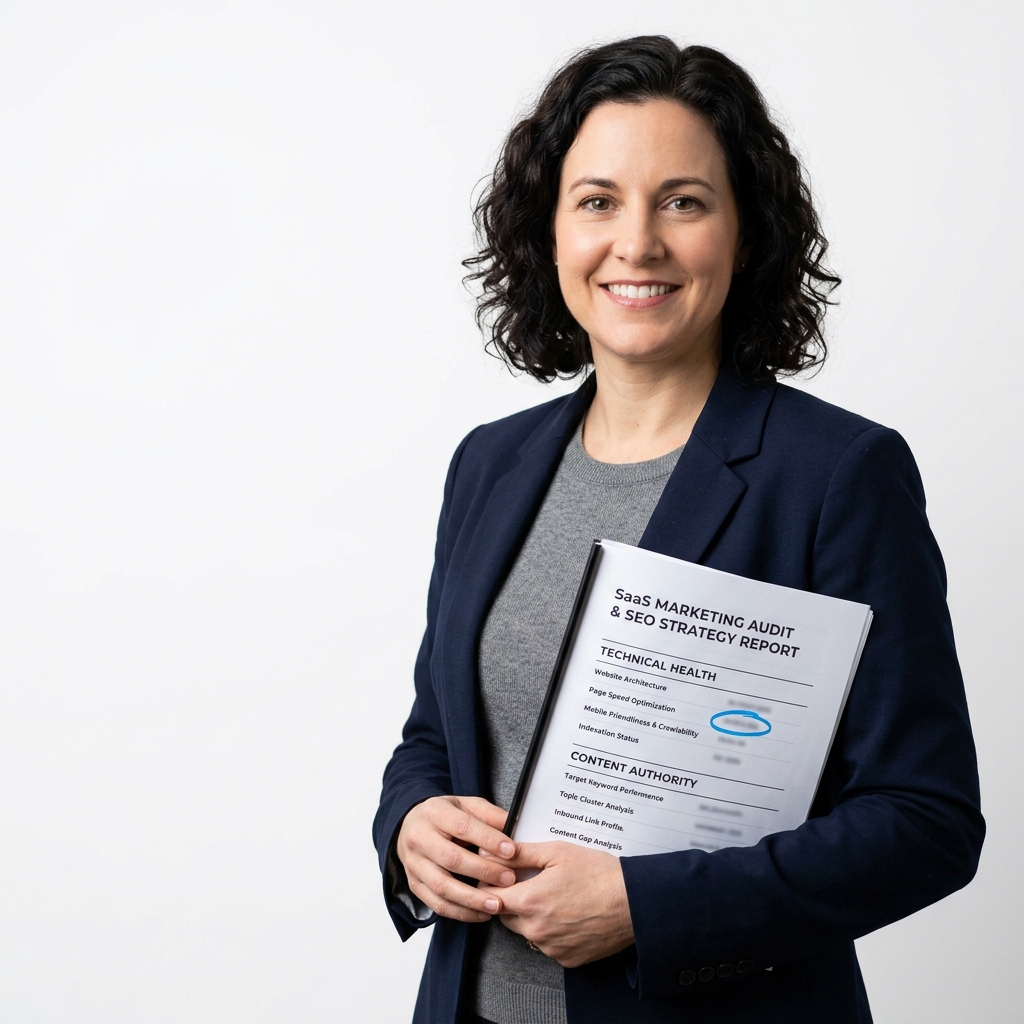
Conclusion
The website ranking signals that matter in 2026 are not mysterious, but they are interconnected. On-page content depth, technical site health, quality backlinks, and AI citation readiness all feed into a single system that either compounds over time or stalls from neglect. B2B SaaS teams that treat these signals as isolated projects will continue to see inconsistent results, while those that manage them as a unified strategy will pull ahead in both Google ranking and AI visibility. The best time to audit where these signals stand for a specific site is before competitors finish building their own compounding advantage.
B2B SaaS teams ready to close ranking gaps should follow this sequence:
Run a technical audit using Screaming Frog or Sitebulb to identify crawl errors, Core Web Vitals failures, and orphan pages -- fix the blockers before producing new content.
Map your top 10 target queries to specific pages and confirm each page opens with a direct answer, uses descriptive H2 headings, and includes schema markup.
Audit your internal link structure to ensure every important page receives at least three contextual inbound links from topically related pages.
Identify the two or three domains in your category that consistently earn backlinks from respected industry sources and reverse-engineer their link acquisition approach.
Run a monthly citation audit across ChatGPT, Perplexity, and Gemini to track whether your brand appears alongside Google rankings or is invisible in AI-driven buyer research.
About the Author: David Kross is Content Operations Strategist at GoBlinkly, where he leads website ranking and content authority programs for B2B SaaS companies. He specializes in helping software brands build compounding visibility across both Google search rankings and AI engine citations through structured, done-for-you execution.
Frequently Asked Questions (FAQs)
How do I improve my website ranking?
Focus on aligning content with search intent, fixing technical SEO issues like Core Web Vitals and crawlability, and earning backlinks from topically relevant domains rather than chasing volume.
What affects website ranking?
Google evaluates hundreds of factors, but the most impactful are content relevance and depth, technical site health, backlink quality, user experience signals, and E-E-A-T indicators.
How long does it take to rank a website?
New pages typically take 3 to 6 months to reach stable positions, though highly competitive B2B SaaS keywords can take 6 to 12 months of consistent optimization and authority building.
Why did my website ranking drop?
Ranking drops are most commonly caused by algorithm updates that reclassify content quality, technical issues like broken pages or slow load times, lost backlinks, or competitors publishing stronger content on the same topic.
Can I improve my ranking without backlinks?
Some improvement is possible through strong on-page optimization and technical health, but backlinks remain one of the strongest external trust signals, and competitive categories are extremely difficult to win without them.
How does answer engine optimization affect ranking?
AEO does not directly change Google rankings, but the structured content and brand authority signals it builds simultaneously strengthen both traditional search performance and AI citation frequency.
Which is better, AEO vs traditional SEO for ranking?
Neither is better in isolation; traditional SEO drives organic search traffic while AEO captures AI-driven buyer research, and the most effective B2B SaaS strategies treat them as complementary channels that reinforce each other.