Quick Answer
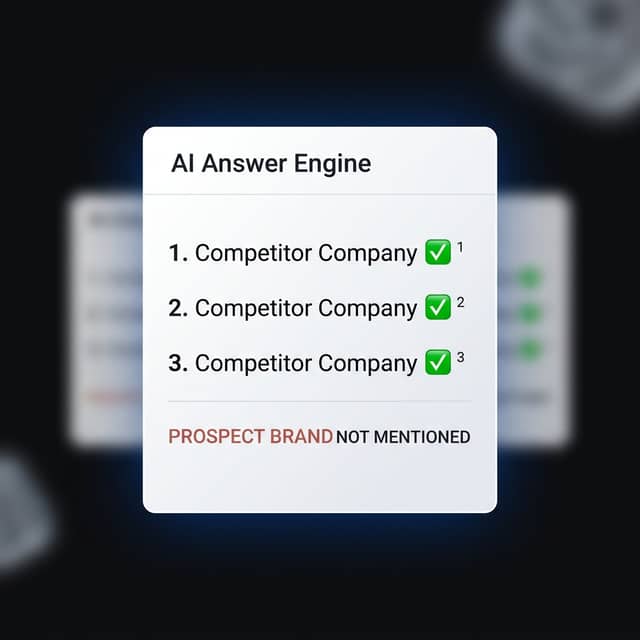
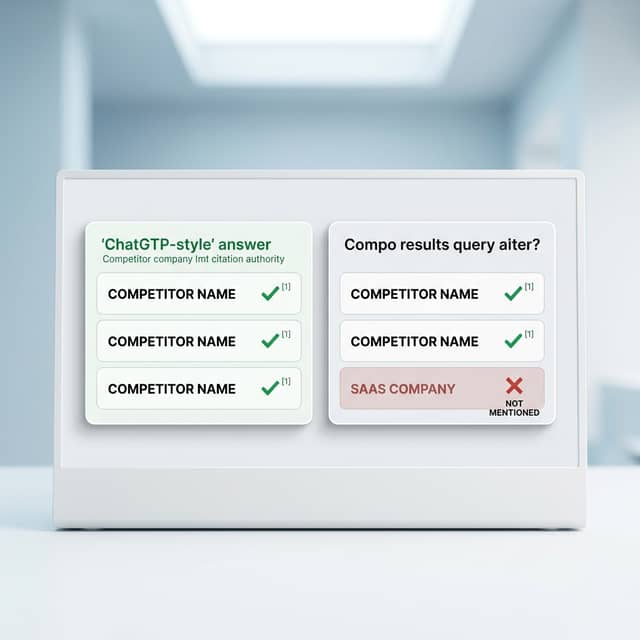
The defining AI trend reshaping B2B SaaS in 2026 is that buyers now ask ChatGPT, Claude, Perplexity, and Gemini for vendor recommendations before ever running a Google search or booking a demo (see AI trends reshaping B2B buyer research). Brands cited inside those AI answers capture qualified pipeline early, while brands absent from them lose deals they never knew existed. Winning this channel requires answer engine optimization, not more traditional SEO alone.
Introduction
Buyer behavior in B2B SaaS has quietly crossed a threshold this year. Enterprise buyers now open an AI chat window before a search tab, and the vendor names surfaced in that first response set the shortlist long before marketing teams see any signal in their analytics. The shift is not incremental; it is structural, because trust evaluation has moved from human-curated review sites and Google's first page to language models trained on which sources deserve to be quoted. Recent research from Harvard Business Review found that generative AI is disrupting B2B buying decisions at the earliest evaluation stages, where discovery once lived exclusively on search engines. The compounding effect is severe: brands cited early become the default suggestion, and every additional citation reinforces the next.
Key Takeaways:
AI answer engines have become the first stop in B2B SaaS vendor research, replacing Google as the initial discovery layer.
Early AI citations compound into a durable recommendation advantage that traditional SEO cannot replicate on its own.
Answer engine optimization now works alongside SEO as a required channel, not an experimental one.
Quick Questions Answered
What are the latest AI trends in B2B?
Buyers now treat generative AI as a trusted advisor during early vendor research, shifting influence from rankings to citations.
Can AI search replace traditional SEO?
No, AI search layers on top of SEO, since strong SEO signals feed the authority pool models draw from.
How does AI-sourced traffic compare to organic?
AI-sourced traffic converts at roughly 4.4x organic search because buyers arrive pre-qualified.
What metrics matter for AI search optimization?
Citation frequency per buyer question, share of voice across major engines, and AI-sourced demo conversion rate.

How AI Answer Engines Rewired the B2B Buyer Journey
The traditional B2B funnel assumed a buyer would type a question into Google, click three or four blue links, gate themselves behind an ebook, and eventually land on a demo request form. That sequence is collapsing. Buyers in 2026 open ChatGPT or Claude, describe their problem in plain language, and expect a filtered shortlist of two to four vendors back. The middle of the funnel has effectively been outsourced to a language model.
The New Discovery Layer
Enterprise AI adoption trends show buyers treating chat interfaces as senior colleagues rather than search tools, and this changes how they weigh recommendations. When a model names a vendor, the buyer accepts that name with a level of trust that no paid ad ever earned. This is the core of the shift, and it produces a specific set of behavioral changes worth naming clearly.
Compressed research cycles: Buyers arrive at demo calls having already ruled in or out most of the market based on AI conversations.
Pre-qualified intent: AI-sourced leads describe use cases in the vendor's own language because they absorbed it from AI summaries.
Invisible losses: Deals disappear before a CRM entry exists, because the buyer never visited the site to be tracked.
Reference-grade content wins: Content built to be quoted outperforms content built to rank, because models cite what they can parse cleanly.
Recommendation lock-in: Once cited, a brand tends to stay cited, giving early movers a compounding advantage.
Why Traditional SEO Alone No Longer Captures Buyers
Ranking first on Google still matters, but it is no longer sufficient. A buyer who never reaches the search results page cannot see your ranking, and that is exactly what happens when the AI answer resolves the question in one turn. This is where the divergence between AI-sourced and organic-sourced pipeline shows up in reporting, and where an AI marketing strategy for SaaS founders starts to matter more than another round of keyword expansion. Semrush data from 2025 pegs AI referral conversion at roughly 4.4x organic search, meaning fewer sessions produce more revenue when the traffic originates from a model recommendation.
AEO vs Traditional SEO: What Actually Belongs in Your 2026 Plan
The debate over answer engine optimization versus classic search optimization has resolved into a practical answer: both, with different jobs. Traditional SEO earns the authority signals models use to decide who to quote, and AEO structures your presence so those quotes actually happen. G2's most recent buyer research, covered in their 2026 AI Search Insight Report, shows the majority of surveyed B2B software buyers now start vendor research inside an AI chatbot rather than a search engine, confirming the channel shift is no longer speculative.
Side-by-Side Comparison
The clearest way to see where each channel fits is to compare their mechanics directly. The table below breaks down how each approach behaves across the criteria that matter for a B2B SaaS pipeline.
Criteria | Traditional SEO | Answer Engine Optimization |
|---|---|---|
Primary goal | Rank on Google SERPs | Get cited inside AI answers |
Success metric | Position, clicks, sessions | Citations per buyer question |
Content style | Keyword-optimized long-form | Reference-grade, quotable claims |
Time to first result | 4 to 9 months | 30 to 60 days for first citations |
Lead quality | Mixed, top-of-funnel heavy | Pre-qualified, high-intent |
Compounding effect | Moderate, algorithm-dependent | Strong, citations reinforce each other |
The takeaway is that SEO still feeds the authority pool models draw from, but AEO is where trust conversion actually happens in 2026. Teams treating them as competing budgets miss the point; the dual-channel approach is what produces defensible visibility, a pattern explored further in AEO versus SEO for AI visibility.

Building an AI-First Content Marketing Framework
Getting cited by AI answer engines is a specific discipline, not a byproduct of publishing more blog posts. The framework that produces citations rewards clarity, evidence, and structural cleanliness over word count and keyword density. It also treats off-site authority as the input models weigh most heavily when deciding whose claims to trust.
What Reference-Grade Content Looks Like
Content built for AI citation reads differently. Claims are specific, sourced, and phrased in ways that survive extraction from context. A model needs to lift a sentence from your page and paste it into an answer without adding qualifiers, which means vague benefit language and gated assets both fail immediately. This is why mastering AI citations depends more on editorial discipline than on volume. Guidance from Backlinko on answer engine optimization reinforces this: pages that answer discrete buyer questions with direct, parseable claims outperform sprawling pillar pieces when the goal is model quotation.
Measuring What Actually Matters
Traditional dashboards do not surface AI visibility because most analytics platforms cannot see conversations happening inside a chat interface. New metrics have to enter the reporting cadence, including citation frequency per buyer question, share of voice across ChatGPT, Claude, Perplexity, and Gemini, and the ratio of AI-sourced demos to organic ones. Teams tracking these signals catch shifts weeks earlier than teams still reporting on rankings alone, and they can respond before competitors accumulate an unrecoverable lead. GoBlinkly builds these tracking layers into every engagement so clients see exactly which questions surface them and which surface a competitor.

Conclusion
The behavioral shift is already priced into 2026 pipeline numbers, whether marketing teams are measuring it or not. Buyers now trust AI answer engines to filter their vendor shortlist, and the brands cited inside those answers own the discovery layer that used to belong to search. Teams that treat AEO as a niche experiment will find themselves absent from conversations where deals get shaped, while teams that build reference-grade content and off-site authority in parallel will compound their advantage every quarter. The playbook is available, the tracking is possible, and the window for early-mover citations is still open. Waiting another cycle to act is the most expensive option on the table.
Ready to see which buyer questions name a competitor instead of you across every major AI engine? Book a free visibility audit with GoBlinkly and get a clear map of where your brand needs to show up next.
Frequently Asked Questions (FAQs)
What are the latest trends in artificial intelligence for B2B?
The dominant trend is buyers using generative AI as a trusted advisor during early vendor research, which shifts influence away from search rankings and toward AI citations.
How can B2B SaaS companies improve AI visibility?
Companies improve AI visibility by publishing reference-grade content with quotable claims, earning authority on third-party sources models already trust, and structuring pages so answer engines can parse them cleanly, as detailed in resources on large language model brand recommendations.
Why should SaaS leaders invest in AI authority?
AI authority compounds, so leaders who earn citations early become the default recommendation and lock competitors out of buyer conversations they never see.
Can AI search engines replace traditional Google SEO?
AI search engines are not replacing SEO but layering on top of it, because strong SEO signals feed the authority pool that models draw from when deciding who to cite.
How does AI-sourced traffic compare to organic search?
AI-sourced traffic converts at roughly 4.4x organic search according to Semrush 2025 data, because buyers arrive pre-qualified and already aligned with your value proposition.
How to optimize content for Gemini and Claude?
Optimize by writing direct, evidence-backed answers to specific buyer questions, using clean HTML structure and citing credible sources, which is easier once you understand how AI search engines compared reveal each engine's preferences.
What metrics matter for AI search engine optimization?
Citation frequency per buyer question, share of voice across major answer engines, and AI-sourced demo conversion rate matter more than traffic or rankings.
About the Author
Ethan Brooks is an AI Content Strategy Specialist focused on helping B2B SaaS teams translate AI and search engine shifts into practical content workflows that produce measurable pipeline. His work centers on search intent, content automation, and the operational side of getting brands cited inside AI answers.