Quick answer: Answer engine optimization structures your brand's content and third-party presence so AI tools like ChatGPT and Perplexity cite you directly, capturing buyers earlier than traditional SEO by earning a spot in their shortlist before they ever visit a website.
Introduction
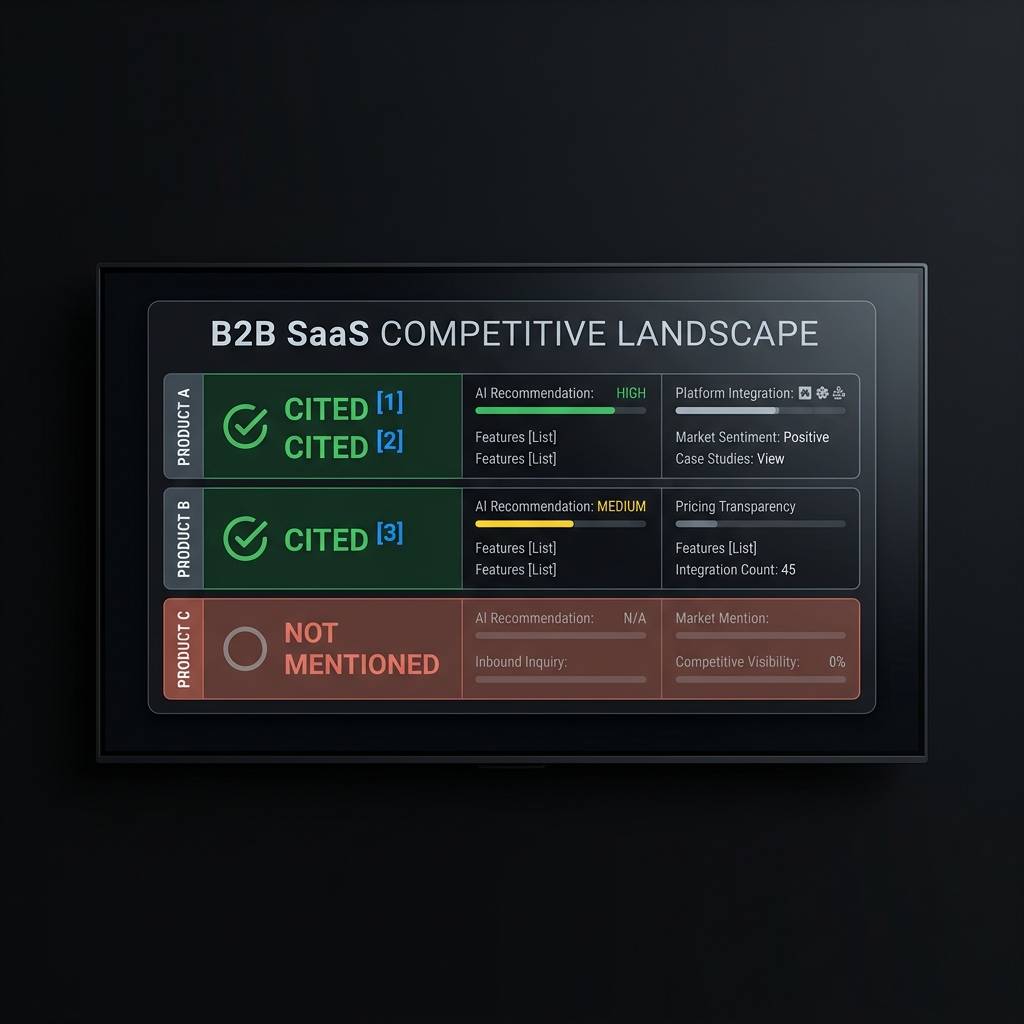
Answer engine optimization is the practice of structuring your brand's digital presence so that AI tools like ChatGPT, Claude, Perplexity, and Gemini cite you as a trusted recommendation when buyers ask who to use. Unlike traditional SEO, which focuses on ranking in a list of blue links, AEO targets the moment a buyer receives a direct answer and a shortlist forms before they ever visit a website. For B2B SaaS companies, this shift matters because the research phase is increasingly happening inside AI conversations, not Google results pages. Companies that earn those citations capture demand at the earliest possible stage, while those that do not are simply absent from the buyer's consideration set.
Key Takeaway: Answer engine optimization positions your brand to be named and recommended inside AI-generated answers, capturing buyers during their research phase and directly influencing pipeline before a sales conversation begins.
How AI Answer Engines Decide What to Recommend
Understanding what drives AI citations requires dropping the old mental model of keywords and backlinks as the primary levers. AI models synthesize information from across the web, weigh source credibility, and generate a response that directly answers the user's question. The signals they use overlap with SEO but diverge in important ways.
The Ranking Factors Behind AI Citations
AI answer engines evaluate a combination of content quality, topical authority, and third-party validation when deciding which brands to name. Research analyzing AI citation patterns across Reddit, YouTube, and LinkedIn has revealed consistent patterns in what earns a mention. The key answer engine ranking factors include:
Topical Authority: Brands that publish comprehensive, focused content around a defined category are cited far more often than those with scattered coverage
Third-Party Presence: Being mentioned on review platforms, industry publications, and community sites signals credibility to models that synthesize multiple sources
Content Clarity: Pages structured with direct, parseable answers to specific buyer questions are easier for AI to extract and cite
Source Freshness: Models favor recently updated content, especially for rapidly evolving categories like software
Why Traditional SEO Alone Falls Short
A page ranking number one on Google does not guarantee it will be cited in an AI answer. Citation distribution data shows that while there is overlap between search visibility and AI citations, the correlation is far from one-to-one. AI models pull from a broader set of sources, including community forums, comparison sites, and expert roundups that may not rank highly in traditional search. For SaaS companies, this means a strong Google presence is necessary but insufficient. The distinction between SEO and AEO comes down to intent: SEO optimizes for algorithmic ranking, while AEO optimizes for being the answer a model trusts enough to recommend by name.

AEO vs SEO: Where the Approaches Diverge
SaaS decision-makers evaluating an AI citation strategy need a clear picture of how AEO compares to the SEO playbook they already know. The two disciplines share a foundation of quality content and technical hygiene, but their objectives, tactics, and success metrics differ substantially.
A Side-by-Side Breakdown
The following table highlights the practical differences between traditional SEO and answer engine optimization across the dimensions that matter most for B2B pipeline generation.
Dimension | Traditional SEO | Answer Engine Optimization |
|---|---|---|
Primary Goal | Rank in search results pages | Get cited as a recommendation in AI answers |
Success Metric | Rankings, organic traffic, CTR | Citations, brand mentions, AI-sourced pipeline |
Content Format | Keyword-targeted pages and posts | Reference-grade, question-answering content |
Off-Site Focus | Backlinks from authoritative domains | Presence on sources AI models already trust (reviews, forums, expert roundups) |
Buyer Touchpoint | Buyer clicks a link, lands on your site | Buyer hears your name before visiting any site |
Competitive Moat | Rankings can shift with algorithm updates | Citations compound and are harder for competitors to displace |
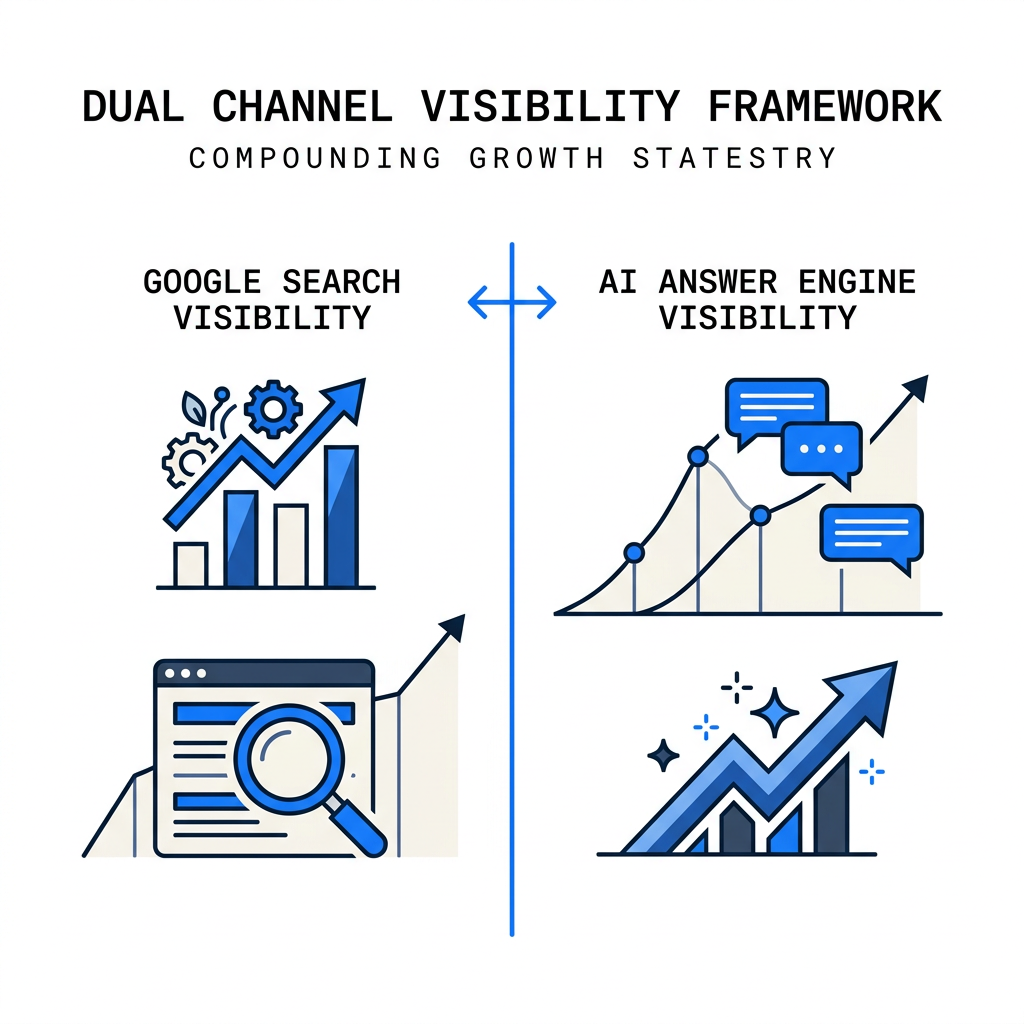
The most important takeaway here is that AEO captures buyers earlier in their research process. When a prospect asks ChatGPT "What is the best freight matching platform for mid-market shippers?" and your competitor is named but you are not, no amount of Google ranking fixes that gap. A dual-channel approach, treating strong SEO as a foundation for earning AI citations, is the most defensible strategy for SaaS companies operating in competitive categories.
What This Means for North American and European SaaS
The dynamics apply broadly, but answer engine optimization for North American SaaS companies often centers on ChatGPT and Perplexity, which dominate buyer research in English-language markets. European tech companies face an additional layer: AI search engines vary in adoption across regions, and multilingual content strategies become essential when targeting buyers in Germany, France, or the Nordics. Regardless of geography, the core principle holds. The companies that show up in AI answers are the ones that shape the buyer's shortlist, and everyone else is competing for whatever attention remains.
How to Build an AEO Strategy That Earns Citations
Knowing what AEO is matters less than knowing how to execute it. A credible AI search optimization effort involves four interconnected workstreams: buyer question research, content creation, on-site structure, and off-site authority building.
The Execution Playbook
Start with buyer question research. Identify the exact queries your target buyers are typing into ChatGPT, Perplexity, and Gemini. These are not traditional SEO keywords. They are full-sentence questions like "What CRM works best for a 50-person sales team selling into healthcare?" Map those questions to your product's strongest positioning, then build content that answers them with the clarity and specificity that AI models need to extract a recommendation.
Next, restructure your site so answer engines can parse it cleanly. This means clear heading hierarchies, structured data where appropriate, and content organized around topics rather than scattered across disconnected blog posts. HubSpot's guide to topic clusters and AI citations confirms that content structure and topical clustering are foundational to earning visibility in AI-generated results. Simultaneously, invest in off-site authority by building presence on the third-party platforms that AI models already trust: G2, Capterra, industry publications, relevant Reddit communities, and expert roundups. Models weigh these external signals heavily when deciding whether to name a specific brand.
Measuring What Matters
Traditional SEO metrics like organic traffic and keyword rankings do not capture AEO performance. The primary metric is citation tracking: how often, where, and in response to which queries your brand is named by AI engines. Tools that track ChatGPT citations and monitor brand mentions across Perplexity, Gemini, and Claude give you a clear picture of visibility over time. GoBlinkly, for example, tracks citations across all four major engines and ties them directly to pipeline impact, giving SaaS teams a measurable link between AEO activity and revenue. The compounding nature of citations makes early investment disproportionately valuable. First citations typically land within 30 to 60 days of a focused effort and expand from there as content earns more references across the web.
Conclusion
Answer engine optimization is not a speculative channel. It is a measurable, compounding system for getting your brand recommended at the exact moment buyers are forming their shortlist inside AI tools. The companies that invest now in buyer question research, reference-grade content, structured sites, and off-site authority will own a competitive position that grows harder to displace with every passing month. For B2B SaaS leaders evaluating where to allocate marketing resources, GoBlinkly offers a fully managed approach built specifically to deliver AI citations and the pipeline that follows. The question is not whether AI will reshape how buyers discover software. It already has.
Frequently Asked Questions (FAQs)
What is answer engine optimization?
Answer engine optimization is the practice of optimizing your brand's content, site structure, and third-party presence so that AI tools like ChatGPT, Perplexity, Claude, and Gemini cite you as a trusted recommendation in response to buyer queries.
How do answer engines choose what to recommend?
AI answer engines synthesize information from multiple web sources, weighing topical authority, content clarity, source freshness, and third-party validation to determine which brands are credible enough to name in a direct recommendation.
How is answer engine optimization different from SEO?
SEO focuses on ranking pages in search engine results, while AEO focuses on earning named citations inside AI-generated answers, targeting a different touchpoint earlier in the buyer's research process.
How long does it take to get cited in AI answers?
Most focused AEO efforts produce initial citations within 30 to 60 days, with visibility compounding over the following months as content and off-site authority accumulate.
What content strategy works for answer engines?
Content built around specific buyer questions, structured with clear headings and direct answers, and supported by topical depth across a defined category consistently outperforms keyword-first content in earning AI citations.
Is answer engine optimization better than paid search for B2B SaaS?
AEO and paid search serve different stages of the funnel, but AI referrals convert at roughly 4.4x the rate of organic search, making AEO a high-leverage investment for companies that want to influence buyers before paid ads reach them.
What answer engine optimization services exist in North America?
Specialized AEO agencies now offer fully managed services that handle buyer question research, content creation, site optimization, and citation tracking specifically for B2B SaaS companies targeting AI visibility across ChatGPT, Perplexity, and other major engines.
About the Author
Aiden Cross is the Head of AEO and Organic Growth at GoBlinkly, focused on helping B2B SaaS brands get discovered across Google, ChatGPT, Gemini, and Perplexity. He specializes in building scalable AEO systems that align content, site architecture, and authority signals with how modern answer engines select their sources.