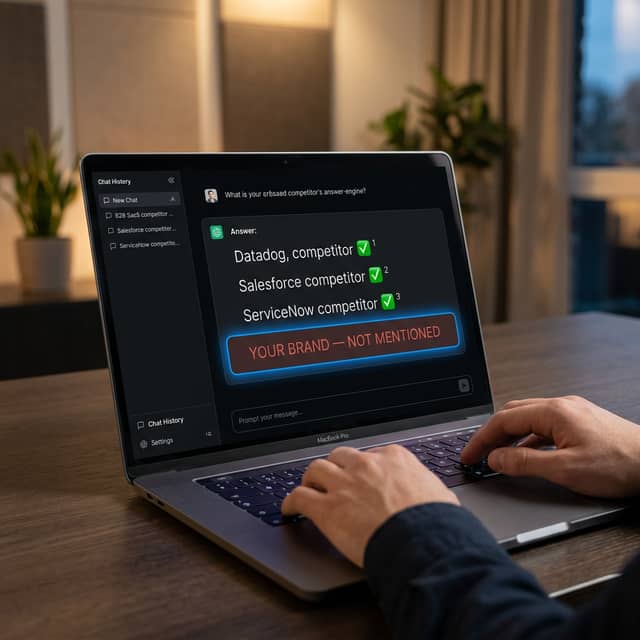
Quick answer: To appear in Gemini answers, B2B SaaS companies need structured, authoritative content that directly answers buyer questions, combined with off-site trust signals on sources Gemini already references, since Gemini is used by 62% of B2B buyers for work and 61% for product research
Introduction
When a B2B buyer asks Gemini AI which project management tool or CRM to trust, the brands that appear in Gemini's answers are the ones that enter the consideration set. Every brand left out of that response is effectively invisible during a critical stage of the buying journey. For B2B SaaS companies still focused exclusively on Google rankings, this is a growing blind spot: Gemini is already shaping purchase decisions before prospects ever reach a website or book a demo. Earning Gemini citations requires a deliberate approach to content structure, topical authority, and third-party credibility that differs meaningfully from traditional SEO.
Key Takeaway: To appear in Gemini answers for buyer-intent queries, B2B SaaS companies need to build structured, authoritative content that directly answers the questions buyers ask, while establishing off-site trust signals on sources Gemini already references.
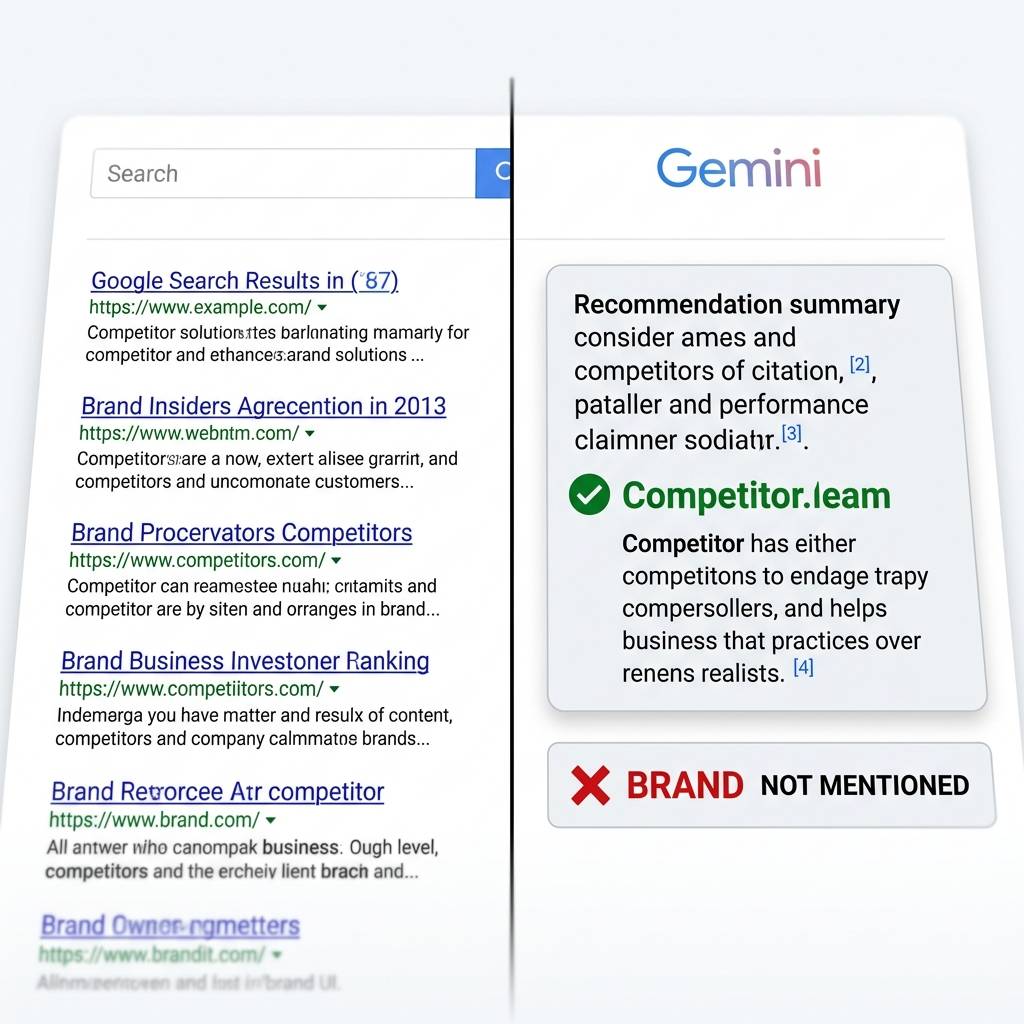
Why Gemini Citations Matter for B2B SaaS Visibility
Gemini is not just another chatbot. It is deeply integrated into Google's ecosystem, which means its recommendations surface inside Google Search, Workspace, and Android devices used by millions of business professionals daily. For SaaS companies, this creates a discovery layer that sits upstream of traditional search results, and ignoring it means ceding ground to competitors who show up when buyers ask for guidance.
How B2B Buyers Are Using Gemini for Software Research
Recent survey data confirms what many SaaS marketers suspected: AI tools are already embedded in the B2B buying process. SmarterX's 2026 research found that 42% of business professionals report using Gemini, with strong adoption for both work-related tasks and product research. Buyers are asking Gemini questions like "best compliance software for mid-market companies" or "which HR SaaS tools integrate with Slack," and the brands cited in those responses gain an outsized advantage. Here is what that looks like in practice:
Shortlisting: Buyers use Gemini to narrow options before visiting any vendor website, making citations equivalent to a first-round screening pass
Comparison queries: Questions like "Tool A vs Tool B" generate side-by-side Gemini responses that directly influence which demos get booked
Trust validation: After hearing about a product, buyers ask Gemini whether it is reputable, and the presence or absence of a brand mention shapes perception
Category discovery: Buyers who do not know specific vendors ask Gemini to recommend solutions for a problem, making Gemini brand mentions the first touchpoint
AEO vs Traditional SEO: What Changes
Answer engine optimization is not a replacement for SEO. It is an adjacent discipline that targets how AI models select and cite sources rather than how Google's algorithm ranks pages. Traditional SEO rewards keyword targeting, backlink volume, and technical performance. Gemini SEO optimization, by contrast, rewards direct answers to specific questions, structured content that models can parse cleanly, and consistent authority signals across trusted third-party sources. A page that ranks first on Google may never be cited by Gemini if its content is buried in marketing copy rather than presented as a clear, factual answer. Understanding this difference is the first step toward building a dual-channel visibility strategy (see B2B SEO strategy: why AEO wins deals) that captures traffic from both Google and AI engines.
How to Earn Gemini Citations: The Practical Playbook
Knowing that Gemini matters is one thing. Executing a plan that actually gets your SaaS brand cited is another. The following subsections break down the specific signals Gemini evaluates, the content structures that perform, and the tactical steps worth prioritizing first.
What Signals Gemini Uses to Select Cited Brands
Gemini does not simply scrape the top Google result and repeat it. It synthesizes information from multiple sources, weighing topical authority, content structure, and off-site credibility. The table below compares the key AI ranking factors that influence Gemini citations against the factors that drive traditional Google rankings.
Signal | Traditional Google SEO | Gemini Citation Selection |
|---|---|---|
Content format | Long-form, keyword-rich pages | Direct, structured answers to specific questions |
Authority source | Backlink quantity and domain authority | Mentions on trusted third-party sites Gemini already references |
Topical depth | Keyword clusters and pillar pages | Consistent expertise across related queries in a category |
Freshness | Recent updates improve crawl priority | Regularly cited across current sources signals ongoing relevance |
User intent match | Page matches search query keywords | Content directly resolves the buyer's question without navigation |
The clearest takeaway here is that Gemini favors sources that answer buyer questions directly and appear consistently across credible third-party references. A SaaS company with strong review profiles, mentions on industry publications, and well-structured product pages has a significant edge over competitors relying only on traditional website ranking tactics.
Understanding how AI engines pick SaaS recommendations also reveals that Gemini cross-references multiple types of content. A brand mentioned on G2, referenced in an industry blog post, and described clearly on its own site creates a reinforcement loop that makes Gemini far more likely to cite it. Research on generative search citation preferences shows AI engines systematically favor different source characteristics than traditional organic ranking does, which makes earning these citations a direct revenue driver, not just a brand awareness play.
Building Content That Gemini Wants to Cite
The content that earns Gemini visibility looks different from standard blog posts or landing pages. Gemini pulls from pages that present information in a parseable, authoritative format. Start by identifying the exact buyer-intent questions your target audience asks, queries like "best [category] software for [use case]" or "how does [your product] compare to [competitor]." Then build dedicated content assets that answer each question directly in the opening lines, followed by supporting detail. Use clear heading structures (H2, H3), concise paragraphs, and factual claims over vague marketing language.
Schema markup (FAQ, Product, HowTo) also helps Gemini parse content more reliably, though it is not a guarantee of citation on its own. Pair structured content built to be cited with a regular publishing cadence that demonstrates ongoing expertise in your category. A SaaS company that publishes one comparison page and stops will lose to a competitor that consistently produces structurally optimized content every month. Off-site authority matters just as much: secure mentions on industry review sites, earn placements on relevant "best of" lists, contribute expert commentary to trade publications, and ensure your founder or leadership team has a visible presence in category conversations. These are the signals that compound into Gemini B2B recommendations over time.

Conclusion
Gemini AI is already influencing which B2B SaaS brands buyers shortlist, compare, and ultimately choose. The companies that invest now in answer engine optimization, structured content, and off-site authority will compound their Gemini visibility over months, making it progressively harder for competitors to displace them. GoBlinkly helps B2B SaaS companies execute this entire process end-to-end, from buyer-question research to citation tracking across Gemini and every major AI engine (see tracking AI citations across every answer engine). The window to build this advantage is open now; the brands that move first will be the ones cited when it matters most.
Frequently Asked Questions (FAQs)
How to get cited in Gemini?
Publish structured, question-and-answer-formatted content on your site, earn consistent brand mentions on trusted third-party sources, and ensure your pages directly resolve the buyer-intent queries Gemini synthesizes answers from.
How to appear in Gemini answers for B2B queries?
Target the specific buyer questions your audience asks (such as "best [category] tool for [use case]"), answer them clearly in the first lines of dedicated content, and build off-site authority through review sites and industry publications.
Why is Gemini important for B2B SaaS companies?
Gemini is integrated across Google Search and Workspace, which means its AI-generated recommendations reach B2B decision-makers during active research, often before they visit any vendor website.
Is Gemini replacing Google Search?
Gemini is not replacing Google Search, but it is layered on top of it through AI Overviews and integrated summaries, which means brands need to optimize for both traditional rankings and AI citation selection simultaneously.
Gemini vs ChatGPT citations: which matters more?
Both matter for different reasons: Gemini reaches users within Google's massive ecosystem, while ChatGPT has a large standalone user base, so a comprehensive AEO strategy should target citations across all major AI engines.
How does Gemini choose which brands to recommend?
Gemini synthesizes information from multiple sources, weighting topical authority, structured and direct content, consistent third-party mentions, and the factual relevance of a brand's content to the specific question asked.
Can I track Gemini recommendations globally?
Yes, specialized AEO platforms and services can monitor Gemini outputs for specific buyer-intent queries across different regions, languages, and market segments to show exactly where your brand is or is not being cited.
About the Author
Ethan Brooks is an AI Content Strategy Specialist focused on helping B2B SaaS teams translate AI and search engine shifts into practical content workflows that produce measurable pipeline. His work centers on search intent, content automation, and the operational side of getting brands cited inside AI answers.