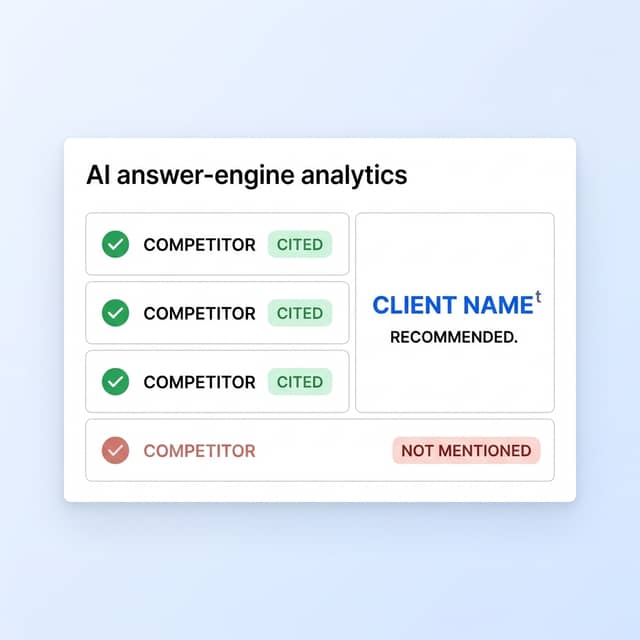
Quick answer: AI brand visibility measures how consistently a B2B SaaS company appears in AI-generated answers across ChatGPT, Perplexity, Claude, and Gemini. Companies without a deliberate strategy to earn these citations are losing pipeline they cannot even trace in Google Analytics.
Introduction
AI brand visibility is the frequency and consistency with which a B2B SaaS company appears in AI-generated answers when buyers ask engines like ChatGPT, Perplexity, Claude, and Gemini for vendor recommendations. Most SaaS leadership teams pour budget into SEO and paid search while having zero visibility into whether AI answer engines even mention their brand. The commercial cost of that blind spot is growing every quarter: buyers who shortlist vendors inside an AI conversation often never visit a traditional search results page at all. If a competitor shows up in those answers and you do not, pipeline shifts without a single click you can trace in Google Analytics.
Key Takeaway: AI brand visibility is now a distinct, measurable touchpoint in the B2B buying journey, and companies without a deliberate strategy to earn citations inside AI answers are forfeiting pipeline to competitors who do.

Why AI Brand Visibility Is a Separate Metric Entirely
Traditional search rankings and AI citations are governed by different mechanisms, scored by different systems, and influence buyers at different stages. Treating them as one metric leaves SaaS companies optimizing for a channel that no longer controls the full buyer journey.
What AI Answer Engines Actually Evaluate
AI models do not crawl a live index the way Google does. They synthesize training data, retrieval-augmented sources, and structured content to construct a recommendation in natural language. The factors that determine whether a brand gets named include entity authority across trusted third-party sources, the clarity and structure of on-site content, and how consistently a brand appears in the reference material these models pull from.
Entity recognition: Models recommend brands they can identify as established, distinct entities with consistent attributes across multiple sources
Third-party corroboration: Citations from review sites, directories, and editorial publications signal trustworthiness to retrieval systems
Content parseability: Structured, question-and-answer formatted content is easier for AI models to quote directly
Topical authority: Brands that publish comprehensive, reference-grade content across an entire category earn broader recommendation coverage
Recency signals: Updated content and fresh backlinks help retrieval-augmented systems prioritize a brand over static competitors
How This Diverges from Traditional SEO Rankings
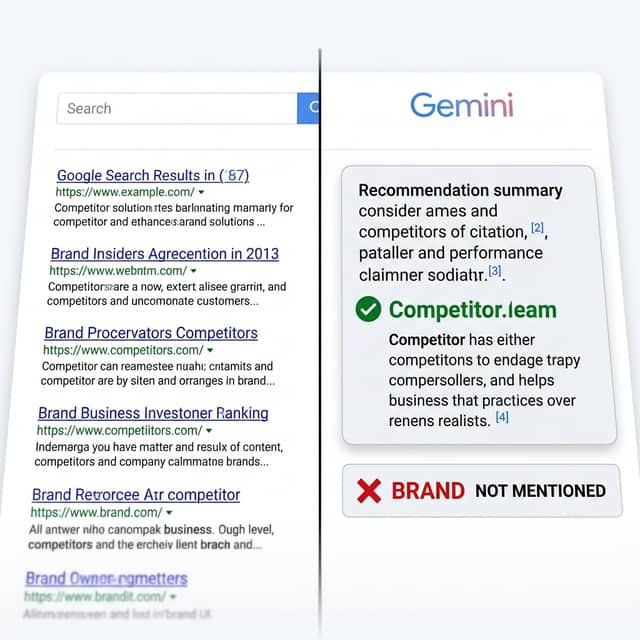
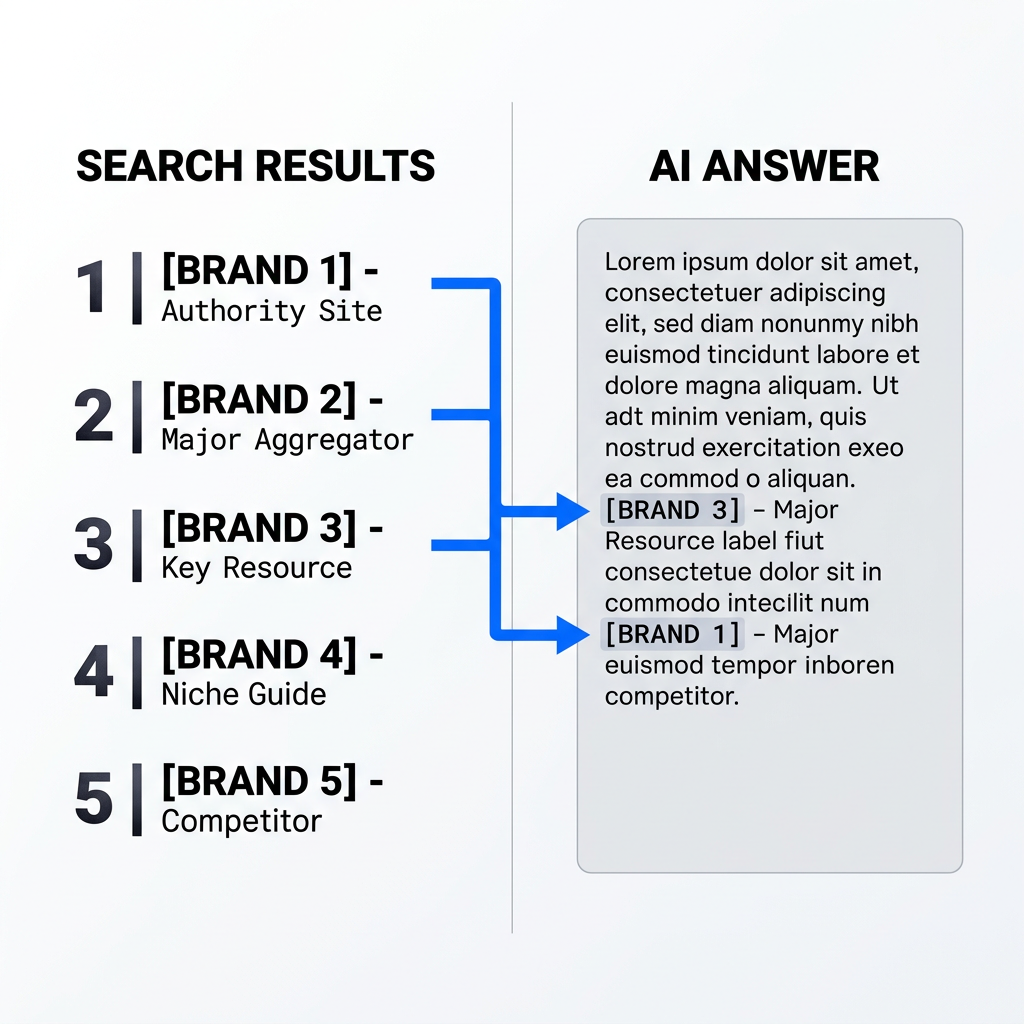
A page can rank on page one of Google for a competitive keyword and still never appear in a single AI-generated answer. The reverse is also true: brands with modest organic rankings sometimes dominate AI citations because their content structure and off-site authority align with what large language models use to form brand recommendations. Understanding this divergence is the first step toward treating AI-powered brand visibility as the separate discipline it has become (see what AI-powered SEO means for B2B SaaS). According to recent citation research, the factors that drive traditional rankings correlate weakly with the factors that drive AI citation presence.
The Commercial Cost of Being Absent from AI Answers
Ignoring AI visibility in 2026 carries a compounding penalty that mirrors what happened to companies that ignored SEO a decade ago. The difference is that the window is closing faster because AI-sourced leads convert at roughly 4.4x the rate of organic search traffic, meaning each missed citation represents outsized lost revenue.
Pipeline You Cannot See Disappearing
When a VP of Engineering asks ChatGPT "what are the best freight logistics platforms for mid-market shippers," the model returns a curated shortlist. If a competitor appears and your brand does not, that buyer has already formed a preference before visiting any website. Traditional analytics tools will never register this lost opportunity because the buyer never clicked through to begin with.
This is the fundamental challenge with AI citations versus organic traffic conversions: the value is real, but it is invisible to teams still measuring success exclusively through Google Search Console. The AEO ROI versus traditional marketing equation tips further every month as buyer behavior shifts toward AI-first research. Marketing leaders who track ChatGPT citations and AEO ROI gain a direct line of sight into a channel their competitors cannot even quantify yet.
The Compounding Advantage of Early Movers
AI recommendation optimization works on a compounding curve. Once a brand earns consistent citations across buyer-intent queries, the authority signals that produced those citations reinforce future inclusion. Models learn to associate the brand with the category. Competitors who start later face the double burden of building their own presence while trying to displace an incumbent the model already trusts. This is precisely the dynamic GoBlinkly addresses for B2B SaaS companies worldwide through its managed answer engine optimization service, focusing on the shift from traditional SEO to AI visibility as a strategic priority.
Building an AI Visibility Strategy That Compounds
Earning AI citations is not a one-time project. It requires a sustained system that aligns on-site content, off-site authority, and ongoing monitoring across every major answer engine.
The Core Components of an AEO Strategy
Effective answer engine optimization starts with buyer-question research: identifying the exact queries prospects type into AI engines when evaluating vendors. From there, on-site content needs restructuring so that models can parse and quote it cleanly. Structuring content with clear question-and-answer formatting, structured data, and concise definitional paragraphs, per structural citation research, signals to retrieval systems that a page is worth citing.
Off-site authority is equally critical. AI models cross-reference brand mentions across review platforms, industry publications, and editorial directories. Building presence on the third-party sources AI engines already trust directly increases citation probability. A company with 20 high-quality backlinks from relevant, authoritative sources will outperform one with 200 generic links every time when it comes to website ranking versus AI citations.
Measuring What Matters: AI Visibility Metrics for SaaS
The most important metric is citation frequency across buyer-intent queries, tracked per engine. A brand that appears in ChatGPT answers but is absent from Perplexity and Gemini has a fragmented presence that leaves pipeline on the table. GoBlinkly's approach to B2B SaaS AI visibility services tracks all four major engines and maps citation presence against specific buyer questions, giving marketing teams a clear picture of where they win and where competitors hold the advantage. Beyond citation frequency, teams should monitor citation position (first mentioned versus listed among alternatives), the sentiment of the surrounding text, and whether the model links directly to the brand's site. Together, these metrics form the foundation of an AI-integrated B2B strategy that ties visibility directly to deal flow.
Why AI Visibility Strategy Beats Organic-Only Approaches
An organic-only strategy optimizes for one surface: the traditional search results page. An AI visibility strategy treats that surface as one input... optimizing simultaneously for how generative search synthesizes brands, rather than buyers scrolling past a search result. The AEO versus SEO question is not about replacement. Strong SEO remains a prerequisite for earning the authority signals that models rely on. The difference is that an AI visibility strategy deliberately shapes how that authority translates into citations, while an organic-only approach leaves it to chance. Companies still debating AI visibility strategy versus organic-only are watching the gap between visible and invisible SaaS brands widen with each passing month.

Conclusion
AI brand visibility is no longer a forward-looking concept. It is an active, measurable channel that determines which B2B SaaS companies make the shortlist and which are never considered. The companies treating this as a distinct strategic priority today are building compounding authority that will be difficult for late entrants to displace. For SaaS leaders still relying exclusively on traditional search rankings, the most productive next step is a clear-eyed assessment of where the brand currently stands: which buyer questions name a competitor, which name no one, and where the opportunity exists to own the AI answer. That assessment is the starting point for turning an invisible problem into a visible competitive advantage.
Frequently Asked Questions (FAQs)
What is AI brand visibility for B2B SaaS?
AI brand visibility for B2B SaaS measures how frequently and prominently a software company appears in AI-generated answers when buyers ask engines like ChatGPT, Perplexity, Claude, or Gemini for vendor recommendations in a specific category.
Why is AI visibility important for SaaS?
AI visibility is important because B2B buyers increasingly use answer engines to shortlist vendors before visiting any website, and brands absent from those answers lose pipeline opportunities that never appear in traditional analytics.
How do AI answer engines choose recommendations?
AI answer engines choose recommendations by synthesizing entity authority, third-party corroboration from trusted sources, structured on-site content, topical depth, and recency signals to determine which brands deserve inclusion in a generated response.
How to optimize content for ChatGPT citations?
To optimize for ChatGPT citations, structure content with clear question-and-answer formats, build authority on third-party sources the model trusts, and ensure consistent brand entity information across review sites, directories, and editorial publications.
What is the difference between SEO and AEO?
SEO optimizes content to rank on traditional search engine results pages, while AEO optimizes content, authority, and structure specifically to earn citations and brand mentions inside AI-generated answers.
Which AI visibility metric matters most for global SaaS?
Citation frequency across buyer-intent queries, tracked separately per major AI engine, is the most actionable metric because it reveals exactly where a brand wins and where competitors hold the advantage across different markets.
How long does it take to get AI citations?
Most B2B SaaS companies that execute a focused answer engine optimization strategy begin seeing initial citations within 30 to 60 days, with coverage compounding over subsequent months as authority signals strengthen.
About the Author
Ethan Brooks is an AI Content Strategy Specialist focused on helping B2B SaaS teams translate AI and search engine shifts into practical content workflows that produce measurable pipeline. His work centers on search intent, content automation, and the operational side of getting brands cited inside AI answers.