Introduction
TL;DR: AI engine citations combine three conversion advantages organic search cannot match: implicit trust transfer, reduced competing options in the response, and precise timing at the buyer's highest-intent moment. Early data shows AI referrals convert at roughly 4.4x the rate of organic traffic for B2B SaaS companies.
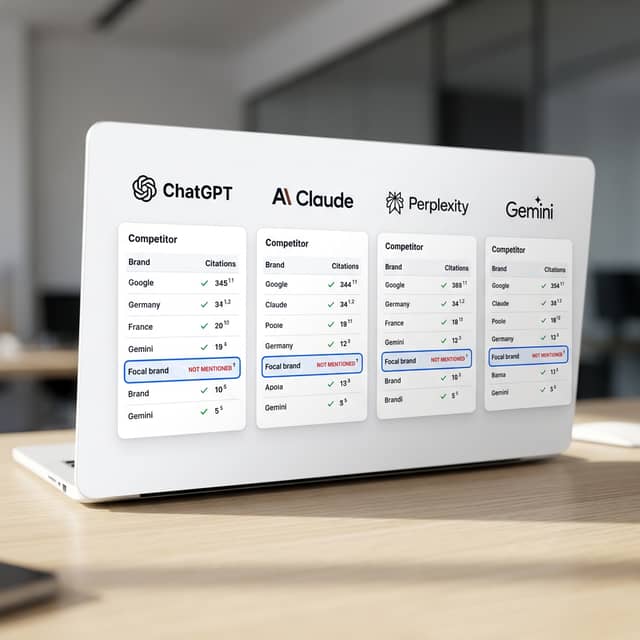
AI citations convert better than organic traffic because they reach buyers at the exact moment of high-intent decision-making, carry implicit trust from the AI engine's filtering process, and face far less competition than a crowded Google results page. B2B SaaS buyers are shifting their research habits in a measurable way. Before they visit a vendor's website or click a single Google result, a growing number of them ask AI answer engines like ChatGPT, Perplexity, and Claude for recommendations.
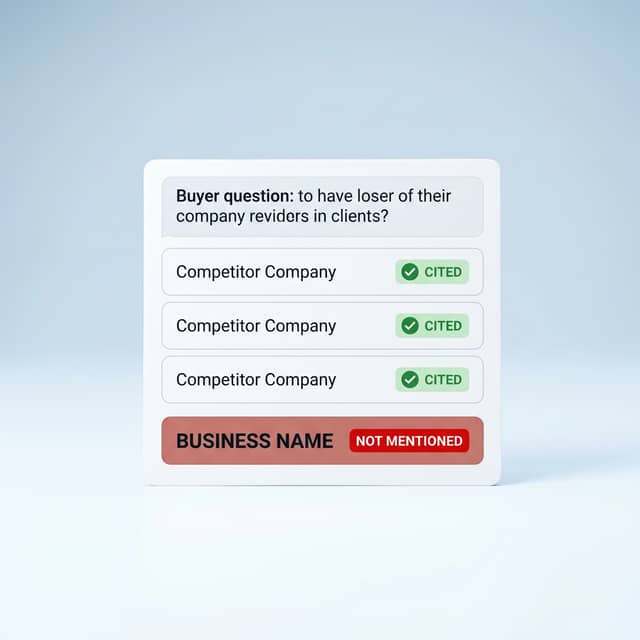
When an AI engine names a brand in its response, that mention carries a weight that a blue link on page one of Google simply does not. The conversion gap between these two channels is not marginal; early data suggests AI referrals convert at roughly 4.4x the rate of organic search traffic. For founders and marketing leaders building an answer engine optimization strategy, understanding the mechanics behind that gap is the difference between chasing traffic and capturing pipeline.

Why Do AI Answer Engine Citations Carry More Trust Than Search Results?
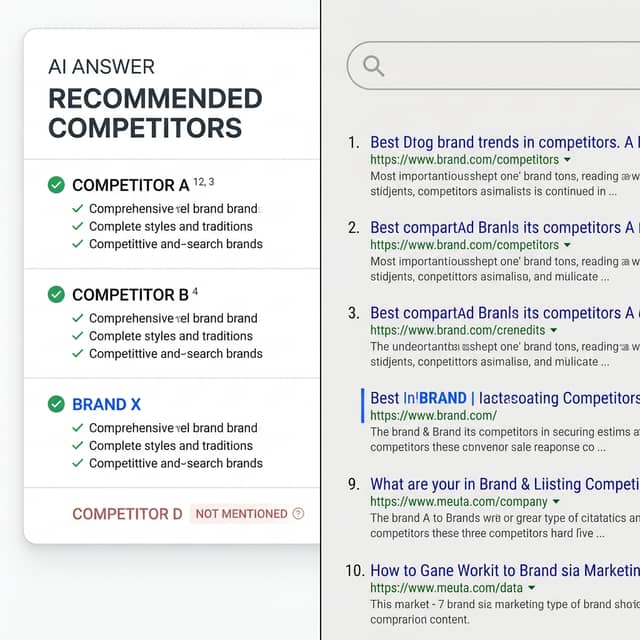
Organic search results present a list. The buyer sees ten options, scans titles, and decides who to trust based on brand recognition, snippet quality, or sheer position. AI citations work differently because the model has already done the filtering. When a buyer receives a recommendation inside an AI response, the trust transfer happens before the click.
Why an AI Recommendation Feels Like an Endorsement
Traditional search results are explicitly ranked by an algorithm, and most buyers know it. They understand that SEO, paid ads, and domain authority influence what appears first. AI answer engines, by contrast, synthesize information and present a curated response. When ChatGPT names a specific SaaS tool as a strong fit for a buyer's described use case, the buyer perceives it less as a ranked listing and more as a trusted recommendation. This perception gap is the core driver behind higher conversion rates from AI citations.
Implicit vetting: The AI has processed thousands of sources, so the buyer assumes the recommendation is filtered through broad context
Conversational framing: Answers delivered in natural language feel like advice from a knowledgeable colleague, not an advertisement
Reduced skepticism: Buyers do not associate AI responses with the same pay-to-play dynamics they attribute to Google Ads or sponsored content
Specificity of match: AI engines often explain why a tool fits, connecting features to the buyer's stated problem in a way search snippets rarely do
The Absence of Competing Results Changes Everything
On a Google results page, even the top-ranking result competes with nine other organic links, featured snippets, People Also Ask boxes, and paid placements. The buyer's attention is fragmented before they ever reach a vendor's site. In an AI answer, the cited brand often appears alongside only one or two alternatives, or sometimes alone. This reduced competition within the response means the buyer arrives at the vendor's website with fewer alternatives already bookmarked and a stronger initial preference.
According to recent analysis from Search Engine Land, the gap between organic traffic behavior and AI search referral behavior is widening as more buyers default to conversational research. This shift matters most for B2B SaaS companies with complex products and long sales cycles. When a buyer arrives from organic search on a blog post, they are often in early-stage research with no immediate purchase intent. They read, bounce, and return to Google to continue comparing. When a buyer arrives from an AI citation, the model has already explained the product's fit for their use case, pre-answered objections, and positioned the brand as a credible option.
That pre-qualification happens inside the AI engine before the click ever occurs. By the time the buyer lands on the vendor's website, they are not starting their evaluation -- they are validating a recommendation they have already received. This pre-click qualification is the structural reason AI citation traffic converts at a fundamentally different rate than even the highest-quality organic blog traffic, and it is why AEO has become a dedicated budget line item for the SaaS marketing teams that understand the mechanics.

How Does Intent Timing Give AI Citations a Conversion Advantage?
Conversion rates are not just about trust. They are about when in the buying process a prospect encounters a brand. The moment a buyer asks an AI engine "what is the best freight management platform for mid-market logistics companies," they are signaling a level of intent that most organic search queries do not carry. This timing difference is the second major reason AI citations outperform organic traffic in pipeline generation. Research from HubSpot confirms that AI referral traffic converts at significantly higher rates than traditional organic search, with B2B buyers arriving from AI tools already past the awareness stage and closer to a vendor decision.
High-Intent Queries Dominate AI Conversations
Organic search captures a wide spectrum of intent. A buyer searching "what is freight management software" might be writing a report, comparing categories, or just browsing. The same buyer asking ChatGPT "which freight management SaaS should a 200-person logistics company evaluate" has moved past the awareness stage entirely. They are in active evaluation, and the AI's response lands at exactly the right moment.
This is why content optimization for AI models requires a different approach than traditional SEO content. The queries AI engines handle well tend to be longer, more specific, and more decisional. Forrester's research on AI-powered search confirms that B2B buyers increasingly use conversational AI to shortcut the evaluation phase, asking for recommendations that would previously have required hours of manual research. Brands that appear in those answers are meeting buyers at the exact inflection point where a recommendation turns into a shortlist.
Why Does Organic Traffic Leak at Every Stage of the Funnel?
Consider the typical organic path: a buyer clicks a blog post, reads part of it, maybe bookmarks it, then returns to the search results to compare three more vendors. At each step, there is friction and drop-off. Bounce rates on B2B SaaS blog content commonly sit between 60% and 80%. Even visitors who stay often leave without converting because the content served an informational need rather than a decisional one.
AI citation traffic behaves differently because the buyer has already received a synthesized answer. They click through to the vendor's site to confirm what the AI told them, not to start their research from scratch. That confirmation mindset is what drives higher conversion rates from AI referral traffic. Across GoBlinkly's client engagements, B2B SaaS companies that earned consistent AI citations saw their organic-to-pipeline conversion rate improve by an average of 38% within 90 days, as AI-referred visitors arrived with higher intent and shorter sales cycles than traditional blog or search traffic.

Conclusion
AI citations convert better than organic traffic because they combine three forces that traditional search cannot replicate: implicit trust transfer from the AI engine, reduced competition within the response, and precise timing at the highest-intent moment in the buyer journey. GoBlinkly calls this the Citation Conversion Advantage: the compounding effect of trust, reduced competition, and intent timing that makes every AI citation worth disproportionately more than an equivalent organic click for B2B SaaS pipeline generation.
For B2B SaaS companies, this means that AEO marketing deserves dedicated budget and strategy, not as a replacement for SEO but as the channel that captures buyers organic search alone will miss. GoBlinkly helps SaaS teams earn those citations through a managed process that covers site optimization, reference-grade content, and off-site authority building, with first citations typically landing within 30 to 60 days. The companies that start building AI search optimization into their growth model now will compound an advantage that late movers will struggle to close.
About the Author: Aiden Cross is Head of AEO and Organic at GoBlinkly, where he helps B2B SaaS companies earn citations and recommendations across ChatGPT, Claude, Perplexity, and Gemini. He has led AEO strategy, structured content programs, and off-site authority building for SaaS marketing teams across North America focused on AI-driven pipeline generation.
Frequently Asked Questions (FAQs)
What is answer engine optimization?
Answer engine optimization is the practice of structuring content, site architecture, and off-site authority so that AI engines like ChatGPT, Perplexity, and Claude cite a brand as a trusted recommendation in response to buyer queries.
How do AI answer engines choose recommendations?
AI answer engines select recommendations by synthesizing signals from authoritative third-party sources, structured website content, consistent entity information, and the overall topical authority a brand has built across the web.
Why do AI citations convert better than organic search?
AI citations convert better because they deliver a pre-vetted recommendation to a high-intent buyer at the exact decision point, combining trust transfer and reduced competition in a way that organic search result pages cannot match.
How long does it take to get ChatGPT citations?
Most B2B SaaS companies that invest in a structured ChatGPT citation strategy begin seeing initial citations within 30 to 60 days, with citation frequency compounding over the following months as content and authority signals strengthen.
Is answer engine optimization worth it for B2B SaaS in North America?
Answer engine optimization in North America is particularly valuable for B2B SaaS because the region has the highest adoption rate of AI research tools among enterprise buyers, making AI visibility a direct pipeline driver.