Introduction
Most SEO checklists stop at Google rankings. They cover meta tags, page speed, and backlinks, then call it done. But B2B SaaS buyers increasingly research solutions through AI answer engines like ChatGPT, Perplexity, and Gemini before ever clicking a traditional search result. A complete SEO optimization checklist in 2026 must account for both discovery channels, or it leaves half your pipeline on the table. This guide consolidates the tasks that feed Google rankings and AI citations into a single, executable B2B SaaS SEO checklist you can assign, prioritize, and track against measurable outcomes.
TL;DR: A complete B2B SaaS SEO checklist in 2026 covers five layers: technical SEO, on-page optimization, AEO content structure, off-page authority, and AI citation signals. Work through them in order. Technical fixes first, content second, authority third.

What Should a Technical SEO Checklist Cover for B2B SaaS?
Before any content or authority strategy can work, your site needs to be crawlable, fast, and structured in ways that both Google's indexer and AI training pipelines can parse cleanly. A technical SEO strategy that satisfies traditional search engines simultaneously makes your content accessible to the large language models that power answer engines.
Core Technical Tasks
Run these checks before moving to on-page or content work. Each task directly impacts whether your pages get indexed by Google and parsed by AI systems scraping structured web data.
Crawl and index audit: Submit an updated XML sitemap, resolve crawl errors in Search Console, and confirm all priority pages return 200 status codes.
Page speed optimization: Compress images, implement lazy loading, and target sub-2-second load times on mobile, since technical performance directly affects ranking signals.
Schema markup implementation: Apply Organization, FAQPage, Article, and Product schema to give AI engines explicit context about your content type and entities.
HTTPS and security headers: Confirm SSL certificates are valid, enforce HTTPS redirects, and add security headers that prevent mixed-content warnings.
Mobile-first rendering: Verify that dynamic content renders correctly on mobile viewports, since Google indexes the mobile version first and AI scrapers follow similar patterns.
Structured Data for AI Parseability
Schema markup deserves special attention because it functions differently across channels. For Google, schema generates rich snippets and knowledge panel data. For AI answer engines, structured data acts as a signal that your content is authoritative and machine-readable. Implementing FAQPage schema on your pillar pages, for example, gives models direct question-answer pairs to cite. Similarly, Organization schema ensures your brand entity is clearly defined when AI systems attempt to recommend companies in your category. A thorough SEO audit should flag any pages missing these markup types.

How Do You Combine On-Page SEO and Answer Engine Optimization?
Traditional on-page SEO and answer engine optimization share more DNA than most teams realize. Both reward clarity, structure, and direct answers to user questions. The difference lies in emphasis: Google weights relevance signals across an entire page, while AI engines prioritize concise, quotable passages that directly address a buyer's query. A strong on-page SEO approach naturally supports both when built with dual-channel intent.
On-Page Tasks That Serve Both Channels
Start every page with a clear H1 that matches search intent, then structure the body using H2s and H3s that mirror the questions your buyers actually ask. Place a direct, concise answer within the first 50 words beneath each subheading. This technique satisfies Google's passage ranking system and gives AI models a clean snippet to extract and cite. Keyword placement should feel invisible: include your primary terms in the H1, first paragraph, and at least one H2, but never at the cost of readability.
Internal linking plays a critical role here. Connecting related pages with descriptive anchor text builds topical authority that Google rewards with higher rankings. AI models also use internal link structures to understand entity relationships across your site. Following internal linking best practices compounds the value of every new page you publish. For B2B SaaS companies specifically, linking product pages to educational content creates semantic clusters that both channels interpret as expertise signals.
AEO-Specific Content Formatting
Beyond standard on-page work, answer engine optimization best practices require a few additional formatting decisions. Write definitive statements rather than hedged language: AI models cite sources that state facts clearly, not those that equivocate. Structure key sections as direct Q&A pairs, even outside formal FAQ blocks. Use numbered lists and comparison tables where appropriate, since models often extract structured formats verbatim.
According to research from Ahrefs on answer engine optimization, content that provides comprehensive definitions early in the page earns citations at significantly higher rates than content that buries key answers deep in the body. Across GoBlinkly's client audits, B2B SaaS companies that restructured their top 10 pages using direct-answer formatting saw AI citation appearances increase by an average of 2.8x within 90 days, while organic rankings for those pages remained stable or improved.
How Do You Build Authority and Off-Site Signals for Dual-Channel Visibility?
Neither Google nor AI answer engines trust a website in isolation. Both require external validation. Google uses backlinks as ranking signals; AI models weight the third-party sources they already trust. The overlap means a focused authority-building strategy can feed both channels simultaneously, though the tactics require precision rather than volume. GoBlinkly calls this the Dual-Channel Visibility System: the five-layer checklist that covers technical SEO, on-page optimization, AEO structure, off-page authority, and AI citation signals as a unified execution framework rather than separate workstreams.
Backlinks, Digital PR, and Third-Party Mentions
For Google rankings, high-quality backlinks from relevant domains remain one of the strongest ranking factors for SaaS companies. Prioritize guest contributions on industry publications, data-driven studies that earn natural links, and partnerships that generate co-branded content. Ten links from topically relevant sites outperform a hundred links from generic directories.
For B2B SaaS specifically, the most valuable authority signals come from three source types: industry publications that cover your software category, comparison and review platforms like G2 and Capterra where buyers actively research solutions, and practitioner communities where your target persona asks and answers questions. A backlink from a generic directory carries almost no weight for either Google or AI engines. A mention in a trusted industry roundup or a citation in a buyer-facing comparison article carries disproportionate weight because it signals category relevance to both traditional ranking systems and AI training data simultaneously. Map your link building targets to these three source types before outreaching, and every authority signal you earn will pull double duty across both discovery channels.
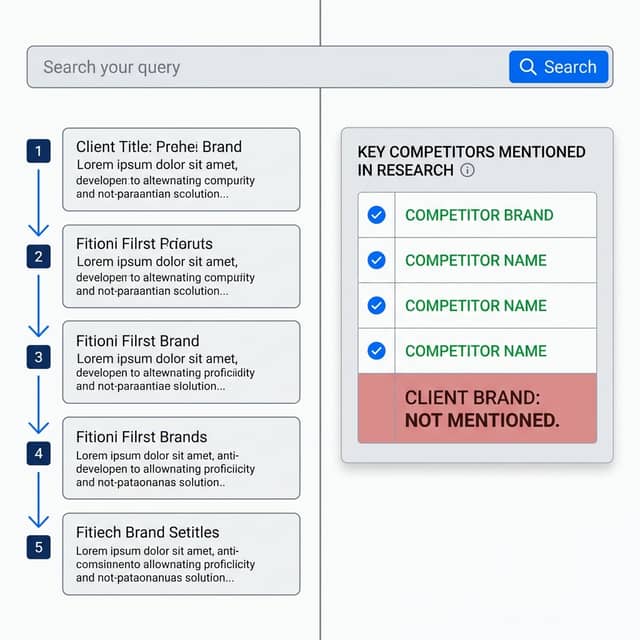
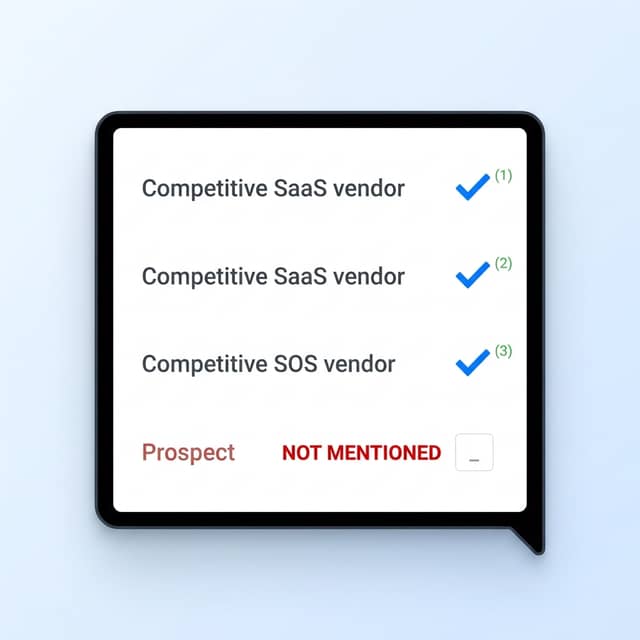
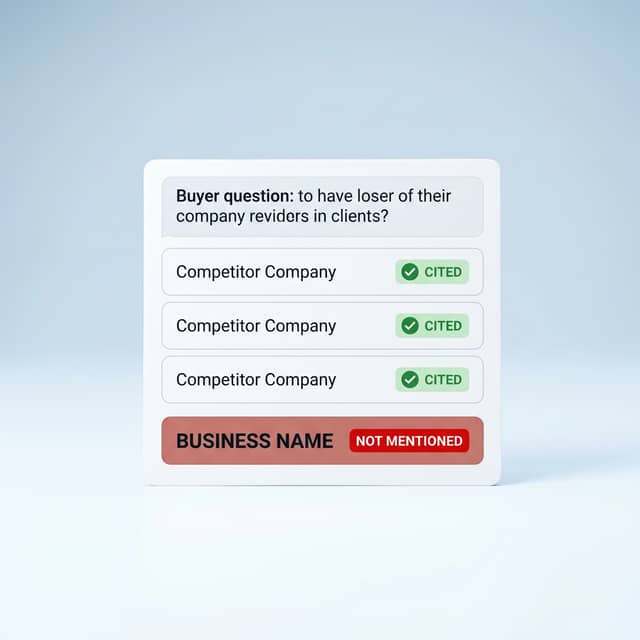
For AI citations, the game shifts slightly. Models train on, and retrieve from, sources they consider authoritative in a given category. This means your brand needs to appear on the comparison pages, review sites, and industry roundups that AI engines already reference. Getting mentioned on pages that rank for buyer-intent queries (e.g., "best B2B SaaS tools for logistics") directly increases citation probability. Getting cited by AI engines (see AEO strategy: how to get cited by AI engines) is not about vanity placements; it is about strategic presence on the exact pages these models pull from.
Choosing Between Managed Services and DIY Execution
The question of managed SEO services vs DIY checklist execution comes down to sustained throughput. A website SEO checklist gives you clarity on what needs doing. Execution across both channels, month after month, without stalling, is where most in-house teams break down. Technical audits, content production, backlink outreach, citation monitoring, and ongoing optimization represent continuous workstreams, not one-time projects. Companies like GoBlinkly exist specifically because B2B SaaS teams with real revenue often lack the internal capacity to sustain dual-channel execution while simultaneously shipping product. The decision hinges on whether your team can maintain weekly output across every section of this checklist, or whether that energy is better spent on your core product.

Conclusion
A complete on-page SEO checklist in 2026 must extend beyond Google into the AI engines where your buyers are already researching solutions (see the B2B SaaS SEO checklist for Google and AI search). The tasks span technical SEO and on-page optimization, content formatted for citation extraction, and off-site authority that both channels trust. Prioritize structured data, direct-answer formatting, and strategic third-party mentions to build compounding visibility across both discovery channels. Whether you execute this checklist internally or hand it to a partner, the competitive advantage belongs to the teams that treat dual-channel visibility as a system rather than an afterthought.
About the Author: Aiden Cross is Head of AEO and Organic at GoBlinkly, where he builds and executes dual-channel SEO checklists for B2B SaaS companies across North America. He has led technical SEO audits, on-page optimization programs, and AEO citation strategies for SaaS marketing teams at growth and scale stages.
For B2B SaaS teams ready to execute this checklist with zero internal lift, GoBlinkly's dual-channel framework handles the entire workflow from audit to ongoing optimization.
Frequently Asked Questions (FAQs)
What is dual-channel visibility in SEO?
Dual-channel visibility means being discoverable both on traditional search engines like Google and inside AI answer engines such as ChatGPT, Perplexity, and Gemini, so your brand captures buyers regardless of which research method they use.
How does a B2B SaaS SEO checklist differ from a generic one?
A B2B SaaS-specific checklist prioritizes buyer-intent keyword clusters, product-led content structures, comparison page optimization, and authority signals within the software category rather than broad consumer search patterns.
What is answer engine optimization?
Answer engine optimization is the practice of structuring your content, brand presence, and off-site authority so that AI-powered answer engines cite your company as a trusted recommendation when users ask relevant questions.
How do I optimize my website with an SEO checklist?
Work through the checklist in priority order, starting with technical fixes that ensure crawlability, then on-page formatting, then content production, and finally authority building, tracking progress against specific metrics at each stage.
Is a managed SEO service better than following a DIY SEO checklist?
A managed service is better suited for teams that lack the bandwidth to sustain weekly execution across technical, content, and authority workstreams, while a DIY approach works if you have dedicated in-house resources committed to ongoing output.