Quick Answer
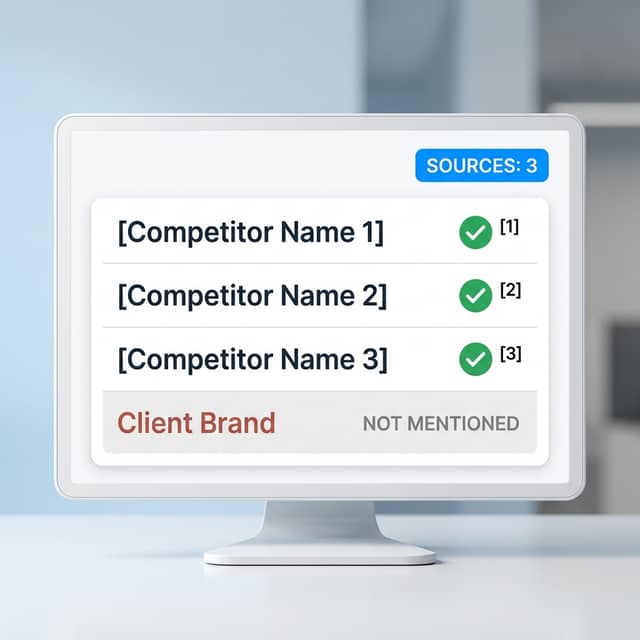
Answer Engine Optimization (AEO) is the practice of getting your SaaS brand cited by AI models like ChatGPT, Claude, Perplexity, and Gemini when buyers ask them for vendor recommendations. Unlike SEO, AEO measures success in citations and mentions inside AI answers, and the fastest path to first citations combines structured reference-grade content, third-party authority signals, and buyer-question research shipped consistently over 30 to 90 days.
Introduction
The average B2B buyer now spends the earliest stage of their research inside an AI chat window, not a search results page. They ask ChatGPT which vendors are trustworthy, ask Perplexity for a shortlist, and ask Claude to compare the top three, all before a sales team ever sees a form fill. By the time a demo request lands, the AI has already decided who made the cut and who did not. That means the vendors named in those AI answers are winning deals they never even competed for on a call.
Key Takeaways:
AI answer engines now shape B2B shortlists before buyers ever contact sales, making citation the new front line of demand generation.
AEO earns its results through structured content, third-party authority, and buyer-question coverage, not through rankings alone.
Most SaaS teams can land first citations within 30 to 90 days when AEO runs as a managed, dual-channel system rather than a side project.

Why Answer Engine Optimization Is the New Front Line of B2B Demand
Buyer behavior has shifted faster than most marketing teams have adjusted. AI answer engines have become the default starting point for vendor research, and the brands cited in those responses are quietly capturing pipeline while everyone else optimizes for a Google click that never comes. Recent B2B marketing research confirms that trust formation now happens inside AI conversations, well upstream of any sales touch.
How the buyer journey actually looks in 2026
The modern buyer no longer scrolls through ten blue links to build a shortlist. They open ChatGPT, describe their problem, and accept the two or three vendors it names as their starting universe. Understanding this shift in AI research in B2B buying is now foundational for anyone selling software.
Discovery moves upstream: Buyers form opinions before visiting your website.
Shortlists shrink: AI typically names three to five vendors, not ten.
Trust transfers instantly: An AI recommendation carries the weight of a peer referral.
Zero-click search optimization matters more: Impressions inside answers now outweigh raw traffic numbers.
Sales cycles compress: Buyers arrive pre-qualified when AI has already vouched for you.
Why traditional SEO alone will not get you cited
Ranking on page one no longer guarantees you exist in an AI answer. Answer engines pull from a broader web of signals, including third-party mentions, structured data, review sites, and reference content across domains you do not own. A page can hold the top Google spot and still be invisible inside ChatGPT if the surrounding authority signals are weak. This is the core of AEO vs SEO for citations: SEO earns rankings, AEO earns recommendations, and the mechanics behind each are meaningfully different.

The AEO Playbook: How AI Engines Actually Choose Who to Recommend
AI models do not roll dice when they name vendors. They synthesize from patterns of authority, clarity, and consistency across the sources they trust, which means an effective AEO strategy targets each of those inputs deliberately.
The four pillars of getting cited by AI models
Every citation traces back to a repeatable set of signals. When a SaaS brand consistently shows up across these four pillars, models begin surfacing it as a default recommendation. Here is how the mechanics of a generative engine optimization program compare to a traditional SEO program, so you can see where the effort actually goes.
Dimension | Traditional SEO | Answer Engine Optimization |
|---|---|---|
Success metric | Keyword rankings and clicks | Citations and mentions in AI answers |
Content style | Long-form, keyword-dense pages | Reference-grade, quotable, structured answers |
Authority signals | Backlinks and domain authority | Third-party mentions on sources AI trusts |
Time to first result | 6 to 12 months | 30 to 90 days for first citations |
Buyer touchpoint | Post-click on your site | Pre-click, inside the AI response |
The takeaway is straightforward: AEO does not replace SEO, it extends it into the layer where buyers now form opinions. Teams that treat the two as one dual-channel system compound faster than teams that pick a side. A practical AEO guide to get cited will always start with the specific buyer questions your prospects are already typing into AI.
What separates cited brands from ignored ones
Brands that get named consistently do three things at once. They publish content structured for extraction, they earn mentions on the third-party sources AI models already crawl and weight heavily, and they cover the full universe of buyer questions instead of a handful of high-volume keywords. HubSpot's breakdown of AEO tactics for SaaS reinforces the point: schema, clarity, and citation-first measurement matter more than word count. GoBlinkly runs this exact system as a done-for-you service, which is why understanding why ChatGPT cites competitors often comes down to gaps in authority coverage rather than product quality.
Building an AEO System That Compounds Instead of Stalls
The biggest mistake SaaS teams make is treating AEO as a one-time content sprint. Citations compound only when the underlying system is maintained monthly, because AI models retrain, competitors publish, and buyer questions evolve.
The 30-to-90 day citation runway
Realistic AEO timelines follow a predictable curve. The first 30 days are about buyer-question research, site restructuring for clean parsing, and shipping the first wave of reference-grade content. Days 30 to 60 focus on third-party authority building, which is where most in-house efforts stall out. By day 90, a well-run program has typically landed initial citations across ChatGPT and often a second engine, with momentum that continues to build. The business case is compelling: AI referrals reportedly convert nearly three times better than traditional search traffic, which changes the math on where marketing budget should sit.
Managed AEO versus DIY: what to expect
Most B2B SaaS teams do not have the internal bandwidth to run buyer-question research, restructure a site for AI parsing, publish reference content weekly, and earn authority backlinks month over month while also shipping product. This is where a managed partner like GoBlinkly changes the equation, since the client's only real task is to grant access and read the monthly updates. The measurement side matters just as much as execution, and knowing how to track AI citations across engines is what separates a real program from a hopeful one.

Conclusion
AI answer engines have quietly become the shortlist builder for B2B software, and the brands cited inside those answers are compounding an advantage that gets harder to close every quarter. Answer engine optimization is not a rebrand of SEO, it is a distinct discipline with its own signals, timelines, and outcomes, and the teams treating it that way are already pulling ahead. The practical path forward is clear: research the buyer questions AI is being asked in your category, publish content structured to be quoted, and earn authority on the third-party sources models already trust. Whether that runs in-house or through a managed partner is a capacity decision, not a strategy debate. What matters is that by the time a buyer opens a chat window and asks who to trust, your name is the answer.
Want to see exactly which buyer questions name your competitors instead of you across ChatGPT, Claude, Perplexity, and Gemini? Run a free competitor visibility audit with GoBlinkly and get a clear picture of where your AEO gaps are before spending a dollar.
Frequently Asked Questions (FAQs)
What is answer engine optimization?
Answer engine optimization is the discipline of earning citations and recommendations inside AI-generated answers from engines like ChatGPT, Claude, Perplexity, and Gemini, rather than optimizing purely for traditional search rankings.
How do you get cited by ChatGPT for B2B queries?
You get cited by combining reference-grade content structured for extraction, authority mentions on third-party sources ChatGPT already trusts, and consistent coverage of the specific buyer questions your prospects are asking.
Why should B2B companies invest in AEO now?
B2B buyers now use AI engines to build vendor shortlists before ever contacting sales, so brands not cited in those answers are excluded from consideration before the sales process even begins.
How do AI search engines choose which brands to recommend?
AI engines synthesize recommendations from patterns of third-party authority, structured content clarity, review consistency, and coverage across trusted sources, weighted more heavily than raw keyword rankings.
Is SEO dead for AI search engines?
SEO is not dead, but it is no longer sufficient on its own, since strong SEO now functions as one input into a broader dual-channel visibility system that includes AEO.
How long does it take to get cited in ChatGPT?
Most well-run AEO programs land their first citations within 30 to 90 days, with momentum compounding as authority signals accumulate across trusted third-party sources.
What should I look for in an AI optimization agency for B2B?
Look for transparent pricing, citation-based measurement rather than vanity metrics, a proven system for earning third-party authority, and a performance guarantee tied to actual AI citations.
About the Author
Ethan Brooks is an AI Content Strategy Specialist focused on helping B2B SaaS companies scale organic growth through search intent optimization, automated content workflows, and answer engine visibility. He writes about the practical mechanics of earning AI citations and translates emerging content marketing shifts into actionable playbooks for busy marketing leaders.