Quick Answer
Traditional SEO ranking factors still matter in 2026, but their role has shifted from earning clicks to earning citations inside AI answer engines. Signals like topical authority, structured content, technical crawlability, and third-party trust now feed directly into whether ChatGPT, Claude, Perplexity, and Gemini pick your brand when synthesizing an answer.
Introduction
The old scoreboard of blue links is quietly being replaced by a scoreboard of AI mentions, and that changes how you should read every ranking signal you have optimized for. Buyers now open ChatGPT or Perplexity before they open Google, and the winner of that first prompt often becomes the shortlist. Some legacy signals still carry heavy weight in that decision. Others have become noise that consumes budget without moving the citation needle. Recent research covering thousands of AI queries shows a striking pattern: pages that rank highly on Google are dramatically more likely to be cited by AI systems too.
Key Takeaways:
Core SEO fundamentals like topical authority, crawlability, and third-party trust remain the strongest predictors of AI citation frequency.
Tactics built purely for click-through, such as keyword density and thin listicles, no longer influence how AI models select sources.
A dual-channel approach that treats SEO and AEO as one system produces more citations than either discipline run alone.
Quick Questions Answered
What are the top SEO ranking factors for 2026?
Topical authority, structured content, technical crawlability, third-party trust, and answer-first formatting.
Can AI search engines replace traditional SEO?
No, AI engines rely on the same underlying indexes and trust signals traditional SEO builds.
Does better Google ranking lead to AI citations?
Yes, top-ranking pages are disproportionately more likely to be cited by AI answer engines.
How do I monitor AI citations for my brand?
Use dedicated citation tracking tools that query ChatGPT, Claude, Perplexity, and Gemini on a recurring schedule.

The Ranking Factors That Still Drive AI Citations
Not every classic signal has aged well, but a specific cluster of them has become even more important now that language models are choosing which sources to quote. These are the factors that consistently correlate with brands showing up inside AI answers rather than only in the tenth blue link.
The Signals That Carry the Most Weight
When you audit which seo ranking factors still matter, the pattern is clear: anything that helps a model verify that a page is trustworthy, specific, and parseable earns disproportionate reward. According to Ahrefs' analysis of AI Overview citations, a meaningful share of AI Overview citations still come from pages ranking in Google's top 100, even as ChatGPT and Perplexity weigh other signals more heavily.
Topical authority: Deep coverage across a subject cluster signals subject-matter depth that AI models prefer when selecting citations.
Third-party trust signals: Mentions on publications, review sites, and Reddit threads that models already index heavily.
Structured content and schema: Clean HTML, FAQ markup, and clear answer blocks help models extract quotable passages.
Technical crawlability: Fast rendering, clean sitemaps, and llms.txt configurations shape whether a model can even read the page.
Answer-first formatting: Pages that lead with a direct answer are quoted more often than pages that bury the point.
The Signals That No Longer Move the Needle
Several tactics that dominated Google search ranking factors playbooks for a decade have effectively lost their influence when the destination is an AI answer rather than a SERP click. Exact-match anchor text schemes, keyword density targets, and thin comparison pages built purely to intercept low-intent queries produce almost no citation lift. The same is true for aggressive interlinking patterns designed to concentrate PageRank on money pages. AI models care about whether a passage answers the question directly and whether the source has independent trust, not whether an internal link graph has been engineered. Founders who invested in these mechanics through 2024 are the ones most surprised to find their traffic holding while their AI citations sit at zero. A helpful lens here is thinking about Google's 200 ranking factors as a filter rather than a checklist.

How AI Answer Engines Actually Pick Sources
Understanding what changed requires looking at how models like ChatGPT, Claude, Perplexity, and Gemini actually retrieve and rank passages during synthesis. The mechanics are different from a classical search index, but the inputs they lean on overlap heavily with what strong SEO teams have always built.
Retrieval, Ranking, and Synthesis in Practice
Answer engines rely on retrieval-augmented generation, which means they pull candidate passages from indexed sources, rank them for relevance and trust, then generate a synthesized answer that cites the strongest passages. That ranking step is where legacy search engine ranking work pays off, because the retrieval systems these models use inherit many signals from traditional web indexes. As real-world traffic data shows, SEO fundamentals still drive the majority of discovery even as AI search grows quickly. The practical implication for AI search optimization is that answer engine optimization and semantic search optimization are not separate disciplines; they share a foundation. Teams treating them as opposing bets tend to underperform teams running a unified plan. This is exactly why the Dual Channel Visibility Framework (see B2B SaaS SEO checklist for dual-channel growth) treats both channels as one system rather than a tradeoff.
Where Legacy SEO Meets Answer Engine Optimization
The overlap between traditional seo vs. AEO strategy is larger than most teams assume, but the differences that remain are decisive. Legacy SEO optimizes for a ranked list of clicks, while AEO optimizes for a single synthesized answer that names a specific brand. That single-answer format punishes generic content severely and rewards pages that are unambiguously authoritative on a narrow question. The 2026 SEO landscape now demands higher standards around llms.txt, structured data, and bot access decisions that directly shape AI visibility. GoBlinkly has spent the last two years building around exactly this overlap, treating technical seo for answer engines as the same job as authority building for saas rather than two separate workstreams, a distinction that shows up in how every client engagement is scoped from day one. For a deeper breakdown of the AEO vs SEO impact on citations, the mechanics matter more than the terminology.
Building a 2026 Strategy That Earns Both Rankings and Citations
The teams winning in 2026 have stopped debating whether to invest in SEO or AEO and started asking which specific inputs feed both outcomes simultaneously. That reframe changes budget allocation, content briefs, and technical roadmaps in ways that compound quickly once the shift is made.
The Inputs Worth Doubling Down On
Prioritize buyer-question research, reference-grade content, structured formatting, and off-site authority on sources the models already trust, because these are the inputs that feed both search engine ranking and AI citation selection. Track citation frequency across all four major engines instead of only chasing keyword positions, since AI ranking factors now include signals that traditional rank trackers cannot see. GoBlinkly runs this as a fully managed program, but the input list is the same whether a team executes it internally or with a partner. What separates the leaders from the laggards is not access to secret tactics but the discipline to sustain the work every month while competitors publish sporadically. Founders comparing AI optimization versus traditional SEO often discover the honest answer is that the two disciplines are converging, not diverging.

Conclusion
The question is not whether seo ranking factors still matter in 2026 but which ones deserve the budget they used to consume. Topical authority, structured content, technical hygiene, and third-party trust have grown in importance because they are the exact signals AI answer engines use to decide who gets quoted. Keyword-density thinking and link-manipulation tactics have quietly stopped paying returns, no matter how sophisticated the toolset around them has become. The strategic move for B2B SaaS teams heading into the second half of 2026 is to run SEO and AEO as one connected system, measured against citations and pipeline rather than rankings alone. Do that, and the brands your buyers hear about when they open ChatGPT will be yours instead of your competitors.
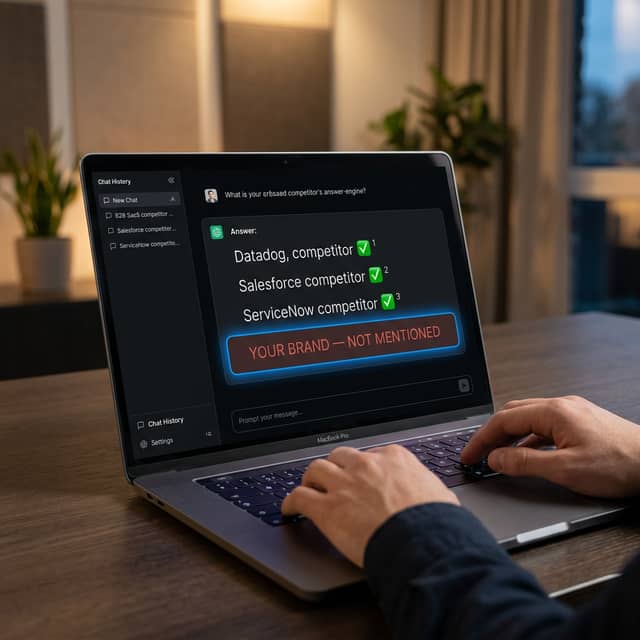
Ready to see which buyer questions cite your competitors instead of you? Talk to GoBlinkly for a free competitor visibility audit across every major AI engine.
Frequently Asked Questions (FAQs)
What are the top SEO ranking factors for 2026?
The strongest factors are topical authority, structured content, technical crawlability, third-party trust signals, and answer-first formatting that language models can extract cleanly.
Can AI search engines replace traditional SEO?
No, AI search engines rely heavily on the same underlying indexes and trust signals that traditional SEO builds, so the two work together rather than one replacing the other.
Is AEO better than traditional SEO for B2B SaaS?
AEO produces higher-intent traffic, with Perplexity referrals converting at roughly 4.4x the rate of organic search (Loganix/Exposure Ninja, 2026), but it performs best when layered on top of a healthy SEO foundation rather than replacing it.
Does better Google ranking lead to AI citations?
Yes, research across tens of thousands of queries shows that ChatGPT, Perplexity, and other AI answer engines disproportionately cite top-ranking Google pages.
How do I monitor AI citations for my brand?
Use dedicated AI citation-tracking tools that query ChatGPT, Claude, Perplexity, and Gemini with your target buyer questions on a recurring schedule and log every mention.
How can I improve brand visibility on Perplexity and Gemini specifically?
Publish reference-grade answers to specific buyer questions, earn mentions on third-party sources these engines trust, and ensure your site is technically parseable via clean schema and llms.txt configuration.
What does an AI SEO strategist do for US-based SaaS firms?
An AI SEO strategist maps the buyer-question landscape, rebuilds content and technical architecture for answer engines, and earns off-site authority to make the brand the default AI recommendation.
About the Author
David Mercer is an AI Search and Content Strategist focused on helping B2B SaaS brands earn visibility across both traditional search and AI answer engines. His research-driven approach translates complex SEO, AEO, and technical search topics into actionable strategies grounded in industry data and real-world results.