Quick Answer: Should a growing SaaS team build AEO in-house or hire a managed partner?
Most growing SaaS teams should hire a managed AEO partner, since first citations typically land within 30 to 60 days at 1 to 2 hours of monthly oversight, compared to 4 to 9 months and 15 to 25 hours weekly for an in-house build. The deciding factor is whether leadership can sustain a sixth marketing workstream without cannibalizing SEO, product marketing, or demand generation output.
Introduction
Managed AEO is the answer for growing SaaS teams that recognize AI answer engines are shaping vendor shortlists but have no internal capacity to build a new discipline from scratch. It hands buyer-question research, site restructuring, reference-grade content, and off-site authority work to a specialized partner while the internal marketing team stays focused on demand, product, and pipeline. The stakes are not abstract: recent data shows up to 90% of B2B buyers now use generative AI tools during vendor research, with the majority of that discovery happening before a sales conversation. Teams that wait to build this in-house watch competitor citations compound in ChatGPT, Claude, Perplexity, and Gemini every week they delay.
Key Takeaways:
Managed AEO covers the full operational stack: research, technical rebuild, content, authority, and monthly reporting under one partner.
Growing SaaS teams typically lack the bandwidth to sustain AEO internally without cannibalizing SEO, product marketing, or demand generation output.
The build-versus-buy decision comes down to speed to first citation, opportunity cost, and whether AEO becomes a permanent internal discipline or a one-time push that stalls.

What Managed AEO Actually Includes Day to Day
Managed AEO services are not a repackaged content retainer or an SEO audit with a new label. They cover the specific work required to get a B2B SaaS brand cited when buyers ask an AI model for recommendations, and that work runs across research, technical execution, publishing, and off-site signals every month.
The Core Operational Stack
An Answer Engine Optimization agency runs a defined set of activities in parallel, not sequentially. The output compounds when each function feeds the next, which is why generalist agencies rarely replicate it well, a pattern Ahrefs' research on AI brand visibility also documents. Here is what the operational stack looks like inside a competent managed engagement:
Buyer-question research: Mapping the exact prompts prospects type into AI engines during evaluation, then reverse-engineering which competitors currently own those answers. Deeper methodology is covered in this walkthrough of buyer question research for AEO.
Site restructuring: Rebuilding pages so answer engines can parse, extract, and quote them cleanly, which includes schema, semantic HTML, and question-led headings.
Reference-grade content: Publishing pages designed to be quoted verbatim by models, not just ranked on page one.
Off-site authority: Earning citations, mentions, and links on the third-party sources AI models already trust.
Monthly reporting: Tracking citations across ChatGPT, Claude, Perplexity, and Gemini, tied to pipeline signals rather than vanity metrics.
How It Differs From SEO and Generalist Content Retainers
Traditional SEO optimizes for Google's ranking algorithm, which rewards keyword targeting, backlinks, and dwell time. AEO optimizes for how large language models select and quote sources, which rewards clarity, structured answers, and trusted off-site signals. The two overlap, which is why strong SEO still matters, but the measurement framework and the content shape are different. A useful primer on the discipline itself is available in this overview of Answer Engine Optimization. Teams weighing the transition should also review this breakdown of AEO versus SEO for SaaS.
The Bandwidth Problem for Lean Marketing Teams
Most growing SaaS marketing teams already run lean. A head of marketing, a content lead, a demand generation manager, and maybe a designer are already covering SEO, paid acquisition, lifecycle, product launches, and events. Adding AEO as a sixth workstream without new headcount is where the plan quietly breaks.
Build Versus Buy: A Practical Framework
The decision is not philosophical. It comes down to time to first citation, total loaded cost, and whether the team can keep the work running after the initial push. The table below compares the three realistic paths for a growing SaaS team evaluating AI search optimization for B2B SaaS.
Approach | Time to First Citation | Monthly Cost Range | Ongoing Bandwidth Required | Best Fit |
|---|---|---|---|---|
In-house build | 4 to 9 months | $8,000+ loaded | 15 to 25 hours/week | Teams with a dedicated AEO hire and executive air cover |
Generalist SEO agency | 6+ months, inconsistent | $3,000 to $6,000 | 5 to 10 hours/week | Brands that primarily need Google rankings |
Managed AEO services | 30 to 60 days | $2,500 to $7,500 | 1 to 2 hours/month | Growing SaaS teams without spare capacity |
The takeaway is straightforward: in-house builds win on control but lose on speed and total cost, generalist SEO agencies optimize for the wrong scoring system, and managed AEO trades some flexibility for shipping speed and a compounding channel. The full tradeoff is unpacked further in this piece on managed AEO versus in-house execution.
Signals Your Team Has Outgrown Internal Capacity
Certain patterns show up repeatedly when internal AEO stalls: the content backlog grows faster than it clears, technical rebuild tickets sit in the sprint queue for months, and no one owns off-site authority work end to end. If leadership can name the strategy but nobody can point to the last three pages shipped for AEO specifically, the internal model has already broken. Outsourced execution has a clear track record for closing this exact gap, as shown in this analysis of why managed SEO outperforms DIY for startups.
What to Look for in a Managed AEO Partner
Not every agency selling AI search services is executing real AEO. The category is new enough that positioning has outpaced capability at most firms, so evaluation criteria matter more than pitch decks.
Evaluation Criteria That Actually Predict Outcomes
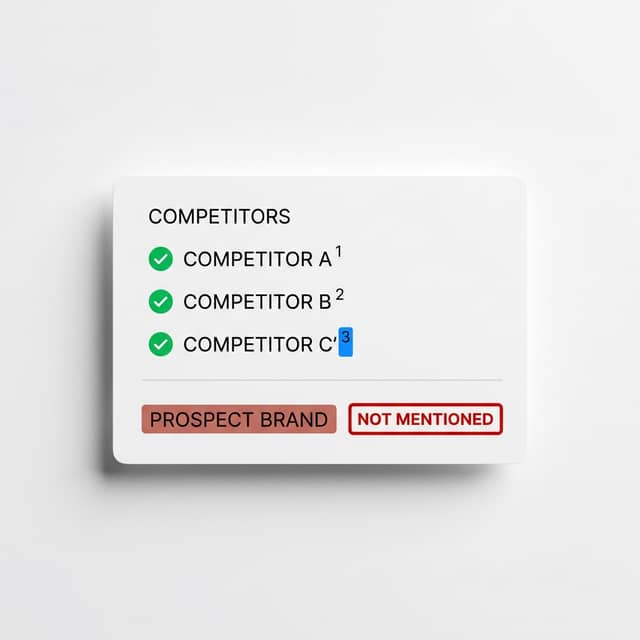
Prioritize partners that measure citations across all four major engines, publish transparent pricing, and stand behind a defined outcome guarantee rather than a soft promise of "improved visibility." Ask for a competitor visibility audit before signing anything, because it will show exactly which buyer questions currently name a competitor instead of the brand. GoBlinkly builds its engagements around this model, running a free competitor audit up front and backing every tier with a 90-day citation guarantee. A useful checklist for vetting firms is available in this breakdown of the best AEO agency for B2B criteria.
Reporting That Ties to Pipeline, Not Vanity Metrics
The right partner reports on citations earned, buyer-question coverage, and AI-sourced lead signals, not generic traffic charts. AI referrals convert at roughly 4.4x the rate of organic search according to Semrush data, which means a single high-intent citation can outweigh thousands of unqualified sessions. That reality is why GoBlinkly frames every quarterly review around outcomes tied to revenue rather than movement on secondary metrics.

Conclusion
Managed AEO exists because growing SaaS teams recognize the shift toward AI-assisted buyer research but cannot realistically absorb another discipline into an already stretched marketing function. The right partner delivers the full stack, from buyer-question research to authority building, and reports on citations and pipeline rather than vanity metrics. The build-versus-buy decision hinges on how fast the brand needs to appear in AI answers and how much internal capacity leadership is willing to redirect from product marketing and demand generation. Teams that move now compound a standing advantage; teams that wait watch competitors get quoted in every prompt that matters.
Ready to see which buyer questions currently name your competitors instead of you? Book a free competitor visibility audit with GoBlinkly and get a clear picture of where your AI citation gaps are before deciding on a path forward.
About the Author
David Mercer is an AI Search & Content Strategist at GoBlinkly, covering the build-versus-buy decision for managed AEO services, helping growing SaaS marketing teams evaluate whether internal capacity can sustain a new discipline. His work focuses on the operational realities that determine speed to first citation.
Frequently Asked Questions (FAQs)
What is managed AEO and how does it work?
Managed AEO is a fully outsourced service where an agency handles buyer-question research, site restructuring, content publishing, and off-site authority building so a B2B SaaS brand gets cited by AI models without any internal execution work.
How do I get recommended by AI models like ChatGPT?
Getting recommended requires publishing structured, reference-grade content that directly answers buyer questions and earning citations on the third-party sources large language models already treat as trusted.
Is AI citation building services worth the investment for SaaS startups?
For SaaS teams with paying customers and a functioning marketing team, AI citation building services are typically worth it because AI-sourced referrals convert at roughly 4.4x the rate of organic search, according to Semrush data.
How do I track AI-sourced leads?
Track AI-sourced leads by monitoring citation coverage across ChatGPT, Claude, Perplexity, and Gemini, then tying self-reported source data from demo requests and CRM attribution back to the citations earned, as detailed in this guide to track ChatGPT citations and ROI.
AEO agency vs traditional SEO services: what is the real difference?
An Answer Engine Optimization agency optimizes for how AI models select and quote sources, while a traditional SEO agency optimizes for Google's ranking algorithm, and the content shape, measurement, and off-site tactics differ meaningfully between the two.
Can any agency guarantee citations in ChatGPT?
Some managed AEO providers, including GoBlinkly, back their work with a defined citation guarantee that refunds the engagement if the client is not cited on ChatGPT for a set number of buyer-intent queries within a fixed window.
What is an AI lead generation strategy built around AEO?
An AI lead generation strategy built around AEO captures buyers during the AI research phase by ensuring the brand is cited as a trusted recommendation when prospects ask answer engines who to trust, before any sales conversation begins.