Introduction
Search engine optimization has always been a moving target, but the arrival of artificial intelligence has accelerated the pace of change dramatically. AI SEO refers to the practice of optimizing content not just for traditional search engines like Google, but also for AI-powered platforms such as ChatGPT, Perplexity, Claude, and Gemini that now generate direct answers for users. For founders and marketers who have invested years learning the rules of Google rankings, this shift can feel disorienting. The core challenge is straightforward: the strategies that earned page-one rankings in 2022 are no longer sufficient when AI engines are deciding which brands get cited and which get ignored entirely.

Understanding the Foundations of AI-Powered Search
Before diving into tactics, it helps to understand what actually changed under the hood of modern search. For over two decades, search engines relied heavily on keyword matching, backlink profiles, and domain authority to determine rankings. Artificial intelligence SEO represents a fundamental departure from that model, driven by semantic understanding, user intent, and natural language processing.
How Search Engines Evolved from Keywords to Context
Traditional Google SEO rewarded pages that matched specific keyword phrases, had strong backlink profiles, and followed technical best practices. That system still matters, but AI has layered a new dimension on top of it. Google's own natural language processing models now interpret the meaning behind a query rather than just matching words. This means a page about "affordable project management for remote teams" can rank for dozens of related queries it never explicitly mentions.
- Semantic search: AI evaluates topic relevance and contextual meaning rather than relying solely on exact-match keywords
- Intent classification: Search engines now categorize queries as informational, navigational, transactional, or commercial, then serve content that matches the underlying need
- Entity recognition: AI identifies people, brands, products, and concepts within content and maps relationships between them
- Conversational understanding: Queries phrased as full questions (common in voice search and AI chat) are parsed for nuance, not just surface terms
What Makes AI Search Platforms Different from Google
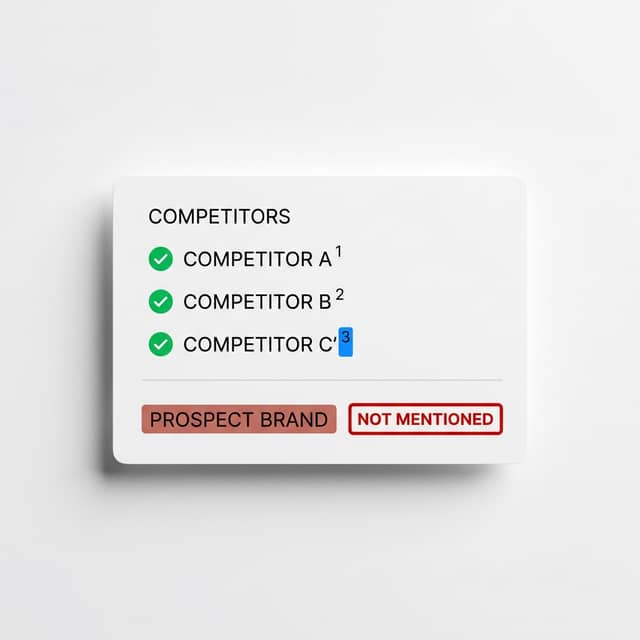
Google returns a list of links. AI search platforms like ChatGPT and Perplexity return synthesized answers. This distinction matters enormously for content strategy. When a user asks Perplexity "what is the best CRM for startups," the platform reads, evaluates, and summarizes multiple sources into a single response, often citing only two or three. If your content is not structured, authoritative, and clear enough to be selected by that synthesis process, you are invisible on these platforms entirely. The shift from traditional SEO to AI search visibility requires rethinking how content is written at every level.

How AI SEO Changes Your Content Strategy
Understanding the technology is one thing. Knowing how to adapt your actual workflow is another. AI SEO optimization touches nearly every part of the content pipeline, from keyword research to content structure to distribution. The businesses seeing results right now are those that have adjusted their approach to account for how AI engines consume and prioritize information. Understanding AI ranking factors that actually determine your visibility is essential for any modern content strategy.
Rethinking Keyword Strategy and Content Structure
Traditional keyword research involved finding high-volume terms, checking competition, and building pages around them. Machine learning SEO optimization has changed this process. Today, clustering topics around user intent matters more than targeting individual phrases. A single well-structured article that addresses a full topic cluster can outperform five thin pages each targeting a different long-tail variation.
Content structure plays a critical role in helping AI platforms extract useful information from your pages. Clear headings, direct answers near the top of sections, and well-organized FAQ blocks all make it easier for AI engines to parse and cite your content. Writing in a question-and-answer format where appropriate signals to both Google's featured snippets and AI answer engines that your content directly addresses user queries. According to SEMrush's study on search intent, matching content format to user intent significantly improves ranking probability. This is closely related to the emerging discipline of generative engine optimization, which focuses specifically on making content citable by AI platforms.
AI SEO vs Traditional SEO: What Actually Changed
The comparison between AI driven SEO and the traditional approach is not a matter of one replacing the other. Traditional technical SEO (site speed, mobile optimization, crawlability, schema markup) remains foundational. What has changed is the content layer on top. Traditional SEO rewarded comprehensive, keyword-rich pages that earned backlinks. AI search engines reward content that is factually precise, well-sourced, clearly structured, and written in a way that can be directly quoted or paraphrased.
Another key difference lies in how authority is established. In traditional SEO, domain authority builds over time through backlinks. In AI search, authority is contextual. A relatively unknown site with an exceptionally clear, well-sourced article on a niche topic can get cited by ChatGPT over a major publication if the content quality is higher for that specific query. This levels the playing field considerably for small businesses and SaaS companies willing to invest in AI content optimization. For a deeper breakdown of how these two systems differ in practice, the comparison between GEO and traditional SEO strategies is worth reviewing.
Practical Steps for Implementing AI SEO
Knowing the theory is helpful, but execution is where most businesses stall. The gap between "we should be doing this" and "this is actually live on our site" is where competitive advantage lives. Here is what an effective AI SEO implementation looks like in practice.
Building Content That Ranks on Both Google and AI Platforms
The goal is dual visibility: ranking in Google's organic results while also appearing in AI-generated answers. Start by auditing your existing content for clarity and structure, following proven strategies for building SEO content that ranks on both Google and AI. Every page should have a clear primary question it answers, stated plainly in the first paragraph. Use headings that mirror how real people phrase their searches. Include concise, quotable statements that AI engines can extract directly.
FAQ sections are not optional anymore. They serve double duty as structured data that Google can pull into featured snippets and as clean Q&A pairs that AI platforms can cite verbatim. Managed AI SEO services like GoBlinkly build these elements into every piece of content from the start, eliminating the common problem of retrofitting existing articles. For founders exploring the difference between handling this independently and outsourcing it, the comparison between AI SEO tools and managed services can clarify the tradeoffs.
Why Small Businesses and SaaS Companies Should Act Now
AI SEO for small business is not a luxury reserved for enterprises with massive content teams. The current moment is unusually favorable for smaller players. Most businesses have not yet adapted their content for AI search engines, which means early movers have a genuine window to establish authority before their categories become crowded. A SaaS startup publishing well-structured, AI-optimized content weekly can build citation momentum on platforms like ChatGPT and Perplexity within months.
The cost of inaction is compounding. Every week that passes without AI-optimized content on your site is a week your competitors are potentially being cited in AI answers and you are not. According to recent research on AI search traffic patterns, the brands that appear in AI-generated results are seeing meaningful referral traffic from these platforms. GoBlinkly addresses this urgency specifically for founders who lack the bandwidth to manage a content pipeline themselves, handling everything from research to publishing while continuously adjusting based on how AI search engines rank content in real time.

Conclusion
AI SEO is not a buzzword or a passing trend. It is the new baseline for digital visibility. The businesses that understand how artificial intelligence reshapes search optimization, and act on that understanding, will capture traffic and citations that their slower competitors never recover. Whether you are a founder, a marketer, or a growing SaaS team, the practical next step is clear: start structuring content for both traditional search engines and AI answer platforms today, because waiting means falling further behind every week.
If your business is invisible on AI search, it's time to let GoBlinkly automate your AI SEO pipeline so you can get back to what you do best.
Frequently Asked Questions (FAQs)
What is AI SEO?
AI SEO is the practice of optimizing content to rank on both traditional search engines and AI-powered answer platforms like ChatGPT, Perplexity, and Google's AI Overviews. It focuses on creating content that AI systems can easily understand, extract, and cite when generating responses to user queries.
How does AI improve SEO rankings?
AI improves rankings by enabling search engines to understand user intent, semantic context, and content quality at a deeper level than keyword matching alone allows. It analyzes relationships between concepts, evaluates content comprehensiveness, and matches conversational queries with relevant content through natural language processing.
Can AI write SEO content?
AI can assist in drafting SEO content, but the best results come when AI-generated drafts are reviewed and refined by human specialists for accuracy, brand voice, and strategic alignment. The most effective approach combines AI's efficiency in generating initial drafts with human expertise for quality control and strategic refinement.
What is generative engine optimization?
Generative engine optimization (GEO) is a discipline focused on making content structured and authoritative enough to be cited by AI platforms that generate direct answers for users. It emphasizes clear formatting, definitive statements, and topical authority to increase citation probability.
How do AI search engines like ChatGPT impact SEO?
AI search engines like ChatGPT impact SEO by synthesizing answers from multiple sources, which means only the most clearly structured and authoritative content gets cited and seen by users. Content not cited receives zero visibility, creating a winner-take-most dynamic where being referenced is essential.