Quick answer: AI answer engines choose which B2B SaaS brands to cite based on content structure, topical authority, and third-party trust signals, not traditional keyword rankings, and understanding these mechanics is the first step toward earning visibility where buyers now begin their research.
Introduction
AI answer engines like ChatGPT, Perplexity, Claude, and Gemini are changing how B2B SaaS buyers research solutions. Instead of scanning ten blue links and clicking through landing pages, modern buyers type a question and receive a synthesized, citation-backed recommendation, often before they ever speak to a sales team. For SaaS brands, the mechanics behind how these AI answer engines select, evaluate, and cite sources directly determine whether a product shows up on a buyer's shortlist or gets skipped entirely. The gap between brands that earn consistent AI recommendations and those that remain invisible comes down to a specific set of structural, authority, and content factors that most marketing teams have never optimized for.
Key Takeaway: AI answer engines choose which B2B SaaS brands to cite based on content structure, topical authority, and third-party trust signals, not traditional keyword rankings; understanding these mechanics is the first step toward earning visibility in the AI research phase where buyers now begin.
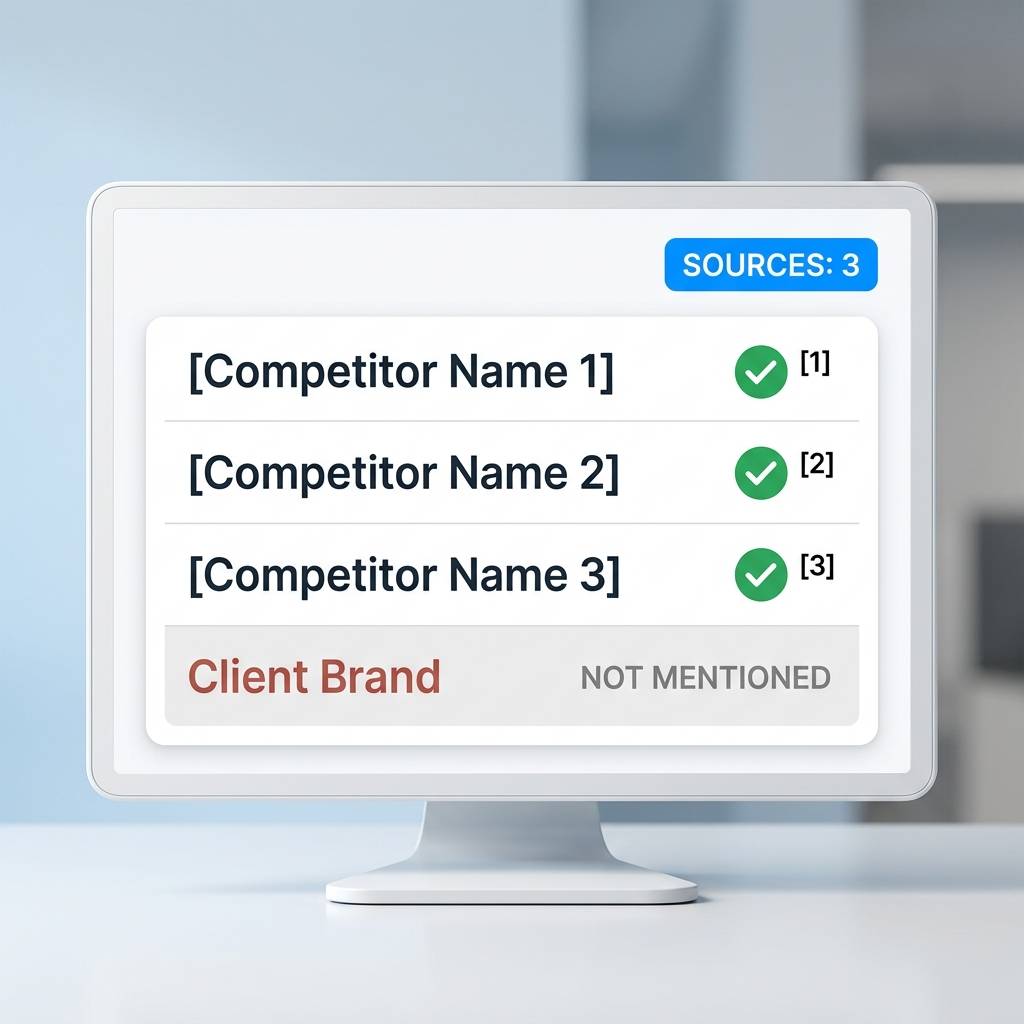
What AI Answer Engines Actually Do Differently
Traditional search engines return a ranked list of pages and let the user decide which one to click. AI answer engines collapse that entire process into a single, synthesized response. The model reads, evaluates, and merges information from multiple sources, then delivers a direct answer with embedded citations. This fundamental shift means that the unit of competition is no longer a page ranking; it is a brand mention inside a generated answer.
How Source Selection Differs from Google Rankings
Google's algorithm relies on crawlable HTML, PageRank, backlinks, and user engagement signals to rank pages against a query. AI answer engines operate on a different logic. Large language models (LLMs) draw from their training data, retrieval-augmented generation (RAG) pipelines, and live web indexes to identify the most relevant, well-structured, and authoritative content for a given question. The practical difference is significant: a page can rank #1 on Google for a keyword and still never appear in an AI-generated answer if its content is not structured for easy extraction.
Training Data Weight: LLMs internalize information from sources they were trained on, meaning citation authority builds over time as models encounter a brand repeatedly across trusted domains
Retrieval-Augmented Generation: Engines like Perplexity and ChatGPT with browsing pull live web content at query time, favoring pages that answer specific questions directly in their opening paragraphs
Entity Recognition: AI engines identify brands as entities and associate them with product categories, use cases, and buyer intent patterns, not just keyword matches
Third-Party Corroboration: A brand mentioned positively across independent reviews, comparison articles, and industry publications earns stronger citation weight than one that only appears on its own site
Why Traditional SEO Alone Falls Short
Optimizing for Google and optimizing for what content AI engines decide to show require overlapping but distinct strategies. A SaaS company can have strong domain authority, clean technical SEO, and high organic traffic while still being absent from AI answers. The reason is that answer engine visibility depends on whether content is written in a way that models can parse, quote, and attribute cleanly. Pages built around broad keyword targeting with vague introductions and thin conclusions rarely give an AI engine a clear extractable answer to work with. Answer engine optimization vs SEO is not an either-or choice; strong SEO creates the foundation, but AEO strategy adds the structural layer that gets a brand quoted.
What Makes a B2B SaaS Brand Citation-Worthy
Earning AI recommendations for B2B SaaS requires more than publishing blog content and hoping a model notices. The brands that consistently appear in AI-generated answers share a specific set of characteristics that map to how answer engines evaluate trust, relevance, and parsability. Understanding these factors provides a clear operational framework for marketing teams ready to invest in answer engine visibility.
The Four Pillars of Answer Engine Authority
Through analyzing which SaaS brands earn citations across ChatGPT, Perplexity, Claude, and Gemini, a consistent pattern emerges. Citation-worthy brands build strength across four areas simultaneously: content structure, topical depth, off-site authority, and entity consistency.
Content structure means writing pages where the answer to a buyer's question appears in the first two sentences of the relevant section, followed by supporting context. AI engines extract from structured, front-loaded prose far more reliably than from pages where the answer is buried below 500 words of preamble. Topical depth means covering an entire category of buyer questions, not just a single keyword. A brand that publishes reference-grade content across "what is," "how to," "best for," and "versus" queries within its niche builds the kind of brand citation signals that models reward. Off-site authority comes from being mentioned, reviewed, and cited across the third-party domains that AI engines already trust: industry publications, SaaS directories, comparison sites, and editorial roundups. Finally, entity consistency means that a brand's name, positioning, and category associations are uniform across every touchable surface online. Models build brand entities from patterns; inconsistency fragments those patterns.
These four pillars are interdependent. A brand with excellent on-site structure but zero third-party mentions will struggle to earn citations. Likewise, a brand mentioned widely but with no content structured for AI extraction will lose citations to a competitor whose site is built for it.
How AI Engines Handle Buyer Intent Queries
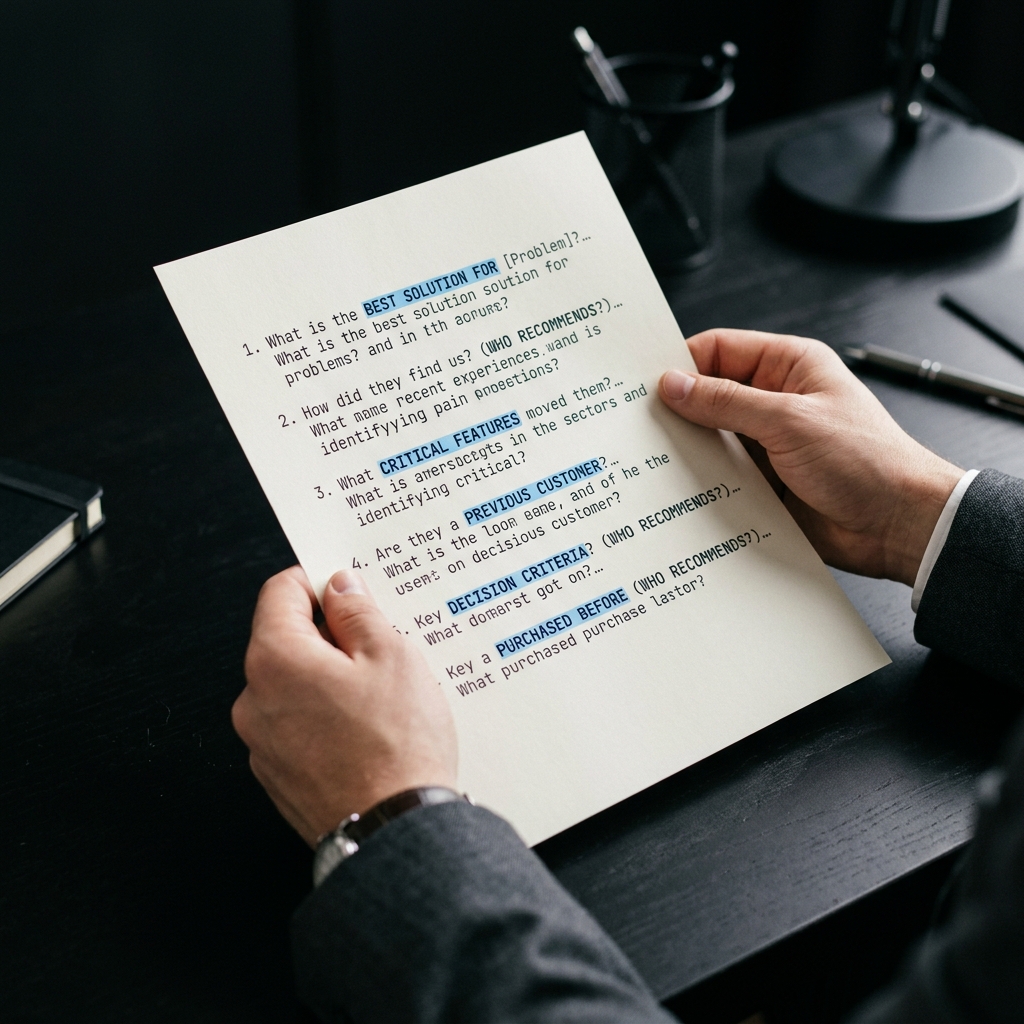
B2B SaaS buyers use AI engines to ask questions that map to specific stages of the buying process: "What's the best project management tool for remote teams under 50 people?" or "How does [Brand A] compare to [Brand B] for enterprise compliance?" When an AI engine receives a buyer-intent query, it does not simply return the page with the best keyword match. It assembles an answer by pulling from sources that demonstrate direct relevance to the question's specifics, including company size, use case, industry, and feature requirements. Brands that answer these precise, layered questions in their published content, with structured data and clear factual claims, position themselves to be cited at the exact moment a buyer is narrowing their shortlist. This is exactly the kind of answer engine content optimization that separates brands generating measurable pipeline from AI from those still relying on traditional funnels alone.

Conclusion
AI answer engines are not a future trend for B2B SaaS; they are the current research layer where buyers form shortlists before sales conversations begin. The brands that earn AI search optimization advantages do so by combining structured, extractable content with deep topical coverage and consistent off-site authority. For SaaS marketing teams, the first practical step is auditing which buyer-intent questions already name a competitor across ChatGPT, Perplexity, Claude, and Gemini, then building the content and authority assets needed to replace that gap. Agencies like GoBlinkly specialize in exactly this process, running answer engine optimization for SaaS companies that need to move from invisible to cited without pulling internal resources off product. The SaaS brands that start building answer engine visibility now will compound their advantage with every model update, while those that wait will find the citation gap increasingly difficult to close.
Frequently Asked Questions (FAQs)
What are AI answer engines?
AI answer engines are platforms like ChatGPT, Perplexity, Claude, and Gemini that respond to user queries with synthesized, citation-backed answers instead of a list of links.
How do AI answer engines choose sources?
They evaluate content structure, topical authority, third-party corroboration, and entity consistency to determine which sources are most relevant and trustworthy for a given query.
What is answer engine optimization?
Answer engine optimization (AEO) is the practice of structuring content, building off-site authority, and establishing entity signals so that AI engines cite a brand in their generated answers.
How do answer engines differ from Google?
Google ranks pages as a list and lets users click through, while AI answer engines synthesize information from multiple sources into a single answer with embedded citations.
How do I get my SaaS company in AI answers?
Publish structured, front-loaded content that directly answers buyer-intent questions, then build third-party mentions across the review sites, directories, and publications that AI engines already trust.
Can my B2B SaaS get leads from AI engines?
Yes, brands cited in AI answers report higher-intent leads because buyers arriving through AI recommendations have already been filtered and validated by the engine's synthesized response.
How do I optimize for AI answer engines in North America?
Focus on covering the buyer questions specific to your North American market segment with structured, reference-grade content while earning citations on the industry publications and SaaS directories that serve that region.
About the Author
David Kross is a Content Operations Strategist focused on scalable content systems, search performance, and measurable organic growth. His work centers on translating search intent and off-site authority signals into operational frameworks B2B SaaS teams can execute against. He writes about content scaling, SERP analysis, and the performance analytics that connect off-site investment to pipeline outcomes.