Introduction
Most B2B SaaS founders have tried some version of search engine optimization, whether that means hiring a freelancer, subscribing to a tool, or tasking a junior marketer with "doing SEO." The results tend to follow a familiar pattern: a few blog posts get indexed, traffic trickles in from low-intent queries, and nothing connects to pipeline. The problem is not that SEO does not work for SaaS. The problem is that generic SEO services are built for a fundamentally different buying cycle than the one B2B software companies operate in. Buyers researching enterprise tools do not browse casually; they compare solutions across Google, AI answer engines, and peer networks before ever booking a demo. What SaaS founders actually need is a B2B SEO services approach engineered for that specific research behavior, one that builds compounding authority rather than chasing isolated keyword wins.
Key Takeaway: Effective B2B SEO for SaaS requires a managed, authority-first strategy that targets high-intent buyer queries across both traditional search and AI engines, not a generic content-and-keywords playbook borrowed from consumer marketing.

Why Generic SEO Falls Short for B2B SaaS
Consumer-focused SEO agencies optimize for volume. They target broad keywords, produce high-frequency content, and measure success in traffic graphs. That model breaks down when the goal is not pageviews but qualified pipeline. B2B SaaS companies sell to a narrow audience that uses precise, problem-aware search queries, and the content that ranks for those queries needs to demonstrate genuine expertise rather than surface-level coverage.
The Mismatch Between Traffic and Pipeline
A SaaS company selling compliance software to mid-market finance teams might rank number one for "what is compliance" (100K searches per month, roughly 0.2% conversion to demo) but sit at position eight for "automated SOX compliance reporting for mid-market" (500 searches per month, 12% conversion to demo). The second query generates roughly 60x more pipeline value per search despite 200x fewer impressions. Targeting these specific queries requires deep keyword research tailored to B2B SaaS buying stages, not a generic keyword tool export. According to Search Engine Journal's 2026 analysis of B2B content and pipeline, the highest-converting organic content targets bottom-of-funnel queries where purchase intent is already present. In GoBlinkly's keyword audits for B2B SaaS clients, an average of 68% of existing content targets informational queries with no commercial signal, meaning most SaaS companies are investing the majority of their content budget in topics that will never generate a demo request.
Top-of-funnel bloat: Generic agencies fill content calendars with awareness-stage posts that never reach decision-makers
Missing buyer intent mapping: Without aligning content to how procurement teams actually search, rankings produce clicks but not conversations
No authority compounding: One-off blog posts without a linking and citation strategy fail to build the domain strength needed to rank for competitive terms
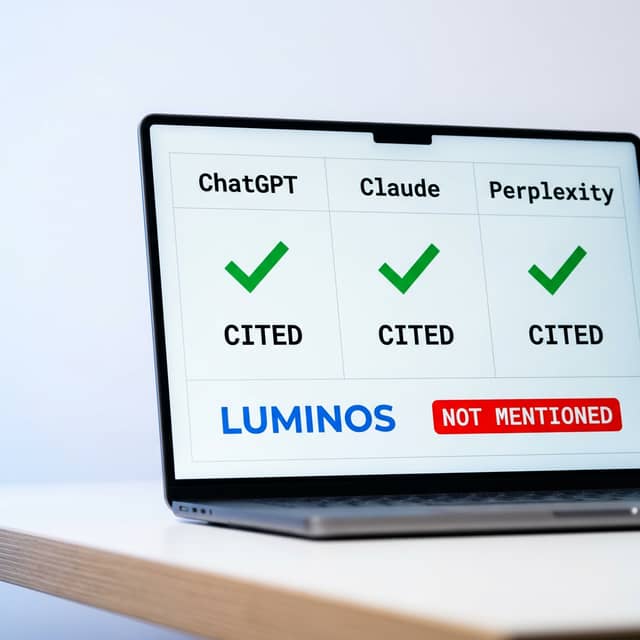
Ignoring AI engines: Buyers increasingly ask ChatGPT, Perplexity, and Gemini for vendor recommendations, and traditional SEO alone does not guarantee visibility there
What SEO Competitor Analysis Actually Reveals
When SaaS founders run a proper SEO competitor analysis, the gap becomes obvious. Competitors who dominate organic search in B2B categories are not simply publishing more content. They use schema markup to tag expertise claims (for example, a competitor might use schema markup to tag their founder as an industry expert, which helps Google and AI engines attribute credibility to their content), organize content by buyer stage, and build internal linking patterns that signal topical authority to crawlers. A surface-level audit might show keyword gaps, but a thorough competitive review exposes the trust signals and citation patterns that separate companies getting recommended from those getting ignored. A proper SEO audit checklist for B2B SaaS covers these structural elements alongside traditional ranking factors.

What a Purpose-Built B2B SEO Service Delivers
The distinction between a full-service SEO agency that understands B2B SaaS and a generalist shop comes down to what is actually included in the engagement. Managed SEO services built for SaaS do not hand over a keyword list and a content brief. They execute end-to-end, from technical foundations to off-site authority, with every action tied to how enterprise buyers research and evaluate solutions.
The Core Components That Move Pipeline
On-page SEO optimization is table stakes, but in B2B it goes beyond meta tags and header structure. Pages need to be architected around the specific questions buyers ask at each stage of evaluation. That means building comparison pages, feature breakdowns, and integration guides that match the exact phrasing procurement teams use. A structured content strategy framework ensures every page serves a defined role in the buyer journey rather than existing as an isolated ranking attempt.
Authority building services represent the compounding engine that separates SaaS companies with durable organic visibility from those stuck on page two. This means earning mentions from G2, Capterra, and industry-specific publications, the sources that both Google and AI models reference when generating recommendations. When a buyer asks ChatGPT "best compliance tools for mid-market," the model cites sources it has been trained on. If a company appears on G2 with strong reviews and is mentioned in a SaaS trade journal, it is far more likely to be included in that recommendation.
Recent B2B SEO statistics confirm that domain authority remains one of the strongest predictors of ranking position for competitive commercial queries. GoBlinkly's managed SEO engagements for B2B SaaS clients focus authority-building effort specifically on these high-domain, industry-relevant sources, consistently producing measurable ranking improvements on commercial queries within 90 days of launch. Backlink building services in a B2B context are not about volume; they are about relevance and trust. Traditional backlinks help Google, while industry mentions help both Google and AI engines.
Managed SEO vs DIY SEO for SaaS Founders
The managed SEO vs DIY SEO question comes up in nearly every founder conversation. Running SEO internally means hiring or training someone who understands technical SEO, content strategy, link acquisition, and increasingly, how AI engines select sources to cite. Most SaaS teams with fewer than 50 employees lack the bandwidth to execute all of this while maintaining product velocity. A single in-house marketer cannot simultaneously manage technical audits, produce intent-mapped content, and build authority with industry publications. A managed approach designed for startups coordinates all three, ensuring content is built on a strong technical foundation and authority is earned from sources that matter to both search engines and AI models.
GoBlinkly operates in exactly this space, providing a fully managed engagement where the client grants access once and the agency handles buyer-question research, site restructuring, content production, and off-site authority building. The model is designed for SaaS teams that need organic growth strategy without adding headcount. What makes this approach distinct is the dual focus: every action is calibrated to earn visibility on both Google and AI answer engines, so the brand appears whether a buyer searches traditionally or asks an AI assistant for a recommendation.

Conclusion
B2B SaaS founders do not need more blog posts or another keyword tracking dashboard. They need a managed SEO service that understands how enterprise buyers research, what signals search and AI engines use to determine trust, and how to build authority that compounds month over month. The right engagement covers technical foundations, intent-mapped content, and off-site authority in a single coordinated system.
SaaS founders ready to shift from generic SEO to a managed, pipeline-focused approach should follow this sequence:
Audit your current content to identify which pages target bottom-of-funnel, purchase-intent queries versus broad awareness topics.
Map your top five competitor domains to see which buyer questions they rank for that you do not.
Fix technical foundations first: crawlability, schema markup, and internal linking before producing new content.
Build authority on G2, Capterra, and one niche industry publication before scaling content output.
Track pipeline contribution from organic traffic monthly, not just keyword rankings or traffic volume.
For founders evaluating their next move, the clearest test is simple: ask whether the current SEO approach is generating pipeline conversations, or just traffic reports. If the answer is the latter, the strategy needs to change, and GoBlinkly offers a B2B SEO strategy built around the outcomes that actually matter. The companies investing in SEO strategies optimized for both traditional search and AI answer engines today are the ones buyers will find, and trust, tomorrow.
About the Author: Ethan Brooks is an AI Content Strategy Specialist at GoBlinkly, where he leads B2B SEO and answer engine optimization programs for SaaS companies. He specializes in helping founders move from traffic-focused SEO to managed, pipeline-generating strategies that earn visibility on both Google and AI engines.
Frequently Asked Questions (FAQs)
Why is SEO important for SaaS companies?
SEO captures buyers during the active research phase before they ever contact sales, making it the most scalable channel for generating qualified pipeline in B2B SaaS.
How long does SEO take to work?
Most B2B SaaS companies see measurable ranking improvements on Google within three to six months because new content needs time to accumulate authority signals, while AI engine citations (where a brand appears in ChatGPT or Perplexity recommendations) can happen in 30 to 60 days if the company is mentioned in trusted publications that AI models already reference.
How to build authority for SEO?
Authority is built by earning backlinks and mentions from trusted industry publications, SaaS directories like G2 or Capterra, and third-party sources that both search engines and AI models reference, starting by identifying which sources target buyers already consult and then contributing relevant expertise through guest posts, webinars, or sponsored research that signals recognized authority in that space.
What makes good SEO content?
Good SEO content directly answers the specific questions buyers ask at each stage of their evaluation (not "What is compliance?" but "How do we automate SOX compliance reporting?"), using precise language that matches real search queries and surfacing concrete details like pricing, integrations, and team size requirements early in headers, bullet lists, or comparison tables so both readers and search engines can quickly find the answer.
How to measure SEO success?
For B2B SaaS, the most meaningful metrics are pipeline contribution, demo requests from organic traffic, and citation presence in AI answer engines, not raw traffic volume or generic keyword rankings.
Managed SEO vs DIY SEO: which is better for B2B?
Managed SEO is typically better for B2B SaaS teams under 50 employees because a single in-house marketer cannot simultaneously manage technical SEO audits, produce intent-mapped content, and build authority with industry publications, while a managed service coordinates all three to ensure content is built on a strong technical foundation and authority is earned from sources that matter to both search engines and AI models.
What is the difference between SEO and SEM?
SEO builds organic visibility that compounds over time without per-click costs, while SEM (paid search advertising) delivers immediate visibility that stops the moment the ad budget is paused.