Introduction
Every B2B SaaS marketing team faces the same tension in 2026: produce more content, produce it faster, and make sure it actually gets cited by AI answer engines. The explosion of AI content writing tools has made it trivially easy to generate blog posts, landing pages, and thought leadership drafts in minutes. But volume alone does not earn trust from ChatGPT, Perplexity, or Gemini. The real question is whether your team needs a self-serve AI content creator or a fully managed content service, and the answer depends on your company's stage, internal capacity, and how seriously you treat Answer Engine Optimization (AEO).
In short: AI writing tools are best for early-stage teams that need speed and cost efficiency. Managed content services are best for growth-stage teams that need AI citations, topical authority, and strategic depth. Most B2B SaaS companies need both, deployed in the right sequence.

What do AI writing tools actually deliver for B2B SaaS teams?
Self-serve AI writing tools have matured significantly. Platforms like Jasper, Writer, Copy.ai, and Surfer AI now offer end-to-end workflows that handle everything from keyword clustering to draft generation and on-page scoring. For lean SaaS teams trying to scale content without hiring a full team, these tools represent a genuine productivity leap. But understanding their boundaries is just as important as understanding their capabilities.
Core Strengths of Self-Serve AI Tools
When used correctly, the best AI writing tools accelerate the most time-consuming parts of content production. They handle first drafts, outline generation, and competitive gap analysis at a speed no human writer can match. Here is where they genuinely add value:
Speed to first draft: Most tools produce a 1,500-word article draft in under five minutes, letting teams move from keyword to published page within hours instead of weeks.
Cost efficiency at low volumes: Subscriptions typically range from $50 to $500 per month, making them accessible for early-stage SaaS companies with limited marketing budgets.
Built-in SEO scoring: Many platforms include real-time optimization scores, readability checks, and NLP term suggestions that help writers hit baseline on-page requirements.
Template libraries: Pre-built frameworks for blog posts, comparison pages, and product descriptions reduce the planning overhead for building an AI strategy from scratch.
Where AI Tools Fall Short for B2B SaaS
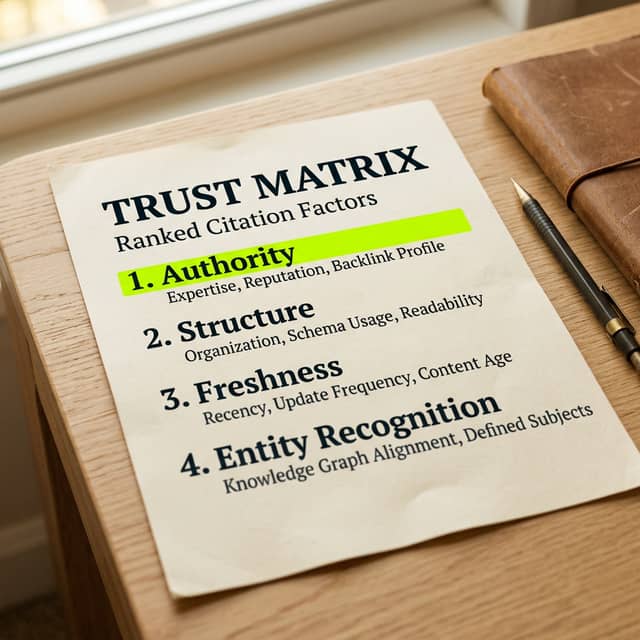
The limitations become clear once you look beyond raw output. An AI based writing tool can generate fluent text, but it cannot build the strategic foundation that B2B SaaS content marketing demands. These tools do not understand your buyer's journey, your competitive positioning, or the specific trust signals that cause an answer engine to cite one brand over another. They generate content in a vacuum, disconnected from the backlink profiles, entity relationships, and topical authority maps that determine whether AI generated content actually earns visibility.
According to a 2026 Semrush study analyzing 42,000 blog posts, human-written content appeared in the top Google position 80% of the time, compared to just 9% for purely AI-generated content. The output of self-serve tools tends to be structurally sound but strategically hollow. It reads well to a human scanning it quickly, yet it rarely passes the deeper evaluation that AI models perform when deciding which sources to reference.
Without expert editorial oversight, the content risks blending into the undifferentiated mass of AI-written pages that answer engines learn to ignore. A team producing 20 AI-written articles per month without a strategic content architecture is not building topical authority. It is producing noise. The brands that earn AI citations are the ones pairing AI speed with human judgment at every stage of production.

What does a managed content service give B2B SaaS companies that tools cannot?
A managed content service operates at a fundamentally different layer. Instead of handing you a tool and letting you figure out the strategy, it provides the strategy itself, along with execution, optimization, and ongoing performance tracking. For B2B SaaS companies that need to be cited by answer engines, the difference between a tool and a service is the difference between having ingredients and having a chef.
Strategy, Authority, and AEO Performance
Managed services start with buyer-question research, not keyword volume. They map the actual queries your prospects type (or speak) into AI assistants and reverse-engineer the content structure needed to become the cited source. This includes building topical authority clusters, earning high-quality backlinks, and structuring content so that AI models can parse and trust it.
The strategic layer is what separates content that ranks from content that gets recommended. Answer engine optimization best practices require a deep understanding of how models evaluate source credibility. Managed providers handle ongoing authority building through digital PR, founder positioning, and cross-platform citation strategies that no self-serve tool can replicate. This is where managed SEO diverges from AI SEO in meaningful ways.
The Human-AI Hybrid That Wins
The most effective managed services in 2026 are not choosing between human writers and AI tools. They use both. The AI content generator handles research synthesis, first drafts, and data-heavy sections. Human strategists then reshape that raw output into content calibrated for specific buyer intents, competitive gaps, and the trust signals that answer engines weigh most heavily. GoBlinkly, for instance, operates this hybrid model as part of its fully managed AEO service, treating AI as an accelerant rather than a replacement for strategic thinking.
This approach solves the central problem with creating content with AI alone: quality control at the strategic level. An AI writer produces text. A managed service produces outcomes, specifically citations, visibility in AI-powered discovery, and pipeline influence. The distinction matters more as generative engines refine how they decide what to cite.

Conclusion
The choice between AI content writing tools and managed services is not binary, but it is directional. If your SaaS company is pre-revenue or testing early content hypotheses, self-serve tools offer a cost-effective starting point. Once you are competing for real buyer attention in AI-powered search, the strategic depth of a managed service becomes the differentiator. The companies that win citations in 2026 and beyond are those that pair AI speed with human strategy, building content ecosystems designed not just to rank, but to be trusted and recommended by the engines your buyers already rely on.
To explore how a managed AEO approach can turn your content into a citation engine, visit GoBlinkly and see what a strategic content partnership looks like.
Frequently Asked Questions (FAQs)
What is the best AI writing tool for B2B SaaS?
The best tool depends on your workflow, but Jasper, Writer, and Surfer AI are popular choices for B2B SaaS teams that need SEO-integrated drafting and collaboration features.
Can AI write articles that rank on Google?
AI can produce articles that meet on-page SEO requirements, but ranking consistently requires human editorial oversight, strategic keyword targeting, and authority signals that tools alone do not provide.
Is AI generated content effective for SEO and AEO?
It can be effective when combined with expert strategy, proper citation structures, and ongoing authority building, but raw AI output without these layers rarely earns citations from answer engines.
AI writing tools vs managed content service: which is better?
Self-serve tools excel at speed and cost efficiency for early-stage teams, while managed services deliver the strategic depth, authority building, and AEO performance that growth-stage SaaS companies need to compete.
How to use AI for content creation without losing quality?
Use AI for research, outlining, and first drafts, then apply human editorial judgment to align every piece with buyer intent, brand voice, and the trust signals that search and answer engines evaluate.