Quick Answer
AI content compounding is the pattern where the first B2B SaaS brand cited by ChatGPT or another answer engine for a buyer question keeps winning that citation as its authority accrues across models. In 2026, this creates a durable first-mover advantage, because answer engines reinforce sources they already trust, and later entrants struggle to displace an incumbent citation even with equal or better content.
Introduction
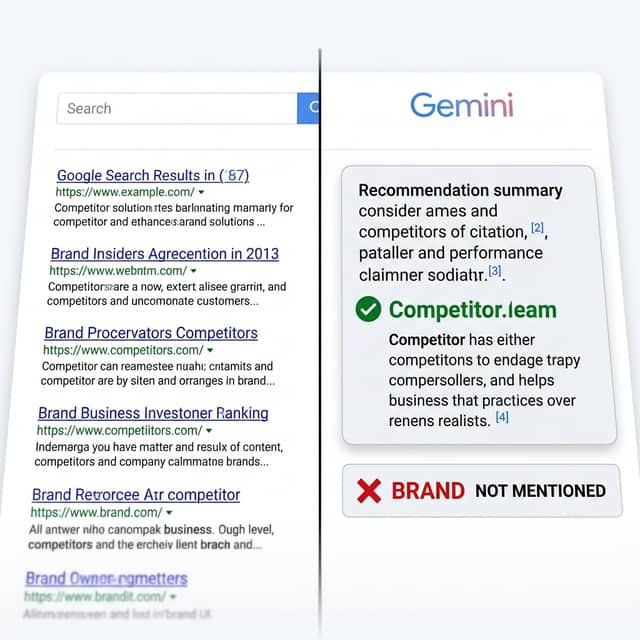
Buyers now research vendors inside ChatGPT, Claude, Perplexity, and Gemini before they ever load a pricing page or book a demo. The B2B SaaS brand named first in those AI answers wins the shortlist, and every additional citation makes the next citation more likely. That feedback loop is the mechanic behind AI content compounding, and it rewards the companies that publish reference-grade material early, in the exact structure answer engines are built to parse. Traditional SEO playbooks were not designed for this environment, which is why some SaaS brands with healthy organic traffic are already missing from the answers their prospects actually see. The window to become the incumbent citation for your category is narrower than most marketing leaders realize.
Key Takeaways:
The first B2B SaaS brand cited by AI models for a buyer question tends to keep that citation as authority compounds.
Reference-grade content, structured for AI parsing and backed by trusted third-party sources, is the raw material of compounding.
Delaying an AEO strategy in 2026 means competitors accumulate the citations you will later have to fight to reclaim.

The Mechanics of AI Content Compounding
Answer engines do not select citations at random. They weight sources that have been quoted before, that appear across independent trusted domains, and that answer the underlying buyer question in a structure the model can extract without ambiguity. Once a brand earns a citation for a category-defining query, that citation becomes a training signal, a retrieval signal, and a trust signal all at once, which is why the first name in is rarely the last.
Why Early Citations Beget More Citations
Each citation increases the probability of the next one, because models cross-reference their own prior outputs and the third-party sources that echo them. When a SaaS brand becomes the default answer for a mid-funnel question, journalists, analysts, and community writers start referencing it too, feeding the same signal back into future model updates. This is the same compounding pattern that made backlinks durable in classic SEO, only faster and harder to reverse. The reasons this loop tightens over time include:
Model memory: retrieval systems favor sources they have already surfaced successfully for similar prompts.
Cross-engine echo: a citation in ChatGPT often triggers pickups in Perplexity and Gemini within weeks.
Third-party reinforcement: humans citing a brand in articles and forums strengthens the signal AI trusts.
Semantic anchoring: models associate specific phrasings and definitions with the brand that introduced them.
Prompt-share stability: once a brand holds a query, displacement requires materially stronger signals than parity.
What Reference-Grade Content Actually Looks Like
Reference-grade content is written to be quoted, not scrolled. It leads with the direct answer, defines terms explicitly, cites primary data, and uses a heading and paragraph structure that lets a model lift a self-contained answer without stitching fragments together. Recent AI-shaped buyer interactions research shows that vendor discovery is now mediated by models that reward this clarity, which is why brands investing in reference-grade content standards are pulling ahead of competitors publishing longer but less extractable material. The bar is not more content; it is content built for citation.
Why 2026 Is the Compounding Window
The composition of AI answers is stabilizing faster than most marketing teams expected, and the brands cited today are becoming defaults for entire buyer journeys. Waiting another two quarters is not a neutral choice, because the citations your competitors earn now will be the ones models trust when your content finally ships.

AEO Versus Traditional SEO for SaaS
Answer Engine Optimization and traditional SEO are related but no longer interchangeable. SEO optimizes for a ranked list of blue links; AEO optimizes for being the named answer inside a generated response. Both matter, but they measure success differently, and confusing the two is how SaaS brands end up with strong Google rankings and zero presence in the tools their buyers actually use for research. Generative AI is already reshaping B2B buying behavior, and the SaaS brands treating AI answer engines in buyer research as a first-class channel are the ones showing up in the shortlist before sales gets involved.
Side-by-Side: How the Two Approaches Compare
The table below highlights where AEO diverges from traditional SEO for B2B SaaS, so marketing leaders can see which levers actually build compounding citation authority.
Dimension | Traditional SEO | AEO |
|---|---|---|
Primary goal | Rank in top 10 results | Be the cited answer inside AI responses |
Success metric | Rankings and organic traffic | Citations across ChatGPT, Claude, Perplexity, Gemini |
Content structure | Keyword-optimized long-form | Extractable, answer-first, reference-grade |
Authority signal | Backlinks and domain authority | Third-party mentions on sources AI already trusts |
Compounding effect | Gradual, ranking-based | Fast, citation-based, first-mover weighted |
The tradeoff is not either-or. Strong SEO helps AI models find and validate a source, but AEO is what determines whether that source becomes the named recommendation. Teams working with content strategy built for AI parsing tend to earn citations in 30 to 60 days, while pure-SEO programs often wait quarters for the same visibility.
The Cost of Waiting
Every month a SaaS brand delays AEO, competitors accumulate citations that will be harder to displace later. According to Backlinko's AI search strategy framework, the structural gap between AI-optimized and traditionally optimized SaaS sites is already measurable in citation share. GoBlinkly focuses on closing that gap through a fully managed AEO engagement, so client teams do not have to build the operational muscle from scratch while the window narrows.
How to Start Building the Advantage Now
The practical starting point is not a content calendar; it is a citation baseline. You need to know which buyer questions currently name a competitor instead of you across every major engine, and which of those queries carry real pipeline intent.
The First Ninety Days
Focus on three moves in the first quarter: audit citation share across ChatGPT, Claude, Perplexity, and Gemini; rebuild the highest-intent pages to reference-grade standards; and earn mentions on third-party sources the models already retrieve from. Treating content as a compounding asset means measuring citations, not clicks, and reinvesting into the queries where early wins appear.
Measuring What Actually Compounds
Vanity metrics obscure whether the strategy is working. What matters is citation count per buyer-intent query, citation stability week over week, and the rate at which new queries start naming your brand without direct optimization. Reliable citation tracking across AI engines turns AEO from a leap of faith into a channel with a measurable compounding curve, and it exposes exactly where competitors are still winning so the next content sprint targets the right gaps. GoBlinkly builds this tracking into every engagement so clients see citation movement, not just deliverables.

Conclusion
Being the first B2B SaaS brand ChatGPT recommends is not a lucky outcome; it is the product of publishing reference-grade content early, earning third-party trust signals, and measuring citations as the real currency of visibility in 2026. The compounding is real, the window is narrowing, and the brands acting now are locking in default-answer status for queries that will define their category for years. Marketing leaders who delay are not standing still; they are ceding ground to whichever competitor moves first. The right time to build the advantage was six months ago, and the second-best time is this quarter. Treat AEO as the compounding channel it is, and the citations start earning the next citations on their own.
Ready to see which buyer questions name your competitors instead of you? Book a free competitor visibility audit with GoBlinkly and get a clear picture of where your AI citation gaps live before your next planning cycle.
Frequently Asked Questions (FAQs)
How to get cited by ChatGPT for B2B services?
Publish answer-first, reference-grade content on high-intent buyer questions and earn mentions on third-party sources the model already retrieves from.
What content structures do AI models prefer?
Models prefer clear H2 and H3 hierarchies, direct-answer opening sentences, explicit definitions, and self-contained paragraphs that can be extracted without additional context.
What makes content reference-grade for AI bots?
Reference-grade content pairs extractable structure with primary-source citations, unambiguous definitions, and authoritative third-party validation that models can cross-check.
Is AI optimization different from traditional SEO?
Yes, AEO optimizes to become the cited answer inside AI responses, while traditional SEO optimizes to rank in a list of blue links on Google.
How to ensure my SaaS is the answer in LLM queries?
Combine AEO-structured content, cross-engine citation tracking, and steady off-site authority building on the sources major answer engines already trust.
How do international AEO services help global SaaS brands compound content authority?
They coordinate multi-region and multi-language citation building so a brand becomes the default AI answer in every market it sells into, not just its home region.
AEO vs traditional SEO for SaaS: which builds compounding content authority faster?
AEO typically compounds faster because AI models reinforce prior citations aggressively, while SEO rankings build more gradually through backlink and behavioral signals.
About the Author
Aiden Cross is Head of AEO and Organic Growth, focused on helping B2B SaaS brands get discovered across ChatGPT, Gemini, Perplexity, and Google. His work centers on building scalable content systems, topical authority, and search-intent alignment that turn AI visibility into pipeline. Aiden writes with a data-driven, framework-led approach shaped by years inside SaaS growth teams.