Quick Answer
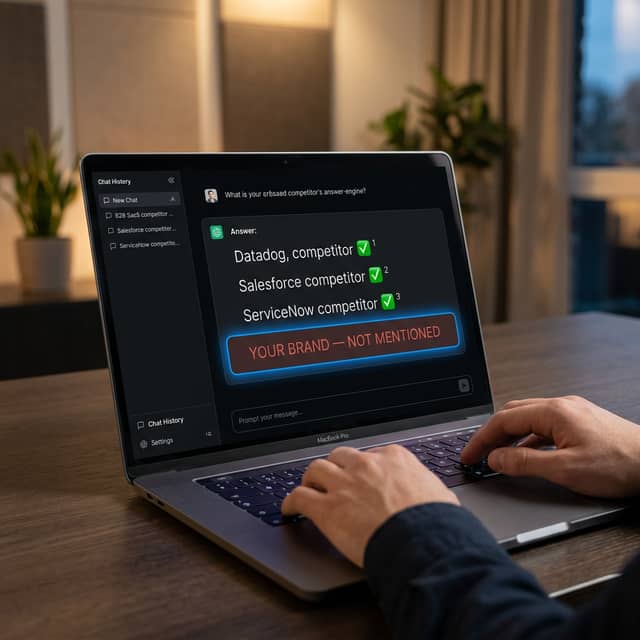
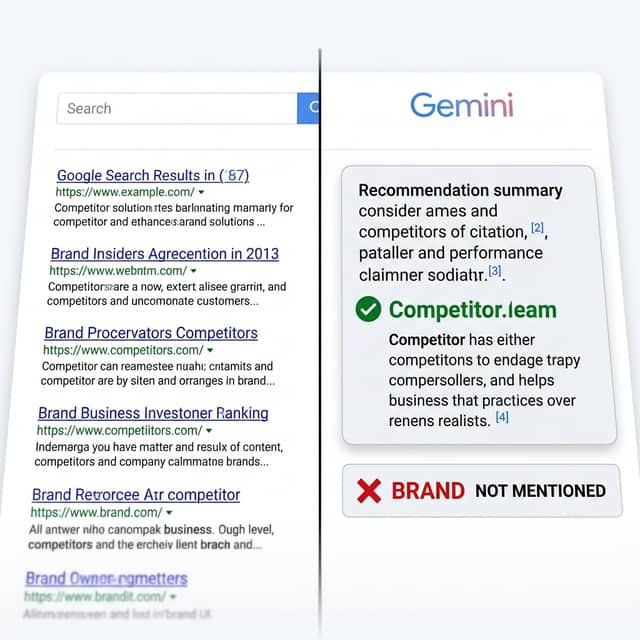
Ranking on Google no longer guarantees visibility inside AI answer engines because ChatGPT, Claude, Perplexity, and Gemini select brands based on citation-worthiness, third-party authority, and machine-parseable content, not blue-link rankings. Winning in 2026 requires a dual-channel strategy that treats SEO as the foundation and AI answer engine optimization as the outcome, executed as a managed service so internal teams are not stuck maintaining two disciplines at once.
Introduction
A managed service provider can hold page-one rankings for its most valuable buyer queries and still lose every AI-driven consideration cycle to a competitor it has never heard of. Buyers are quietly shifting the first half of their research into ChatGPT and Claude, and those engines are not simply reading Google's top results back to them. They are choosing which brands to cite based on a different set of signals, and most B2B SaaS marketing teams are still investing exclusively in the old scoreboard. According to Search Engine Land's 2026 referral data, AI-referred visitors remain a small share of total traffic today, but the buyers arriving through that channel are pre-qualified in a way organic traffic is not, since they have already had a vendor recommendation synthesized for them before ever clicking through.
Key Takeaways:
Google rankings and AI citations are governed by fundamentally different selection mechanics, so strong SEO alone does not produce ChatGPT visibility.
A Dual-Channel Visibility Framework treats SEO as the technical foundation and AEO as the measurable outcome, tracked through citations rather than rankings.
Managed AEO services eliminate the operational burden of running two parallel disciplines and typically deliver first AI citations within 30 to 60 days.

Why Strong Google Rankings No Longer Guarantee AI Visibility
The assumption that authority on Google automatically transfers to AI answer engines has quietly become the most expensive mistake in B2B SaaS marketing. Large language models do not rank pages; they select passages, sources, and brand mentions from a curated set of trusted references, and their selection logic weights entirely different signals than PageRank ever did.
The Mechanics Behind AI Citation Selection
ChatGPT answer engine optimization depends on how models identify brands worth quoting, not which pages Google places first. When a model surfaces a recommendation, it is drawing on training data patterns, retrieval sources, and third-party authority signals that reward consistent brand presence across the web. Understanding this is the first step in closing the gap between ranking on Google but not being cited by AI.
Citation-worthy structure: Answer engines favor content written as direct, self-contained answers rather than long narrative articles that require synthesis.
Third-party authority: Models weight mentions on independent sources, industry publications, and reference sites more heavily than on-domain claims.
Machine-parseable formatting: Schema, clear headings, and unambiguous entity language make a brand easier for retrieval systems to associate with a query.
Buyer-question alignment: Content must map to the exact phrasing buyers use when asking AI, not the keyword variants optimized for Google.
Where Traditional SEO Falls Short
Traditional SEO measures success in rankings and clicks, both of which are diagnostic dead ends when buyers never leave the AI interface. A brand can rank first for its category term and still be absent when a CFO asks Claude to shortlist three vendors, because the models have chosen someone else's third-party mentions to trust. This is why AI-referred visitors now behave like a distinct acquisition channel with its own economics, and it explains why so many B2B SaaS leaders are rethinking separate strategies for Google and ChatGPT.

The Dual-Channel Visibility Framework That Actually Works
A modern AI-first SEO and visibility strategy does not abandon Google; it uses SEO as the operational foundation that makes AEO possible. Crawlability, clean site architecture, and structured content are the prerequisites that answer engines depend on to trust a brand as a citation source, which is why the two disciplines belong inside one framework rather than two competing budgets.
Comparing Traditional SEO, Standalone AEO, and Dual-Channel Execution
The table below compares how each approach performs against the criteria that matter to revenue-owning decision makers in 2026.
Criteria | Traditional SEO Only | Standalone AEO | Dual-Channel Framework |
|---|---|---|---|
Primary Metric | Rankings and clicks | AI citations | Citations backed by organic authority |
Time to First Citation | Not measured | 45 to 90 days | 30 to 60 days |
Foundation Coverage | Strong | Weak or missing | Strong and reinforced |
Buyer-Question Alignment | Keyword-based | Query-based | Both, unified |
Long-Term Compounding | Moderate | Fragile | Strong |
The clear takeaway is that standalone AEO without SEO fundamentals is brittle, and traditional SEO without AEO leaves the highest-converting research channel unclaimed. GoBlinkly's Dual-Channel Visibility Framework is built specifically to close that gap by treating AEO vs SEO for B2B SaaS as complementary rather than competing investments.
What Execution Actually Requires
Executing a dual-channel strategy involves buyer-question research, a site rebuild that answer engines can parse cleanly, reference-grade content designed to be quoted, and ongoing off-site authority building on the third-party sources models already trust. Firms treating AI visibility as core infrastructure rather than a bolt-on tactic tend to capture disproportionately higher customer lifetime value, since the same operational discipline that earns citations also improves how consistently a brand shows up across the buyer's research process. The operational load, however, is where most in-house teams stall, and where managed AEO vs in-house execution becomes a strategic question rather than a preference.
Why Managed AEO Services Beat Building It In-House
The choice to run AEO internally almost always looks cheaper on a spreadsheet and rarely delivers on a calendar. Content operations, technical rebuilds, digital PR, citation tracking, and monthly optimization each require distinct skill sets, and asking a two-person marketing team to sustain all of them alongside product launches is how AEO programs quietly die.
The Real Cost of Internal Capacity
Internal teams that attempt done-for-you AEO services in-house typically underestimate the ongoing cadence required to earn and defend citations. A single reference-grade piece of content is not enough. Models refresh their retrieval sources, and competitor mentions compound, which means visibility must be maintained monthly, not launched quarterly. This is the same pattern documented in analysis of the SEO foundation for AEO, where crawlability and structure are only the starting line.
What a Managed Engagement Removes From Your Plate
A managed AI answer engine optimization agency compresses the full stack of execution into a single access grant, freeing internal teams to focus on product and pipeline. GoBlinkly, for example, runs the buyer-question research, rebuilds the site, publishes the content, earns the backlinks, and tracks citations across ChatGPT, Claude, Perplexity, and Gemini as one continuous operation. First citations typically land within 30 to 60 days, and the model is backstopped by a 90-day performance guarantee that shifts the risk off the client. For teams evaluating AI research in the B2B buying process, the question is no longer whether to invest in AEO but whether to build the muscle internally or acquire it as a managed capability.

Conclusion
Being invisible in AI answer engines while ranking on Google is not a temporary anomaly; it is the new default state for brands that treat SEO as their only visibility channel. The path forward is a unified dual-channel strategy that uses SEO as the foundation and AEO as the measurable outcome, executed with enough operational consistency to compound month over month. For B2B SaaS leadership without the internal bandwidth to run both disciplines at scale, a managed engagement removes the execution risk and delivers citations, not just rankings. The brands that act in 2026 will own the AI research phase for years, and the ones that wait will spend the next cycle explaining to their boards why competitors got there first.
Ready to see exactly which buyer questions are naming your competitors instead of you? Request a free competitor visibility audit from GoBlinkly and get a clear diagnostic across ChatGPT, Claude, Perplexity, and Gemini before your next quarterly review.
Frequently Asked Questions (FAQs)
How do you get cited by ChatGPT for B2B software?
Citations come from a combination of machine-parseable on-site content, consistent third-party authority signals, and buyer-question-aligned reference material that models identify as trustworthy across multiple sources.
What is Answer Engine Optimization for SaaS?
Answer Engine Optimization is the discipline of earning citations and recommendations inside AI answer engines like ChatGPT, Claude, Perplexity, and Gemini, measured in citations rather than traditional search rankings.
Is AI optimization different from traditional SEO?
Yes, AI optimization targets citation selection inside language models rather than page rankings on search engines, which requires different content structure, authority signals, and success metrics.
Why choose managed AEO over a generalist SEO agency?
Generalist agencies optimize for Google's algorithm, while a managed AI search optimization services provider builds around how models actually select and cite brands, which is a fundamentally different operational discipline.
Does AI optimization help with organic Google rankings?
Yes, because the SEO foundation required for AEO, including crawlability, structured content, and third-party authority, also reinforces traditional organic performance as a byproduct.
How does GoBlinkly manage AI search citations?
GoBlinkly runs buyer-question research, rebuilds the site for answer engine parsing, publishes reference-grade content, earns off-site authority, and tracks citations monthly across all major AI engines as a fully managed engagement.
How quickly can a B2B SaaS company expect AI citations?
First citations from managed AEO programs typically land within 30 to 60 days and compound steadily from there as third-party authority and reference content mature.
About the Author
David Kross is a content operations strategist focused on scalable content systems, search performance, and measurable organic growth through data-backed execution. His work centers on aligning content operations with search intent, SERP analysis, and performance analytics to help B2B SaaS teams build compounding organic and AI-driven visibility.