Quick answer: SEO content optimization means structuring, formatting, and deepening content with clear headings, answer-first paragraphs, and full semantic coverage so both Google and AI answer engines treat it as the most citable source.
Introduction
Content optimization is the difference between publishing blog posts that collect dust and creating assets that earn rankings, citations, and pipeline. Most B2B SaaS teams produce content consistently but skip the structural and semantic work that search engines and AI answer engines need to parse, prioritize, and quote. The result is a growing content library that generates neither Google traffic nor AI visibility, while competitors who optimize correctly capture high-intent buyers during the research phase. Closing that gap requires specific, repeatable techniques that make content readable by algorithms and valuable to humans at the same time.
Key Takeaway: SEO content optimization is not about stuffing keywords or gaming algorithms. It is about structuring, formatting, and deepening content so that both Google and AI engines treat it as the most citable answer to buyer questions.

The Foundation: What Content Optimization Actually Means
Content optimization is the practice of refining every layer of a piece of content, from keyword placement and heading structure to semantic coverage and readability, so that it performs in search results and AI-generated answers. It goes well beyond writing "good" content. A well-optimized page signals relevance, authority, and completeness to algorithms while still delivering genuine value to a human reader scanning for answers.
Why Standard Blog Posts Fall Short
Publishing a 1,000-word post with a relevant title and a few keywords is no longer enough to compete. Standard blog posts fail because they lack the depth, structure, and formatting that modern search systems use to evaluate quality. Here is where most content falls apart:
Shallow keyword coverage: Only targeting a single head term without supporting semantic variations that signal topical authority
Flat heading structure: Missing the H2/H3 hierarchy that helps crawlers and AI parsers segment content into discrete, quotable sections
No direct answers: Burying the useful response three paragraphs deep instead of leading with it, which costs both featured snippets and AI citations
Weak internal linking: Failing to connect related content, which leaves search engines unable to understand the site's topic cluster architecture
The Dual-Channel Visibility Problem
Google rankings and AI citations are increasingly intertwined, but they are not identical. Research shows that a significant share of AI citations pull from top-ranking pages, yet the overlap is far from complete. Content needs to satisfy traditional on-page SEO signals while also being structured in a way that AI models can extract, attribute, and recommend. This is the core challenge of any modern content SEO strategy: optimizing for two systems with overlapping but distinct requirements. Teams that treat SEO and answer engine optimization as separate projects waste effort. The techniques below address both channels simultaneously.
Core Content Optimization Techniques for Rankings and AI Citations
Moving from concept to execution, these are the content optimization techniques that consistently move the needle for B2B SaaS pages. Each one contributes to both traditional search performance and the likelihood of earning AI-generated recommendations.
Keyword Placement, Semantic Depth, and Structure
Keyword optimization in content starts with placing your primary term in the H1, the first 100 words, and at least one H2. But placement alone is not enough. Search engines and AI models evaluate whether content covers the full semantic field around a topic. For a page targeting "content optimization," that means also addressing related concepts like readability scoring, heading hierarchy, schema markup, and internal linking in meaningful depth rather than as passing mentions.
Semantic depth means covering the subtopics and questions a reader would logically need answered. Tools like Surfer SEO, Clearscope, or MarketMuse can identify the terms that top-ranking pages cover, but the real skill is weaving those terms into genuinely useful prose. The difference between semantic SEO and traditional keyword SEO is precisely this: one creates a comprehensive resource, the other creates a keyword-stuffed page that ranks briefly and fades.
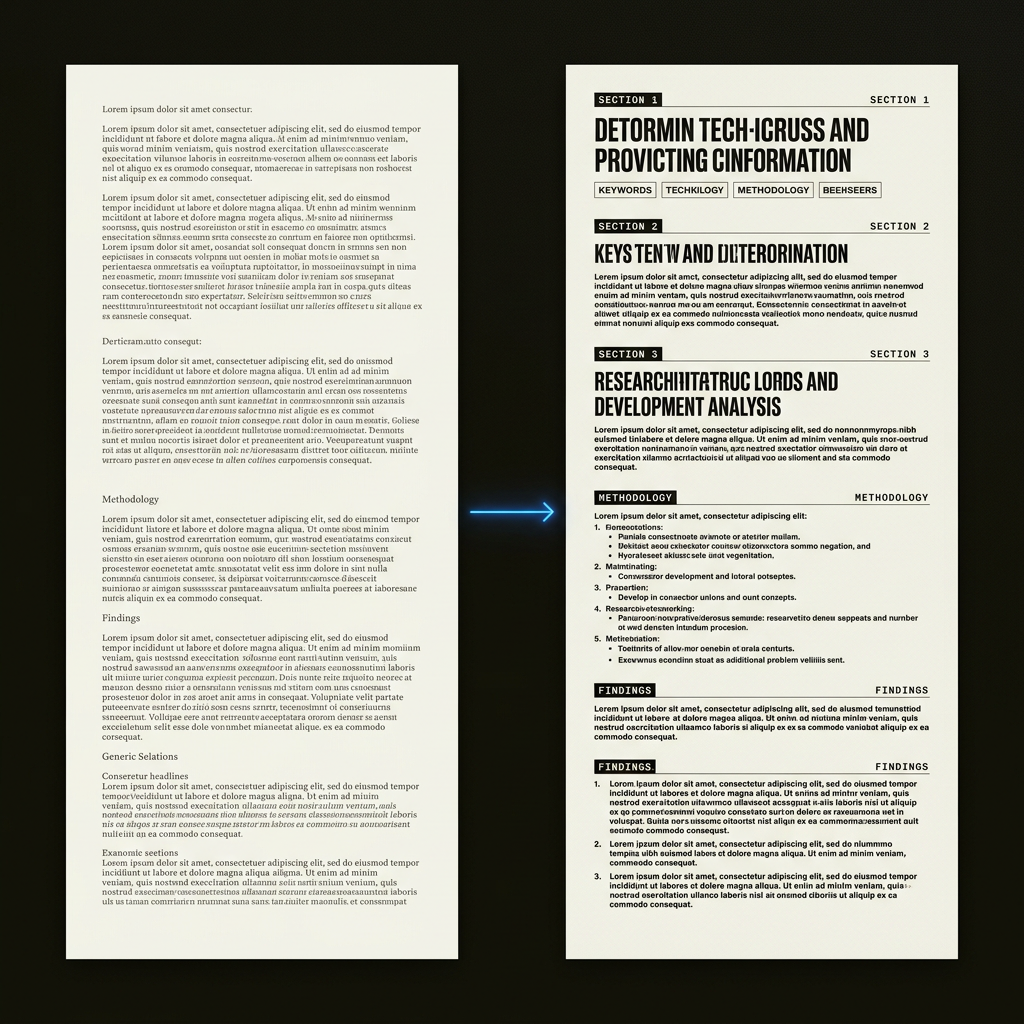
Structure matters equally. Every H2 should introduce a distinct subtopic. Every H3 should narrow focus within that subtopic. This hierarchy lets Google's crawlers index sections independently and gives AI parsers discrete blocks to quote. When a heading clearly states a question and the first sentence underneath directly answers it, that section becomes a candidate for featured snippets and AI citations simultaneously. This answer-first approach is the foundation of any effective AEO content strategy.
Formatting for Parseability and AI Readability
AI answer engines do not read content the way humans do. They scan for structured, parseable content blocks that can be extracted and attributed cleanly. This means formatting choices directly affect whether content gets cited or ignored. Short paragraphs (two to four sentences) outperform dense walls of text. Bullet lists with clear labels help both readers and parsers extract key points quickly.
Tables are useful when comparing options, features, or pricing tiers, but only when the comparison adds decision-useful information. Schema markup (FAQ schema, HowTo schema, article schema) provides an additional structural layer that helps both Google and AI models understand what type of content they are processing and how to present it. The on-page SEO elements (see on-page SEO best practices) that once seemed minor, like meta descriptions, alt text, and heading tags, now serve double duty as signals for both traditional crawlers and language model parsers.
One commonly overlooked technique is writing explicit definition sentences near the top of each section. When a section begins with "Content optimization is..." or "Answer engine optimization refers to...," AI models can extract and attribute that definition with confidence. Vague or narrative-style openings make extraction harder and reduce citation probability.

Conclusion
Content optimization is a compounding discipline. Every page that earns a ranking or an AI citation strengthens the authority of the next one. The techniques covered here, from keyword placement and semantic depth to answer-first structure and AI-readable formatting, are not optional extras. They are the baseline for any B2B SaaS company that wants to be visible where high-intent buyers are actively researching. For teams that lack the internal capacity to execute this consistently, GoBlinkly offers managed SEO content optimization services built specifically for this dual-channel reality. The companies that optimize now will be the ones AI recommends later, and the gap between optimized and unoptimized only widens with time.
Frequently Asked Questions (FAQs)
What is SEO content optimization?
SEO content optimization is the process of refining a page's structure, keywords, semantic coverage, and formatting so that search engines and AI answer engines can parse, rank, and cite it effectively.
How to optimize content for search engines?
Place your primary keyword in the H1 and first 100 words, build a clear H2/H3 hierarchy, cover the full semantic field of the topic, use an answer-first paragraph structure, and ensure internal links connect the page to related content on your site.
Why is content optimization important for SEO?
Without optimization, even well-written content lacks the structural and semantic signals that search engines and AI models need to evaluate relevance, which means it gets outranked by competitors who provide those signals clearly.
Can content be optimized for both Google and AI?
Yes, because AI citation engines heavily overlap with Google's ranking signals, and techniques like heading hierarchy, direct-answer formatting, and semantic depth serve both channels simultaneously.
How does content optimization improve rankings?
It improves rankings by helping search engines understand exactly what a page covers, how authoritative it is within its topic cluster, and whether it directly answers the queries users are searching for.
What content optimization services work best for B2B SaaS worldwide?
Managed services that combine keyword research, reference-grade content production, on-page SEO execution, and AI-readability formatting tend to outperform DIY approaches for B2B SaaS companies operating across multiple markets and languages.
Is managed content optimization better than DIY for SaaS?
Managed content optimization is typically more effective for SaaS teams because it eliminates the execution bottleneck, maintains consistency month over month, and applies specialized expertise that most in-house teams lack the capacity to build and sustain.
About the Author
Ethan Brooks is an AI Content Strategy Specialist focused on helping B2B SaaS teams translate AI and search engine shifts into practical content workflows that produce measurable pipeline. His work centers on search intent, content automation, and the operational side of getting brands cited inside AI answers.