Quick Answer
Large B2B content libraries get ignored by AI answer engines because the content lacks citable structure, third-party authority signals, and direct buyer-question targeting that models require to quote a source. An AEO strategy fixes this by restructuring existing content for machine parsing, building authority on sources AI already trusts, and mapping content to the exact prompts buyers ask, without discarding the library you already built.
Introduction
If you have spent years publishing blog posts and ChatGPT still names your competitors when buyers ask who to trust, the problem is not the volume of your content. It is the format, the authority signals, and the questions the content answers. Traditional SEO taught marketing teams to write for Google's ranking algorithm, but answer engines like ChatGPT, Claude, Perplexity, and Gemini pull citations using an entirely different logic that most published libraries were never built to satisfy. Google rewards depth and keyword coverage while AI models reward structured, extractable answers backed by external validation. That gap is why a 200-post archive can rank well on page one and still earn zero mentions inside AI answers, month after month.
Key Takeaways:
Ranking on Google does not translate into AI citations because answer engines use different signals for selecting sources.
Existing content can be retrofitted for AEO through structural edits, buyer-question mapping, and third-party authority building.
An AEO strategy runs alongside SEO as a dual-channel system, not a replacement for the content investment already made.

Why Large Content Libraries Get Ignored by AI Answer Engines
The assumption that volume plus rankings equals AI visibility has been broken since generative search became a mainstream buyer research channel. Answer Engine Optimization operates on citation logic, not ranking logic, and that difference determines whether your content ever appears inside an AI-generated response.
The Three Structural Gaps Blocking Citations
Most B2B content was written to satisfy Google's crawler and a human scroller, not a language model looking for a quotable fragment. When models scan for citation candidates, they look for specific structural and semantic cues that traditional blog formats routinely miss. Understanding why competitors get AI citations often starts with a structural audit of the content itself.
Unstructured answers: Long introductions, storytelling openers, and buried conclusions prevent models from extracting a clean, standalone response.
Missing entity signals: Content lacks clear definitions, named frameworks, statistics with sources, and consistent brand-entity references that answer engines use to verify expertise.
No buyer-question targeting: Posts optimized for broad keywords rarely match the specific, conversational prompts buyers actually type into ChatGPT during research.
Weak external validation: Without citations from trusted third-party sources, models have no independent authority signal to confirm the content is worth quoting.
Outdated freshness cues: Answer engines favor recently updated, dated content, and older posts without visible refreshes get filtered out of citation pools.
Why Google Rankings Do Not Translate
Google evaluates pages against a query using ranking factors that include backlinks, dwell time, and topical authority, then presents ten blue links. AI models instead select a handful of sources to synthesize into a single answer, favoring content that reads as pre-formatted response material and that appears across multiple trusted references. The result is a widening gap between ranking high but getting no AI mentions, which is now the default experience for content libraries built before 2024. According to HubSpot's research on B2B AEO, the practice hinges on structuring content so AI engines can accurately understand, summarize, and cite the expertise embedded within it, which is a separate discipline from optimizing purely for keyword rankings.
The AEO Strategy That Retrofits Existing Content for Citations
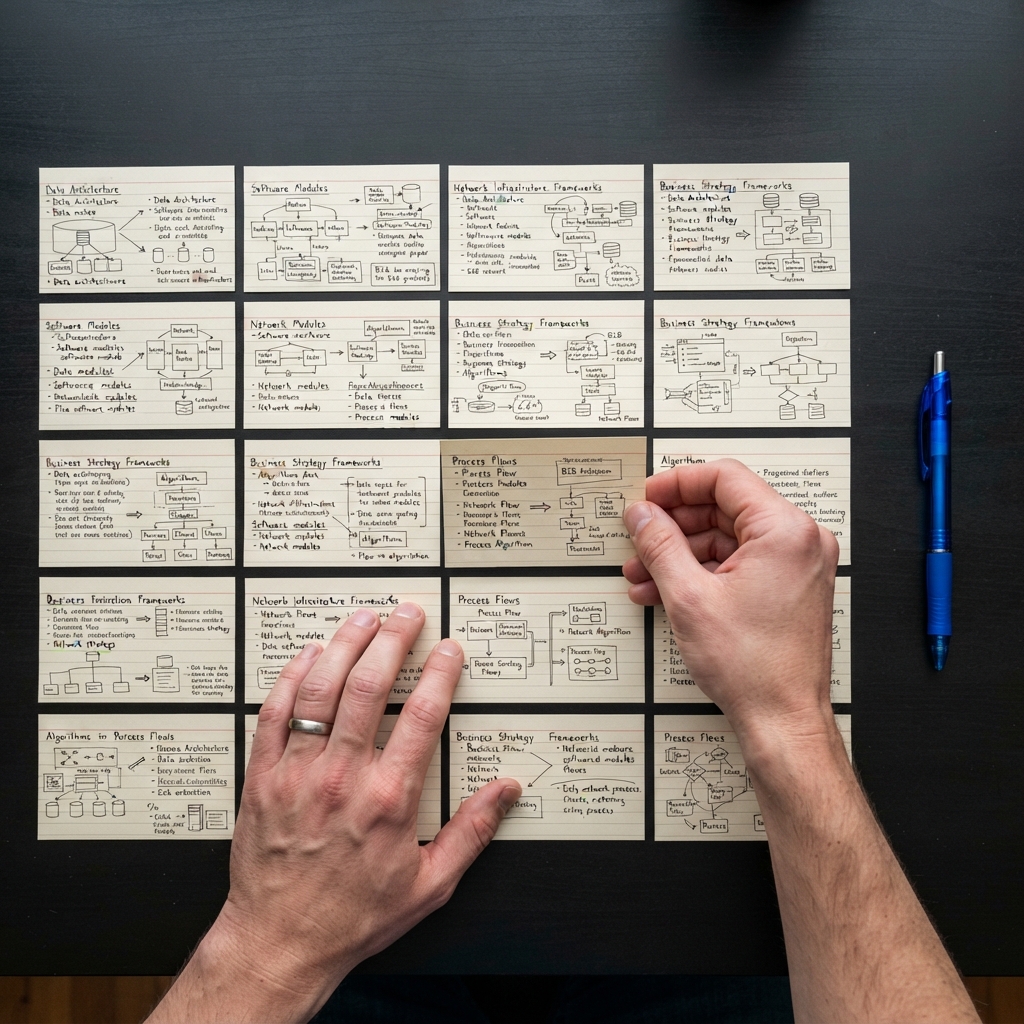
The reassuring reality for content-mature teams is that a 200-post library is an asset, not a liability, once it is restructured for answer engines. Retrofitting is faster, cheaper, and lower-risk than starting over, and it preserves the domain authority and internal linking equity already earned.
Applying the Dual Channel Visibility Framework
The Dual Channel Visibility Framework treats SEO and AEO as complementary layers, where strong search rankings feed the authority signals that AI models reference. This approach recognizes that answer engines often cite pages that already rank well, provided those pages meet the additional criteria that models require for extraction. GoBlinkly applies this framework across established B2B SaaS content libraries by pairing structural edits with off-site authority building on the third-party sources AI already trusts. The retrofit process focuses on three sequential moves: buyer-question research to map real prompts, structural rewrites that convert buried answers into extractable formats, and authority acquisition that gives models a reason to trust the source. Research from Ahrefs, reported by the Content Marketing Institute, found that 44% of cited pages for certain prompts are list-style posts with recent update signals, which reinforces why format and freshness matter as much as depth. Teams looking to earn content strategy for AI citations should treat each existing post as a candidate for structural upgrade rather than a finished asset.
Retrofitting Without a Full Rebuild
The retrofit workflow starts with a visibility audit that identifies which buyer questions currently name competitors instead of you, then prioritizes existing posts that already touch those topics. Each targeted post gets a direct-answer opening block, clear entity definitions, updated statistics with source citations, and a structured FAQ section that mirrors the phrasing buyers use in AI prompts. Off-page, the same content is referenced on trusted third-party sources through digital PR and authority backlink work, giving models the independent validation they need to cite the page. This is exactly the mechanism behind AI visibility without internal lift, where the client grants access once, and the agency executes the retrofit end-to-end. First citations typically appear within 30 to 60 days, and the effect compounds as more retrofitted pages accumulate authority signals across engines.

Conclusion
A stagnant AI visibility problem rarely means the content itself is bad; it means the content was built for a channel that no longer defines the buyer's first research step. Answer Engine Optimization is the missing layer that turns an existing library into a citation-generating asset by fixing structure, adding authority, and targeting the exact prompts buyers use inside ChatGPT, Claude, Perplexity, and Gemini. Retrofitting is faster than rebuilding, and dual-channel visibility compounds into a standing advantage that competitors relying on SEO alone cannot match. The teams that act in 2026 will hold citation share while everyone else watches AI answers hand it away. Start with a diagnostic that shows exactly where the gap is, then execute against it.
Ready to see which buyer questions name a competitor instead of you across every major AI engine? Request a free visibility audit from GoBlinkly and get a clear map of what to retrofit first, backed by getting your brand cited by AI through structured buyer-question research. Semrush reported in 2025 that AI referrals convert at roughly 4.4x the rate of organic search, which puts the ROI question in context, particularly when paired with HubSpot's guide to AI citation tracking benchmarks on citation-driven conversion priorities through 2026.
Frequently Asked Questions (FAQs)
What is Answer Engine Optimization?
Answer Engine Optimization is the practice of structuring content, authority signals, and buyer-question targeting so that AI answer engines like ChatGPT, Claude, Perplexity, and Gemini cite your brand when users ask questions in your category.
How do I get my company cited in ChatGPT?
You earn ChatGPT citations by pairing structured, extractable content with third-party authority on sources the model already trusts, and by targeting the specific prompts your buyers actually ask.
How long does it take to get AI citations?
First citations typically land within 30 to 60 days when structural retrofits and off-site authority work are executed in parallel, and coverage compounds from there as more pages accumulate signals.
How does AEO compare to traditional SEO?
AEO vs traditional SEO differs in that SEO optimizes for ranking positions on Google while AEO optimizes for being selected as a cited source inside AI-generated answers, though the two work best as a dual-channel system.
Is AEO effective for B2B SaaS lead gen?
Yes, AI referrals convert at roughly 4.4x the rate of organic search according to Semrush 2025 data, making AEO a high-leverage channel for B2B SaaS buyer-intent traffic.
How do I audit my brand's AI visibility?
Run a competitor visibility audit that checks which buyer-intent questions name your competitors across ChatGPT, Claude, Perplexity, and Gemini, then map those gaps against your existing content library.
How do I prove AI citation ROI?
Track citation counts by engine, referral traffic from AI sources, and downstream conversion rates on that traffic to build a direct ROI picture tied to pipeline outcomes.
About the Author
David Kross is a Content Operations Strategist focused on scalable content systems, search performance, and measurable organic growth through data-backed execution. His work centers on retrofitting mature B2B content libraries for both search and AI visibility, using clear operational frameworks to convert existing assets into pipeline-driving channels.