Introduction
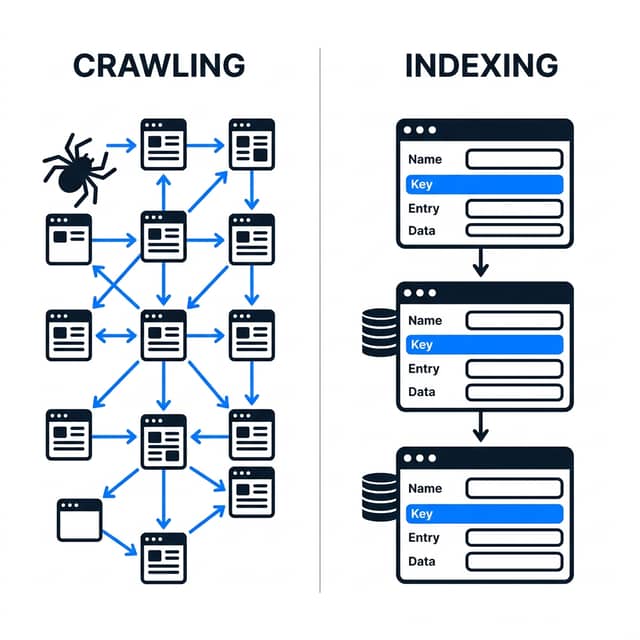
Most B2B SaaS teams assume their SEO is working because they see some traffic trickling in. But traffic without context is a vanity metric. A search visibility audit is a structured process for identifying which high-intent buyer questions your brand fails to appear for, across both Google search results and AI answer engines like ChatGPT, Perplexity, and Gemini. It surfaces content gaps, technical blind spots, and authority deficits before they cost you pipeline. In 2026, buyers shortlist vendors through AI research phases before ever visiting a website, meaning the gaps you cannot see are the ones costing you pipeline. The difference between a brand that gets recommended and one that gets ignored often comes down to a handful of fixable blind spots (see AI tools that show your citation gap).

Mapping Your Buyer-Intent Keywords for a Search Visibility Audit
The foundation of any competitive visibility analysis is understanding which queries actually matter for your business. Not every keyword is worth pursuing. The ones that drive pipeline are specific, high-intent questions your ideal buyers type into Google or ask AI engines when evaluating solutions.
How Do You Build a Buyer Question Map?
Start by listing every question a buyer asks throughout their journey, from problem awareness through vendor comparison. Pull data from sales call transcripts, customer support tickets, keyword research for B2B SaaS, and competitor FAQ pages. Then validate each question using search volume and intent data from tools like Ahrefs, Semrush, or Google Search Console.
Problem queries: Questions that signal the buyer knows they have a pain point but has not started evaluating vendors yet
Comparison queries: Searches where the buyer is actively weighing two or more solutions against each other
Feature-specific queries: Long-tail questions about capabilities, integrations, or use cases your product addresses
Trust queries: Questions about reviews, case studies, or third-party validation that influence final decisions
Prioritizing by Revenue Impact
Not all buyer questions carry equal weight. A query like "best [category] software for mid-market" signals a buyer much closer to a purchase decision than "what is [category] software." Rank your keyword map by proximity to a buying decision and by the monthly volume behind each query. This prioritization ensures you spend time closing the gaps that affect revenue first, rather than chasing search visibility on informational queries that rarely convert (see what search visibility is and how to improve it in 2026).
According to research on SaaS keyword strategy, bottom-of-funnel keywords in B2B often have lower volume but conversion rates three to five times higher than top-of-funnel queries. GoBlinkly's analysis of B2B SaaS audits consistently shows that teams chasing high-volume informational keywords lose pipeline to competitors who own the low-volume, high-intent queries instead.

Running the Audit Across Google and AI Engines
Once you know which queries matter, the next step is checking where your brand actually shows up, and where it does not. A modern audit covers two distinct channels: traditional organic search visibility on Google and brand visibility in AI answers from engines like ChatGPT, Perplexity, Claude, and Gemini.
Auditing Google Rankings and SERP Presence
For each priority keyword, check your current Google position. Tools like Semrush, Ahrefs, and rank tracking platforms will show you where you rank, which SERP features you appear in (or miss), and how your positions have shifted over time. Pay close attention to positions 4 through 20, where you have existing equity but are not capturing meaningful click-through rates.
Beyond rankings, evaluate the quality of your SERP presence. Are competitors earning featured snippets, People Also Ask inclusions, or knowledge panel mentions that you are missing? Ahrefs' Google ranking factors guide emphasizes the role of helpful, experience-backed content in earning these prominent positions. A page that ranks seventh but never earns a SERP feature is functionally invisible for most searches.
How Do You Audit Your AI Citation Presence?
This is the step most teams skip entirely, and it is the one that matters most in 2026. For each high-intent query on your map, manually ask ChatGPT, Perplexity, Claude, and Gemini whom they recommend. Document your findings using these four steps:
Ask each AI engine your top 10 buyer-intent queries.
Record whether your brand is cited, mentioned, or absent.
Note which competitors are named and which sources are referenced.
Repeat in each language and region where you operate, since AI engines often cite different brands depending on language context.
AI-powered search visibility is not just about whether you appear; it is about how you are described. A citation that mentions your brand alongside the right use case or buyer persona is far more valuable than a passing mention. If competitors consistently show up in these answers and you do not, your pipeline is leaking at the earliest stage of buyer research.
According to Gartner, traditional search engine volume will drop 25% by 2026 as buyers shift to AI-assisted research. AI visibility and traditional SEO work as complementary channels, and an audit that ignores either one gives you an incomplete picture. Platforms dedicated to AI citation tracking can help automate parts of this process once you move beyond the initial manual sweep.
How Do You Benchmark Against Competitors and Prioritize Fixes?
A search visibility audit only becomes actionable when you benchmark your performance against the competitors already winning those buyer queries. The goal is not to track vanity metrics but to identify exactly where you are losing and what type of gap, whether content, technical, or authority, is responsible.
Building a Competitive Visibility Scorecard
Build your scorecard in three steps:
List your top 30 to 50 buyer-intent queries as rows in a spreadsheet.
Add columns for your Google ranking and your AI citation status across each engine.
Add the same columns for your top three competitors side by side.
This side-by-side view instantly reveals patterns. You might discover that a competitor ranks below you on Google but gets cited in AI answers because it publishes on third-party sources that AI models trust. Or you might find that organic research reveals gaps where no competitor has strong content, giving you an open lane.
Buyer question research visibility is not only about what your competitors publish on their own sites. It also includes guest contributions, directory listings, review platforms, and industry publications where their brand appears. AI models pull from these external sources heavily, so your audit should track where competitors are mentioned outside their own domain. GoBlinkly runs this type of multi-engine competitor audit as a free starting point for prospects, showing exactly which buyer questions name a competitor instead of the prospect's brand.
Categorizing and Sequencing Your Gaps
Once the scorecard is complete, categorize each gap into one of three buckets. Content gaps mean you have no page or asset targeting that query. Technical gaps mean you have content but it is not being indexed, rendered, or structured in a way that search engines and AI models can parse. Authority gaps mean your content exists and is technically sound, but your brand lacks the off-site credibility needed, including backlinks, mentions, and third-party citations, to outrank or out-cite competitors.
Sequence fixes by combining effort level with revenue impact. Content gaps on high-intent queries should come first because they can often be closed within weeks by publishing reference-grade articles or landing pages. Technical SEO fixes come next, since they unlock value from content that already exists. Authority building for search visibility is the longest-term play but also the most durable, and it compounds over time as you earn mentions on the sources AI models already trust. Teams that address all three gap types in parallel ensure no single gap becomes a bottleneck to overall progress.
Maintaining Visibility Over Time
A single audit is a snapshot. AI models update their training data, Google refreshes its algorithm, and competitors publish new content every week. The brands that sustain keyword visibility treat auditing as a recurring process, not a one-time project.
How Often Should You Re-Audit for Search Visibility?
Run a full audit quarterly and a lightweight check on your top 20 queries monthly. The quarterly audit should repeat the full scorecard process: re-check Google rankings, re-query each AI engine, and update competitor data. Monthly checks are faster, focused on tracking whether new content or authority efforts have moved the needle on priority queries. This cadence catches regressions early before a competitor's new content has time to entrench.
Teams that integrate SEO and AEO strategy into one workflow find it significantly easier to maintain this cadence because the same buyer question map drives both channels. Treating Google and AI engines as a single visibility surface, rather than two separate projects, reduces duplication and keeps the team focused on outcomes that affect pipeline.
Evolving Your Strategy as AI Search Matures
The metrics that matter for search visibility are shifting. GoBlinkly's dual-channel audits show that brands optimizing for Google alone miss an average of 60% of the AI-cited touchpoints their buyers encounter before ever visiting a vendor website. Click-through rate from Google still matters, but citation frequency across AI engines is becoming equally important for B2B SaaS companies whose buyers research solutions conversationally.
Track both channels in a unified dashboard and assign weight to each based on where your pipeline actually originates. GoBlinkly's Dual Channel Visibility Framework structures this measurement in two tracks: a Google track monitoring rankings, CTR, and SERP features, and an AI track monitoring citation frequency, brand sentiment, and share of voice across ChatGPT, Perplexity, Claude, and Gemini.

Conclusion
A search visibility audit is not a diagnostic exercise you run once and forget. It is the operational foundation for understanding where your brand is winning, where it is losing, and exactly which fixes will move pipeline. By mapping buyer-intent keywords, auditing both Google and AI engine presence, benchmarking against competitors, and categorizing gaps by type, you build a prioritized action plan that stops the bleeding and starts compounding in your favor. The brands that run this process consistently are the ones buyers find first, whether they search on Google or ask an AI engine for a recommendation.
Ready to see exactly which buyer questions your competitors are winning? Get a free competitor visibility audit from GoBlinkly and find out where your pipeline is leaking.
This article was written by David Mercer, GoBlinkly's AI Search and Content Strategist, who specializes in helping B2B SaaS companies build visibility across Google and AI answer engines. His work focuses on closing the gap between traditional SEO performance and AI citation presence for growth-stage software companies.
Frequently Asked Questions (FAQs)
How do I know if my brand appears in AI answers?
Manually query ChatGPT, Perplexity, Claude, and Gemini with your top buyer-intent questions and document whether your brand is cited, described, or entirely absent from each response.
How often should you run a search visibility audit?
Run a full audit quarterly and a lightweight check on your highest-priority queries monthly to catch regressions and track the impact of recent optimizations.
How does a competitive visibility analysis work for B2B SaaS?
It compares your Google rankings and AI citation presence against your top competitors for the specific buyer-intent queries that drive pipeline in your category.
Is SEO enough for B2B SaaS visibility?
SEO alone is no longer sufficient because a growing share of B2B buyers use AI answer engines to shortlist vendors before they ever visit a search results page.
Can small SaaS companies achieve search visibility?
Yes, smaller SaaS companies can achieve strong visibility by focusing on niche, high-intent queries where larger competitors have not published authoritative content or earned AI citations.
What is the difference between Google rankings and AI citation presence?
Google rankings measure where your pages appear in traditional search results. AI citation presence measures whether AI engines like ChatGPT, Perplexity, and Gemini name or recommend your brand when buyers ask category questions conversationally. A brand can rank on page one of Google and still be entirely absent from AI-generated answers.