Introduction
Buyer question research is the process of identifying the exact natural-language prompts that B2B buyers type into ChatGPT, Claude, Perplexity, and Gemini when evaluating vendors. It is the missing step between keyword strategy and AI visibility, and the companies skipping it are optimizing for a search landscape that no longer represents how buyers gather information. Every B2B SaaS company publishing content for AI answer engines faces the same silent failure mode: publishing detailed, well-structured answers to questions their buyers never actually ask.
The gap between what a marketing team assumes buyers want to know and what those buyers type into ChatGPT, Claude, Perplexity, and Gemini is where AI visibility is won or lost. Traditional keyword research tells you what people search on Google, but buyer question research is a fundamentally different discipline, one focused on mapping the natural-language queries that trigger AI citations. Without it, even the most technically optimized content becomes invisible to the answer engines that increasingly influence B2B purchase decisions.

Why Traditional Keyword Research Falls Short for AI Engines
Keyword research has been the backbone of search marketing for two decades. It works well for ranking on Google, where algorithms match pages to short-tail and long-tail queries. But AI answer engines operate on a different logic: they synthesize information from multiple sources to construct a single, conversational response. The shift from "ranking" to "being cited" changes what research must uncover.
The Query Format Divergence
When a buyer searches Google, they often type fragmented phrases: "best LTL freight software," "TMS pricing 2026," or "fleet management tool comparison." These keyword strings map neatly to traditional SEO keyword research workflows. When those same buyers query an AI engine, the format changes dramatically. They ask full questions: "Which TMS platform is best for mid-size 3PLs moving less-than-truckload freight in North America?" or "What should a VP of Operations look for when evaluating fleet management software?"
Specificity: AI queries tend to include buyer context such as role, company size, and use case, making them far more precise than typical search keywords.
Conversational structure: Buyers phrase AI queries as natural questions rather than keyword fragments, often including qualifiers and constraints.
Intent layering: A single AI query can combine informational, comparative, and transactional intent in one sentence, which a traditional keyword tool would split into three separate targets.
Follow-up chains: Buyers refine their AI queries in threads, meaning the second and third questions in a conversation reveal deeper competitive gaps that keyword tools never surface.
What Gets Lost in Translation
A growing body of research highlights that the questions buyers ask AI engines overlap only partially with what appears in keyword databases. The mismatch means companies relying solely on traditional tools are optimizing for a search landscape that does not fully represent how buyers now gather information. A B2B SaaS buyer asking Claude "What's the most reliable HR compliance platform for Canadian companies with 200 to 500 employees?" will never appear in a keyword volume report, yet that query triggers a citation opportunity every single time it is asked.

A Practical Framework for Buyer Question Research
Effective buyer question research for answer engine optimization requires a systematic approach that goes beyond brainstorming. The goal is to build a comprehensive map of every question a buyer in your category might ask an AI engine across every stage of their decision journey, then prioritize those questions by citation opportunity and competitive gaps.
Step One: Map the Buyer Journey to AI Query Patterns
Start by identifying the stages where buyers consult AI: problem awareness, solution exploration, vendor shortlisting, and validation. At each stage, the types of questions shift. During problem awareness, a CFO might ask, "Why are our accounts receivable processes slower than industry benchmarks?" During vendor shortlisting, that same CFO asks, "Which AP automation platforms integrate with NetSuite and handle multi-entity consolidation?" Understanding buyer journey mapping at this granular level reveals the exact moments where your brand needs to appear in an AI-generated answer.
The research itself draws from multiple sources. Customer-facing teams (sales, support, customer success) hear these questions daily. Win/loss interviews reveal the specific queries that led a buyer to a competitor. Community forums, review sites like G2 and Capterra, and LinkedIn discussions surface the language buyers actually use when describing their problems. Combine these inputs to build a raw question bank of 50 to 100 queries organized by journey stage. This is the foundation that separates a real AEO strategy from guesswork.
Step Two: Validate and Prioritize Through Live AI Testing
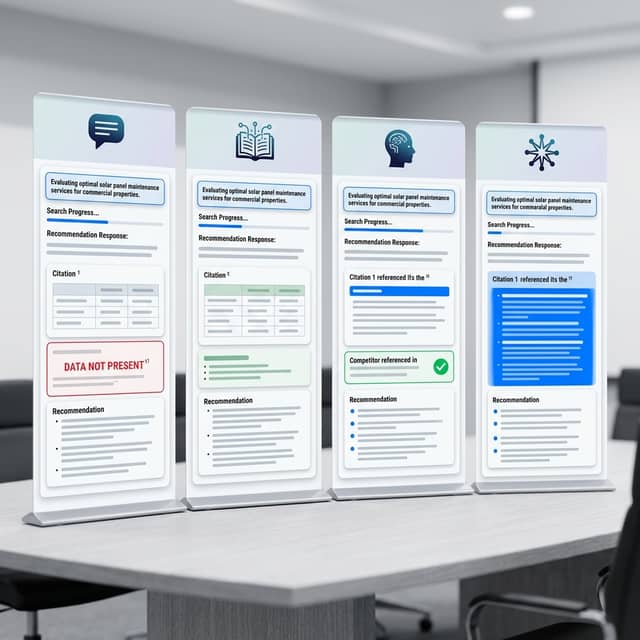
A question bank is only a hypothesis until you test it. The validation step involves entering each question into ChatGPT, Claude, Perplexity, and Gemini, then recording which brands get cited, what content structure those citations pull from, and where gaps exist. This is the most labor-intensive part of the process, and also the most revealing. You will discover that some questions you assumed were important produce generic answers with no brand citations at all, while obscure, highly specific queries trigger detailed recommendations that name your competitors by name.
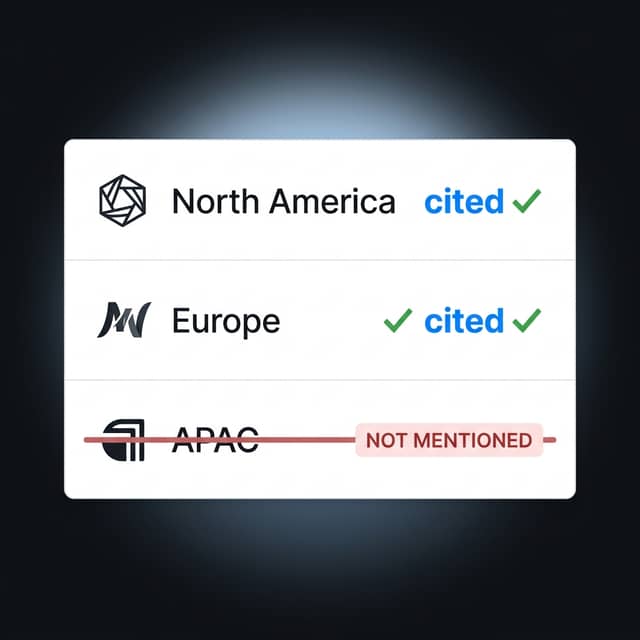
Prioritize questions where competitors are already being cited but your brand is absent. These represent the highest-value opportunities because the AI engine has already decided this question deserves a brand recommendation; your job is to become the better answer. Questions where no brand is cited represent a different kind of opportunity: you can be the first mover. GoBlinkly's approach to this validation phase is worth noting. Their citation-earning methodology runs this audit across all four major engines before a single piece of content is written, ensuring every asset targets a proven citation opportunity rather than an assumption.
Step Three: Build and Distribute Reference-Grade Answers
With a validated, prioritized question list in hand, the final step is content execution. For each high-priority question, create a dedicated section or page that leads with a direct, definitive answer in the first two sentences, then supports it with evidence: data points, named comparisons, and specific criteria. Simultaneously, distribute those answers beyond your own site by earning mentions on the publications, review platforms, and industry blogs that AI engines already trust for your category. GoBlinkly executes this as a parallel workstream, combining on-site content production with off-site authority campaigns so citation signals compound across all four engines from the first day of execution.
Turning Research Into Reference-Grade Content
Knowing the right questions is the prerequisite. Turning that knowledge into content that AI engines actually cite requires a specific structure and depth that goes beyond typical blog writing. The concept of reference-grade content optimization means creating pages that AI models treat as authoritative, quotable sources rather than generic marketing collateral.
Structuring Content for AI Parsability
AI engines favor content that directly and clearly answers a specific question within the first few sentences of a section, then provides supporting detail. This is different from SEO content, which often builds toward a conclusion. For each priority question from your research, create a dedicated section (or page, depending on depth) that leads with a concise, definitive answer. Follow it with evidence: data points, named comparisons, concrete use cases, and specific criteria the buyer should evaluate.
The structure matters because AI engines parse and cite answers differently than traditional search crawlers. They look for clear, attributable statements that can be synthesized into a conversational response. Ambiguous language, hedging, and overly broad claims reduce the likelihood of citation. A page that states "Company X's platform reduces AP processing time by 40% for mid-market firms" is more citable than one that says "Our solution can help improve your processes." Specificity is the currency of AI-recommended brands.
Building Authority Beyond Your Own Site
Buyer question research does not end with on-site content. AI engines weight authority signals from third-party sources heavily when deciding which brands to cite. If your brand is mentioned on trusted industry publications, review platforms, and authoritative blogs in the context of the questions you have mapped, the probability of citation increases significantly. This is where the distinction between AEO and traditional SEO becomes most pronounced: you are not just building backlinks for domain authority, you are earning mentions on the exact sources that AI models already trust for your category.
GoBlinkly's dual channel visibility framework operationalizes this by combining on-site content rebuilds with off-site authority campaigns targeted at the sources each AI engine draws from. The result is a compounding advantage: the more questions your brand answers well across multiple trusted sources, the more frequently AI engines include you in their responses. Initial citations typically land within 30 to 60 days and grow from there as the authority compounds.

Conclusion
Buyer question research is the strategic bottleneck that determines whether your AI visibility efforts produce citations or silence. The companies winning in AI answer engines are not just publishing more content; they are systematically mapping the exact questions buyers ask, validating which queries trigger brand recommendations, and building reference-grade answers across every trusted source. For B2B SaaS leaders evaluating their answer engine optimization readiness (see AEO content strategy: what actually gets you cited), the first step is honest: audit the questions your buyers are actually asking AI today, check whether your brand appears in the answers, and close the gap before competitors make it permanent.
Ready to see how your brand performs across ChatGPT, Perplexity, Claude, and Gemini? Request a free competitor visibility audit from GoBlinkly to uncover which buyer questions favor your competitors, identify missed citation opportunities, and understand exactly where your brand stands across every major AI engine.
About the author: Ethan Brooks is AI Content Strategy Specialist at GoBlinkly, where he helps B2B SaaS companies map buyer questions and build citation authority across ChatGPT, Claude, Perplexity, and Gemini.
Frequently Asked Questions (FAQs)
How to research buyer questions for AI?
Gather questions from sales calls, win/loss interviews, review sites, and community forums, then validate each one by testing it directly in ChatGPT, Claude, Perplexity, and Gemini to see which brands get cited and where gaps exist.
Why is AI visibility important?
AI answer engines are increasingly where B2B buyers research solutions before ever contacting sales, and brands that are cited in those AI-generated answers capture high-intent prospects at a stage competitors cannot reach through traditional channels.
How long does it take to get AI citations?
Most B2B SaaS companies following a structured buyer question research and content optimization process begin seeing initial citations within 30 to 60 days, with results compounding as authority builds over subsequent months.
What should B2B SaaS focus on for AI visibility?
B2B SaaS companies should prioritize mapping the specific buyer questions in their category, creating reference-grade content that directly answers those questions, and building authority on the third-party sources that AI engines trust.
How does buyer question research improve ChatGPT visibility?
By identifying the exact queries buyers type into ChatGPT and structuring content to provide clear, specific, and authoritative answers to those queries, brands increase the likelihood that ChatGPT cites them as a trusted recommendation.
What is the difference between keyword research and buyer question research?
Keyword research identifies search terms buyers use on Google, optimized for ranking in blue-link results. Buyer question research identifies the full, natural-language questions buyers ask AI engines, optimized for earning direct citations in conversational AI-generated answers. The two disciplines overlap partially but require different tools, processes, and content structures.