Introduction
Search behaviour is evolving faster than most businesses can keep up with. Google's AI-powered search experiences are increasingly surfacing synthesised answers instead of traditional blue links, while platforms like ChatGPT, Perplexity AI, and Google Gemini are becoming primary discovery channels for millions of users. The question founders and marketing leads now face is whether they need a dedicated AI-mode SEO tool to stay competitive or whether that is simply another layer of unnecessary software. The honest answer depends on the problem you are trying to solve. Most tools available today address only a portion of the challenge, not the full system required for consistent visibility.
This article is a buying decision, not a tool review: what AI mode SEO tools promise, where they fall short on execution and multi-engine coverage, what a managed approach covers instead, and a quick test to tell whether your business needs one at all.

What AI Mode SEO Tools Actually Are
The term "AI mode SEO tool" is often applied broadly, but at its core, it refers to tools designed to help businesses appear within AI-generated answers, not just traditional ranked results. That is a fundamentally different objective, and it requires a different approach than conventional SEO tooling.
The Core Promise: Optimisation for AI-Generated Answers
Most tools in this category focus on some combination of keyword tracking, content scoring, and structured data recommendations specifically tuned for generative engine optimisation. They analyse how AI engines like ChatGPT and Perplexity are pulling citations and try to reverse-engineer what content characteristics increase the chance of being referenced. Some also monitor brand mentions across AI platforms, which is genuinely useful intelligence for any business tracking its visibility footprint.
Citation monitoring: Tracks whether and how often your brand or content is cited inside AI-generated responses across platforms like Perplexity and Claude.
Content scoring: Evaluates existing content against patterns associated with being selected as an AI source.
Structured data guidance: Recommends schema markup and formatting changes that help AI engines parse your content more reliably.
Keyword intent mapping: Identifies queries where AI engines are synthesizing answers rather than returning links, so you can target those gaps.
How GEO Differs from Traditional SEO Strategy
The gap between generative engine optimisation (GEO) and traditional SEO is more than just a new set of tactics; it reflects a shift in how content is evaluated. Traditional SEO focuses on crawlability, backlinks, and keyword targeting to rank within search results. Generative engine optimisation, by contrast, prioritises trustworthiness, semantic clarity, and answer-first content that AI systems can confidently extract and cite. The underlying logic changes because the audience changes. You are no longer writing only for a human scanning results, but also for AI models like ChatGPT and Google Gemini that determine which sources to include in generated responses.

Where These Tools Fall Short
AI mode SEO tools surface useful data. The problem is that data without execution is just overhead. For most founders and lean teams, adding a new tool to the stack means adding a new responsibility, not removing one.
The Execution Gap No Dashboard Can Fill
The most common failure mode is buying an AEO platform and then not having the bandwidth to act on what it recommends. You get a content brief. You see the optimisation score drop. You get alerts that a competitor is being cited by Perplexity for a topic you cover. None of that moves the needle unless someone writes, edits, and publishes high-quality content in response. Most tools are built on the assumption that you have that capacity in place. Many businesses do not. The gap between insight and output is where most AI content optimisation strategies stall out.
Multi-Engine Coverage Is Harder Than It Looks
Another key limitation is that ranking on Google and being cited by AI engines are not the same task, even if there is some overlap. Multi-engine visibility requires content that satisfies traditional on-page SEO factors while also meeting the structural and semantic expectations of AI systems. Most SEO automation tools were built to optimise for one or the other, not both. Tools designed primarily for Google rankings often fall short when it comes to earning citations in AI-generated answers. On the other hand, tools focused on AI citation tracking frequently lack the depth needed to improve traditional organic performance. For businesses that need both, neither category fully solves the problem on its own.
What a Fully Managed Approach Delivers Instead
There is a meaningful difference between a tool that tells you what to do and a service that actually executes it. For many businesses, especially those without a dedicated content team, the managed model removes the bottleneck instead of simply identifying it.
Coverage Across Google and AI Platforms Without the Stack
A full-stack SEO solution handles research, writing, optimisation, and publishing within a single workflow. That consistency matters because both Google and AI platforms prioritise recency and steady publishing as signals of active authority. Solutions like GoBlinkly operate on this model, producing AI-optimised articles and FAQs on a consistent schedule and publishing them directly to client sites. This removes the need to manage tools, create briefs, or coordinate execution. The outcome is compounding visibility across platforms like ChatGPT, Perplexity AI, Claude, and Google Gemini without adding operational overhead.
Strategy That Adjusts as the Landscape Shifts
The search landscape is not stable enough right now for a static content plan to perform reliably over time. AI-powered SEO that actually works requires ongoing adjustment based on what is and isn't generating traffic. GoBlinkly's Analysis Module monitors trends weekly and realigns strategy based on real performance signals, not just initial keyword research. This is the kind of adaptive layer that standalone tools typically cannot provide, because tools surface data but do not make strategic decisions about how to respond to it.

A Quick Way to Test Whether You Need One
Before you sign up for a trial, run your team through three questions instead of a feature comparison chart. Who on your team will open the dashboard every week, not the first week out of curiosity, but every week for the next twelve months? If nobody's job description already includes that task, the tool becomes another login nobody checks after month two. Who will actually rewrite a page when the tool flags it as under-optimised for AI citation, and how long does that typically take from flag to published fix? If the honest answer is "whenever someone has time," the insight sits in a queue while a competitor's page gets cited instead.
The third question is the one most teams skip: does the tool tell you what to publish next, or only how to grade what you have already written? A scoring dashboard without a content production engine behind it is diagnostic, not corrective. It will confirm a problem you likely already suspected, thin, generic, or outdated pages, without doing anything about the volume or cadence needed to fix it. If your answers to all three questions point back to "we would need someone dedicated to this," that person's time is the actual purchase you are making, whether it shows up as a new hire, an agency retainer, or a managed service. The tool itself is rarely the expensive part.
Conclusion
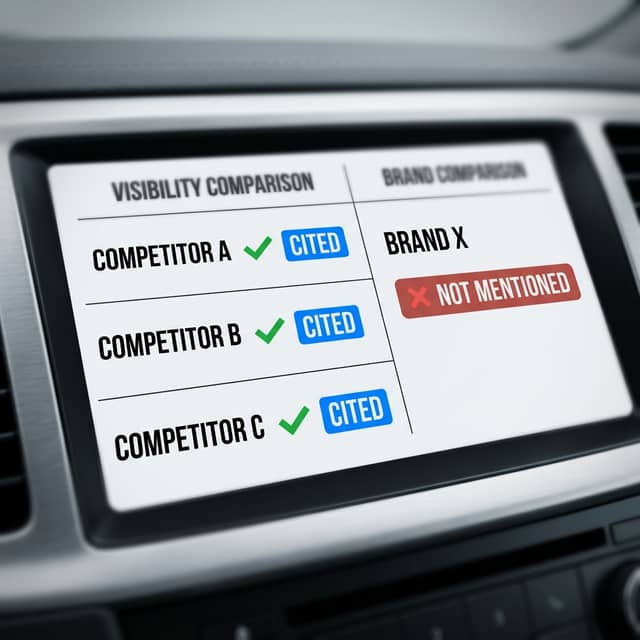
AI mode SEO tools are not inherently flawed. For teams with strong editorial capacity, the right tool can provide valuable visibility and improve execution. But for most businesses, the core issue is not a lack of insights; it is a lack of consistently published content that is structured to both rank on Google and earn citations from AI platforms like ChatGPT. If competitors are already appearing in AI-generated answers and you are not, adding another dashboard is unlikely to close that gap. What actually moves the needle is consistent, well-structured output designed for both search engines and large language models. Before investing in a new tool, evaluate whether you have the resources to act on the insights it provides. If not, the bottleneck is execution, not information.
If you want your content to show up in Google and across AI platforms without managing the process yourself, GoBlinkly handles it all from research to publishing, so you can stay focused on running your business.
Frequently Asked Questions (FAQs)
Do AI mode SEO tools replace traditional SEO tools?
No. AI mode SEO tools complement traditional tools by focusing on AI visibility, but you still need foundational SEO for rankings on Google.
What features should I look for in an AI SEO tool?
Look for content optimisation guidance, AI citation tracking, keyword insights, and integration with your existing CMS and analytics tools.
Can AI SEO tools guarantee citations in AI answers?
No. No tool can guarantee citations, but they can improve your chances by aligning content with what AI systems prefer.
Are AI SEO tools useful for small businesses?
They can be, but only if the business has the time and resources to act on the insights. Otherwise, execution becomes the bottleneck.
How do AI engines decide which sources to trust?
AI systems evaluate clarity, authority, consistency, and relevance when selecting sources to include in generated responses.
What is multi-engine optimisation in SEO?
Multi-engine optimisation means optimising content for both traditional search engines and AI platforms simultaneously.
How often should I update content for AI SEO?
Regular updates every 2–3 months help maintain relevance and improve the likelihood of being cited by AI systems.
Do AI SEO tools help with content creation?
Some tools assist with content generation and optimisation, but quality and accuracy still require human oversight.
What industries benefit most from AI SEO tools?
Industries with high search demand, such as SaaS, real estate, healthcare, and finance, often benefit the most.
Is a managed SEO service better than an AI SEO tool?
It depends on your team. If you lack execution capacity, a managed service is often more effective than a tool alone.